

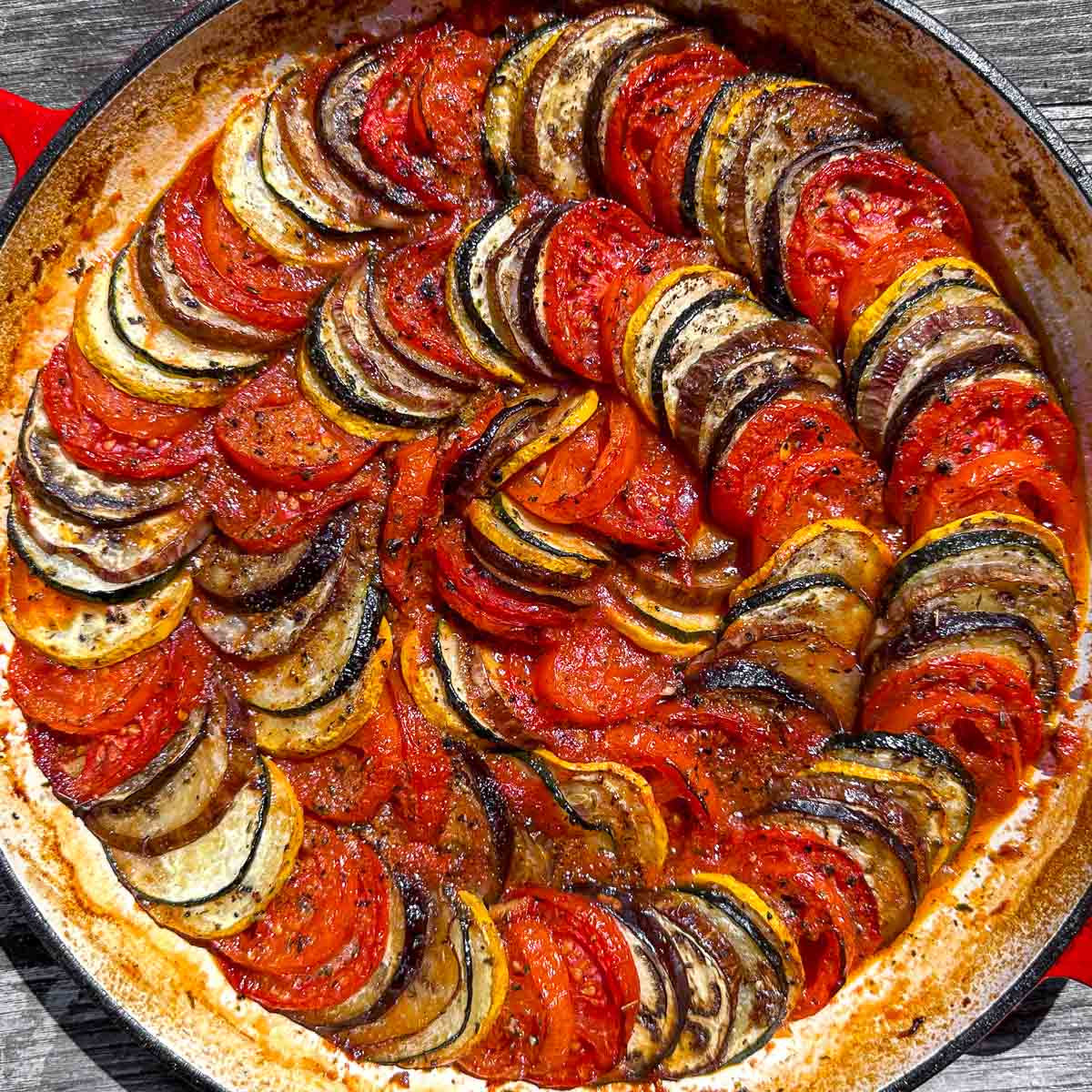
Few dishes embody the soul of Provençal cuisine quite like Classic Ratatouille. This vibrant vegetable stew, brimming with Mediterranean flavours, is a testament to the beauty of simple ingredients prepared with care. While many associate it with the elegant dish from Disney’s Ratatouille, that version is technically a tian. An artful arrangement of sliced vegetables baked atop a rich tomato base. Traditional ratatouille, on the other hand, is a rustic, slow-cooked medley where each ingredient melts into the next, creating a rich, jammy sauce that celebrates summer’s bounty. My take on this classic follows the traditional method while incorporating a few unique steps to enhance its flavour and texture.
Table of Contents
- Ingredient Breakdown
- The Origins of Ratatouille
- Why Pre-Salting the Vegetables Matters
- The Role of White Wine
- Slow and Steady
- Pairings for Classic Ratatouille
- Looking for More Veg-focused Recipes?
Ingredient Breakdown
- Courgettes: Mild and slightly sweet, they soften beautifully in the stew.
- Aubergine: Absorbs flavours well and adds a velvety texture.
- Onions: Provide a savoury base with a hint of natural sweetness.
- Sweet pointed red peppers: Add a subtle smokiness and vibrant colour.
- Garlic: Infuses the dish with its rich, aromatic depth.
- Fresh thyme, rosemary, and basil: Essential Provençal herbs for a fragrant, earthy finish.
- Extra-virgin olive oil: Enhances every ingredient with its smooth richness.
- White wine: Introduces a delicate acidity that balances the stew.
- Whole peeled tomatoes: The heart of the sauce, bringing depth and sweetness.
- Vegetable stock: Rounds out the flavours and creates a cohesive, comforting base.
The Origins of Ratatouille
Ratatouille is one of those dishes that embodies the heart of rustic French cooking. Originating in the Provence region, it was traditionally a humble dish made by farmers using whatever vegetables were in season. The word “ratatouille” itself comes from the French verb touiller, meaning “to stir up.” Historically, it was a way to use up excess summer produce, with vegetables slowly stewed together to develop deep, harmonious flavours.
Unlike the refined tian seen in popular media, classic ratatouille is meant to be a rich, textured vegetable stew where each ingredient plays its role. Over time, the dish has evolved, with variations including different cooking methods and ingredient combinations. Some prefer a chunkier version, while others favour a smoother, almost confit-like texture. Despite its simple origins, ratatouille is beloved worldwide for its rich, comforting taste and ability to pair beautifully with crusty bread, rice, or even pasta.
Why Pre-Salting the Vegetables Matters
One of the most crucial steps in achieving the perfect Classic Ratatouille is pre-salting the aubergine and courgettes. This technique helps draw out excess moisture, preventing the vegetables from becoming overly soft or waterlogged as they cook. Without this step, the stew can become too wet, diluting the intensity of its flavours.
Salting also enhances the natural taste of the vegetables and allows them to absorb the olive oil and seasoning more effectively. After 30 minutes of resting, patting them dry ensures they will caramelise beautifully during cooking. While it may seem like an unnecessary step, it significantly improves the texture of the finished dish, giving it a richer and more structured consistency without losing its signature silkiness.
The Role of White Wine
One often-overlooked ingredient that makes a difference in Classic Ratatouille is white wine. Though not always included in traditional recipes, it adds a delicate acidity that balances the natural sweetness of the vegetables. The wine also helps deglaze the pan, lifting any caramelised bits stuck to the bottom, which adds an extra layer of depth to the dish.
A dry white wine, such as Sauvignon Blanc or Pinot Grigio, works best as it provides a crisp brightness without overwhelming the other flavours. As the wine reduces, its fruit and floral notes complement the Provençal herbs, enhancing the stew’s complexity. If preferred, substitute wine with a splash of balsamic vinegar or lemon juice, though the subtlety of white wine remains unmatched in its ability to refine the dish’s final taste.
Slow and Steady
Unlike quick sautés or flash frying, Classic Ratatouille thrives on slow, deliberate cooking. Each stage of the process serves a purpose: browning the aubergine and courgette intensifies their flavour, while gently stewing the onions and peppers allows their natural sweetness to shine. Rushing the process can result in underdeveloped flavours or uneven textures.
The key is patience. Allowing the vegetables to soften gradually so that they absorb the fragrant tomato sauce. The simmering stage is where everything comes together, as the vegetables break down slightly, creating a rich, almost jam-like consistency. Some chefs prefer to cook ratatouille in the oven at a low temperature, letting the heat do the work over an extended period. Others opt for the stovetop, ensuring regular stirring to prevent sticking. However it’s made, one thing is clear: good ratatouille cannot be rushed. It’s a dish that rewards time, care, and attention to detail.
Pairings for Classic Ratatouille
One of the great things about Classic Ratatouille is its versatility. You can be serve it in numerous ways depending on the occasion. Traditionally, it’s enjoyed as a warm main dish, often accompanied by crusty bread that soaks up the rich, tomato-infused sauce. However, it also works beautifully as a side, complementing everything from grilled meats to simple rice dishes.
Some prefer it slightly chilled as a refreshing summer dish, allowing the flavours to develop even further overnight. In Provence, it’s not uncommon to see ratatouille served with a poached egg on top, the rich yolk mingling beautifully with the vegetable stew. For a heartier option, spoon It over pasta, polenta, or even a bed of quinoa. However it’s served, one thing remains the same: ratatouille is a dish that brings warmth and comfort, making it a staple in any kitchen.
Looking for More Veg-focused Recipes?
Did you enjoy making this Classic Ratatouille? Why not try some more of my veg-focused recipes below:
- Vegan Giant CousCous Salad: A wholesome plant-based salad that’s fresh, filling and packed with veggies.
- Thai-Inspired Noodle Salad: A vibrant, zingy noodle salad packed with veggies and finished with the punchiest lime and fish sauce dressing.
- Vegan Bolognese (Ragu): A delicious, rich plant-based ragu with mushrooms and Puy lentils.
- Vegan Butternut Squash and Chickpea Tagine: A warmly spiced vegan tagine, packed full of veggies, warming spices and bursting with flavour.
See how I make these recipes and more over on my Instagram!
Classic Ratatouille
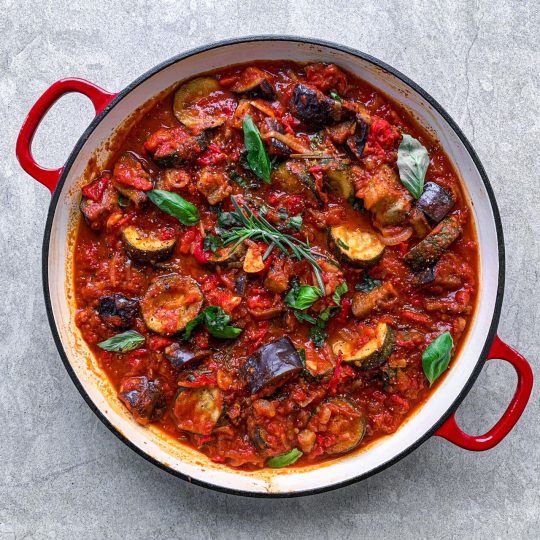
My take on the French classic. Fun fact: the signature dish Rémy serves at the end of Disney’s Ratatouille isn’t technically a ratatouille. It’s a tian, an artful arrangement of sliced vegetables atop a tomato sauce base. Ratatouille, on the other hand, is more of a stew. It usually involves cooking chopped vegetables with a good amount of olive oil and Provençal herbs until the vegetables are nice and soft and an almost jammy sauce forms. My recipe isn’t 100% traditional but it is delicious! It calls for pre-salting the aubergine and courgette to drive off some of the excess moisture and uses a few non-traditional ingredients.
- Prep Time: 15 minutes
- Total Time: 1 hour 15 minutes
- Yield: 6 1x
- Category: Vegan, Vegetarian
Ingredients
- 2 medium courgettes
- 1 large aubergine
- 1½ tsps fine sea salt, plus more
- 2 onions
- 2 large sweet pointed red peppers
- 4 large garlic cloves
- 3 sprigs fresh thyme
- 2 sprigs fresh rosemary
- 2 sprigs fresh basil, plus extra leaves to finish the dish
- extra-virgin olive oil
- 100 ml white wine
- 2 x 400 g tin good-quality whole peeled tomatoes, hand-crushed
- 200 ml vegetable stock
Instructions
- Slice the courgettes into 2 cm thick rounds and chop the aubergine into large chunks. Transfer the courgette and aubergine to a large bowl. Add the 1 ½ tsp salt and toss to combine. Transfer the vegetables to a colander or oven tray and let sit for 30 minutes. The goal is to drive off some of the excess moisture.
- Meanwhile, prep the remaining ingredients: 1) Slice the onions and peppers. 2) Thinly slice the garlic cloves. 3) Tie the thyme, rosemary and basil sprigs together with twine. Set aside.
- Pat the courgette and aubergine dry with kitchen towel.
- Heat a generous glug of extra-virgin olive oil in a large Dutch oven or saucepan over medium-high heat.
- Working in two or three batches, cook the courgette and aubergine, stirring frequently, until they begin to take on some colour, around 5 minutes per batch. You may need to add additional extra-virgin olive oil in between batches. Transfer the vegetables to a large bowl.
- Reduce the heat down to medium and add a final splash of extra-virgin olive oil. Add the onions and peppers and season with sea salt and freshly-ground black pepper. Cook, stirring occasionally, until softened and beginning to brown, around 8 minutes.
- Add the garlic and herb bundle and cook, stirring constantly, for 1 minute, then add the white wine and cook, stirring frequently, until most of the liquid has evaporated, around 2 minutes.
- Add the tinned tomatoes and vegetable stock and season well with sea salt and freshly-ground black pepper. Stir to combine.
- Bring the sauce to a simmer. Reduce the heat to low, cover and simmer gently for 20 minutes.
- Stir the courgette and aubergine into the sauce and turn the heat up to medium. Bring the ratatouille to a simmer. Reduce the heat to low, cover and simmer for a further 20 minutes.
- Remove the saucepan from the heat. Tear in a small handful of fresh basil leaves and stir to combine. Taste and adjust seasoning. Serve with crusty bread or steamed rice – enjoy!



2 responses
So Tasty!
Thank you!