Strawberry Cloud Cake with Mascarpone Cream
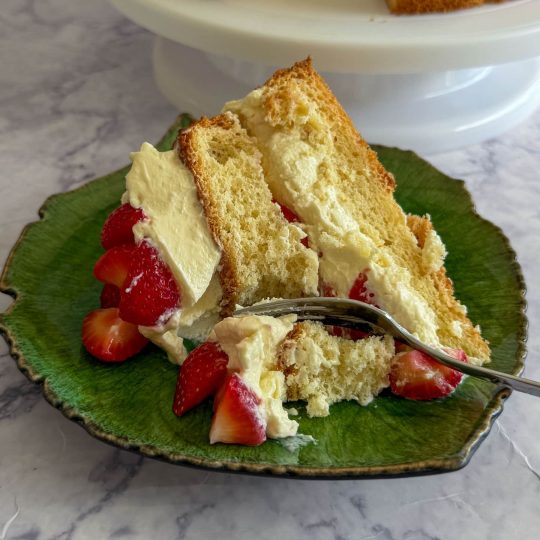
This Strawberry Cloud Cake with Mascarpone Cream has the structural integrity of an actual cloud. It’s impossibly light and fluffy, layered with softly whipped mascarpone cream and juicy macerated strawberries. The sponge itself contains no butter or oil, getting its richness from egg yolks and its cloud-like texture from whipped egg whites. It’s light, fresh and just sweet enough – the kind of dessert that feels made for the last warm days of summer.
Serve it simply with a dollop of mascarpone cream and plenty of strawberries, or sandwich everything together into one beautiful layer cake for sharing.
- Prep Time: 35 minutes
- Total Time: 2 hours 15 minutes (including cooling time)
- Yield: 8-10 1x
Ingredients
Scale
For the cake:
- 6 large eggs, separated (room temperature – this is important)
- 200g caster sugar
- 1 tsp vanilla extract
- 100g self-raising flour
- ½ tsp baking powder
- ¼ tsp salt
For the macerated strawberries:
- 600g fresh strawberries
- 4 tbsp caster sugar
- 2 lemons, zest only
For the mascarpone cream:
- 300ml double cream
- 50g icing sugar
- 1 tsp vanilla bean paste or vanilla extract
- 250g mascarpone
Instructions
- Heat your oven to 180°C/160°C fan.
- Place the egg yolks and 150g of the caster sugar in a large mixing bowl. Using a hand mixer or stand mixer fitted with the whisk attachment, beat on high speed for 4 to 5 minutes, or until the mixture is pale, thick and fluffy. When you lift the beaters out, the mixture should fall back into the bowl in a slow ribbon.
- In a separate large mixing bowl, whisk the egg whites on low speed until soft peaks form. Gradually add the remaining 50g caster sugar, then increase the speed to medium and continue whisking until the egg whites are glossy and hold stiff peaks.
- Sift the self-raising flour, baking powder and salt over the egg yolk mixture and gently fold until no dry streaks remain. Fold a third of the whipped egg whites into the mixture to lighten it, then gently fold the batter back into the remaining whipped egg whites until just combined. Take care not to knock out too much air, as this is what gives the sponge its wonderfully light texture.
- Divide the batter evenly between two ungreased 20cm springform cake tins. Alternatively, pour it into one ungreased 23cm springform cake tin if you plan to slice it in half later. Don’t grease the tins – the batter needs to cling to the sides as it rises, helping the sponge achieve its signature cloud-like texture.
- Bake on the middle rack of your oven for 25 to 30 minutes, or until the tops spring back lightly when pressed and a skewer inserted into the centre comes out clean.
- As soon as the cakes come out of the oven, invert the tins and leave them upside down until completely cool, around 1 hour. If needed, prop the tins up on the handles of two wooden spoons (or something similar) so the sponge is suspended and doesn’t rest against the work surface or cooling rack. Cooling the cakes upside down helps prevent the delicate sponge from collapsing under its own weight.
- Meanwhile, make the macerated strawberries. Place the caster sugar and lemon zest in a medium mixing bowl and rub them together with your fingertips until fragrant. This releases the lemon’s essential oils, giving the sugar a much brighter citrus flavour.
- Hull and halve the strawberries (or quarter any particularly large ones), then add them to the lemon sugar and toss well to coat. Refrigerate for at least 30 minutes, or until you’re ready to serve. As they sit, the sugar will draw out the strawberries’ natural juices, creating a delicious syrup.
- To make the mascarpone cream, place the double cream, icing sugar and vanilla in a large mixing bowl. Whisk until the cream reaches soft peaks, then add the mascarpone and whisk again until the mixture is just thick enough to hold its shape. Be careful not to over-whisk, as the mascarpone can become grainy.
- To remove the cakes from the tins, run a thin knife or offset spatula around the inside edge of each tin before releasing the springform clasp. Carefully slide a spatula underneath each sponge to release it from the base.
- To serve the sponge as a simple dessert, cut it into wedges and top each serving with a generous dollop of mascarpone cream and plenty of the macerated strawberries.
- Alternatively, turn it into a layer cake. Drain the strawberries, reserving the syrup for serving. If you baked one large sponge, slice it in half horizontally. Spread half of the mascarpone cream over one sponge, top with half of the strawberries, then sandwich with the second sponge. Finish with the remaining mascarpone cream and strawberries, and serve with the reserved strawberry syrup on the side for drizzling.
Notes
- The sponge recipe is adapted from a wonderful recipe by Joy of Baking, with a handful of tweaks to the recipe itself
- Room-temperature eggs are essential. They whip to a much greater volume than cold eggs, giving the sponge its incredibly light texture.
- Don’t grease the tins. The batter needs to grip the sides of the tins as it rises. Greasing them can prevent the sponge from climbing properly and result in a flatter cake.
- Fold gently. The whipped egg whites provide all of the sponge’s lift, so take your time when folding them into the batter.
- The sponge is best assembled just before serving. You can make all the components in advance, but layering the cake at the last minute keeps the sponge as light as possible.