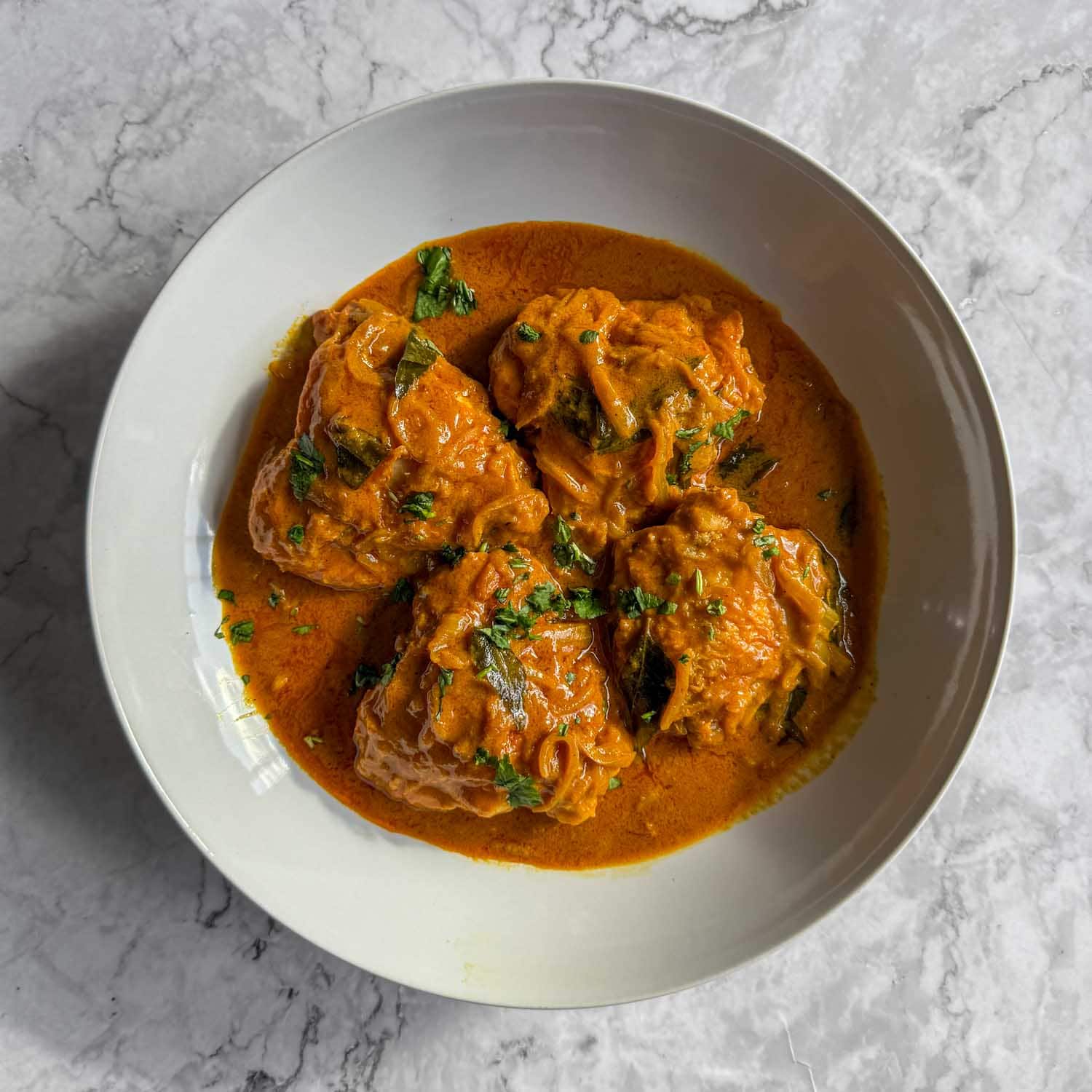
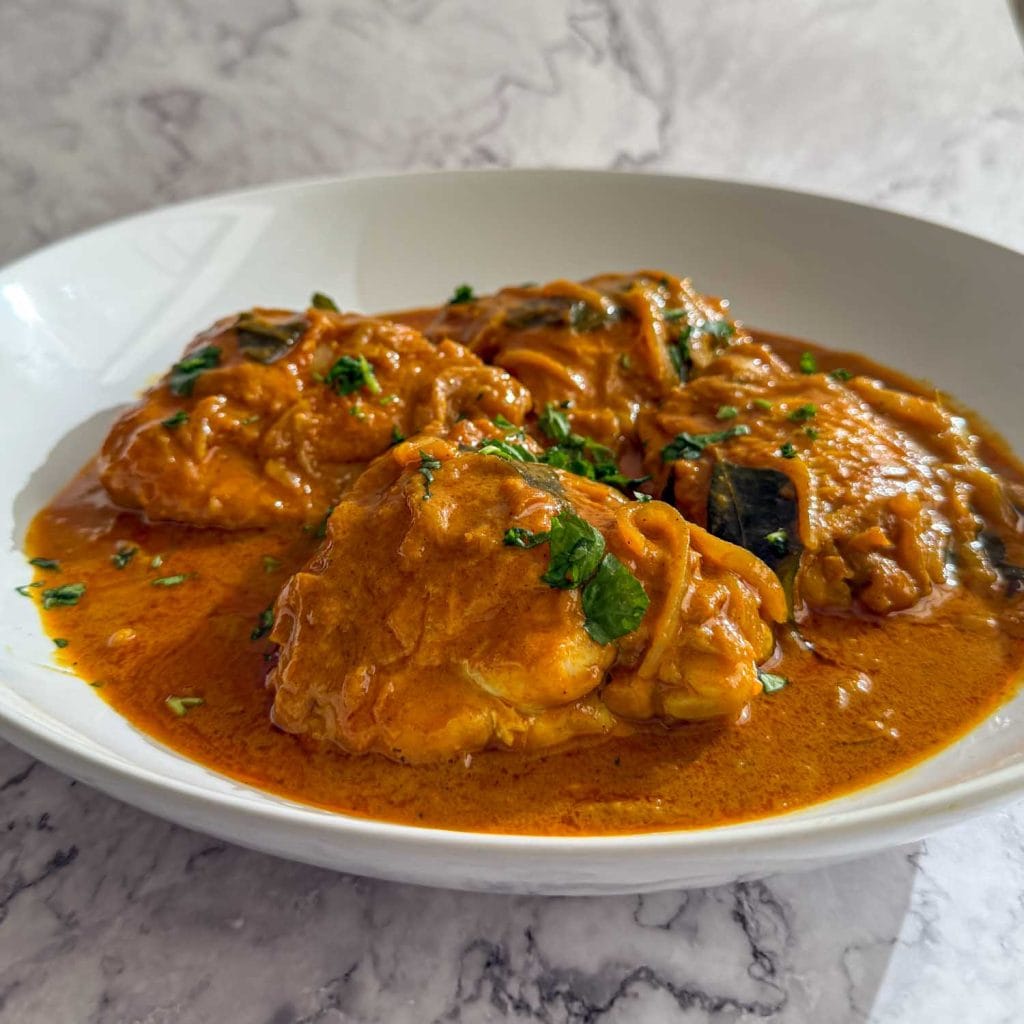
This Caramelised Onion Chicken Curry is a slow-cooked, technique-driven curry that puts onions, chicken fat and curry leaves front and centre. It doesn’t lean on a long spice list or aggressive heat. Instead, it builds depth through patient caramelisation and careful layering, resulting in a savoury, rounded curry that tastes far richer than its ingredient list suggests.
This is the kind of dish that rewards patience. Each step sets up the next, and skipping or rushing any of them flattens the final result. When cooked properly, this Caramelised Onion Chicken Curry delivers deep umami, gentle sweetness and a fragrant, coconutty finish that feels cohesive rather than busy. Serve it with plain rice, coconut rice or flatbreads.
Ingredient Breakdown
- Chicken thighs – bone-in and skin-on to provide flavour, moisture and rendered fat
- Vegetable oil – helps control heat and supports even rendering
- Onions – thinly sliced so they soften and caramelise evenly
- Fresh curry leaves – aromatic and citrusy, forming a key flavour layer
- Double concentrated tomato purée – adds savouriness and depth once caramelised
- Garlic and ginger paste – brings warmth and background heat
- Curry powder – provides structure and gentle spice
- Ground turmeric – adds earthiness and colour
- Coconut milk – rounds everything out and carries flavour through the sauce
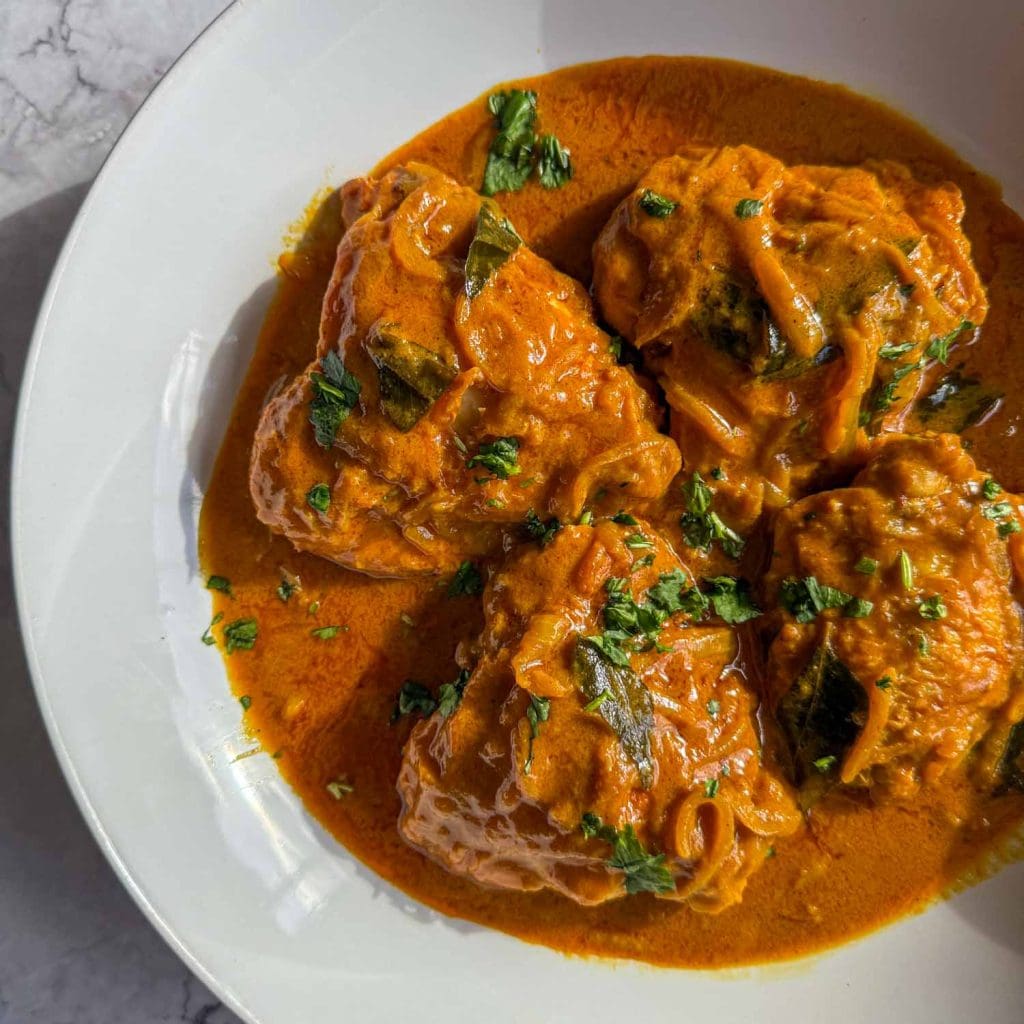
Building Layers of Flavour in Caramelised Onion Chicken Curry
The best curries build flavour in stages, and this Caramelised Onion Chicken Curry is a clear example of that approach. Instead of throwing everything into the pan at once, this recipe develops its base gradually, allowing each element to do its job before moving on.
It starts with the chicken. Rendering the skin releases fat slowly, creating a savoury foundation that already tastes of the finished dish. That fat then becomes the cooking medium for the onions, which absorb both heat and flavour as they soften and caramelise. This is where sweetness develops, but also depth, as the onions break down and concentrate.
Once the onions are properly caramelised, curry leaves go in. They fry briefly in the hot fat, releasing their aroma at the moment it will carry best. Tomato purée follows and gets cooked down until it darkens, losing any raw edge and adding savouriness. Only then do the aromatics and spices join the pan, blooming briefly before the coconut milk brings everything together.
This Caramelised Onion Chicken Curry works because every layer reinforces the one before it. Nothing feels rushed, and nothing tastes bolted on.
The Flavour Base of Caramelised Onion Chicken Curry
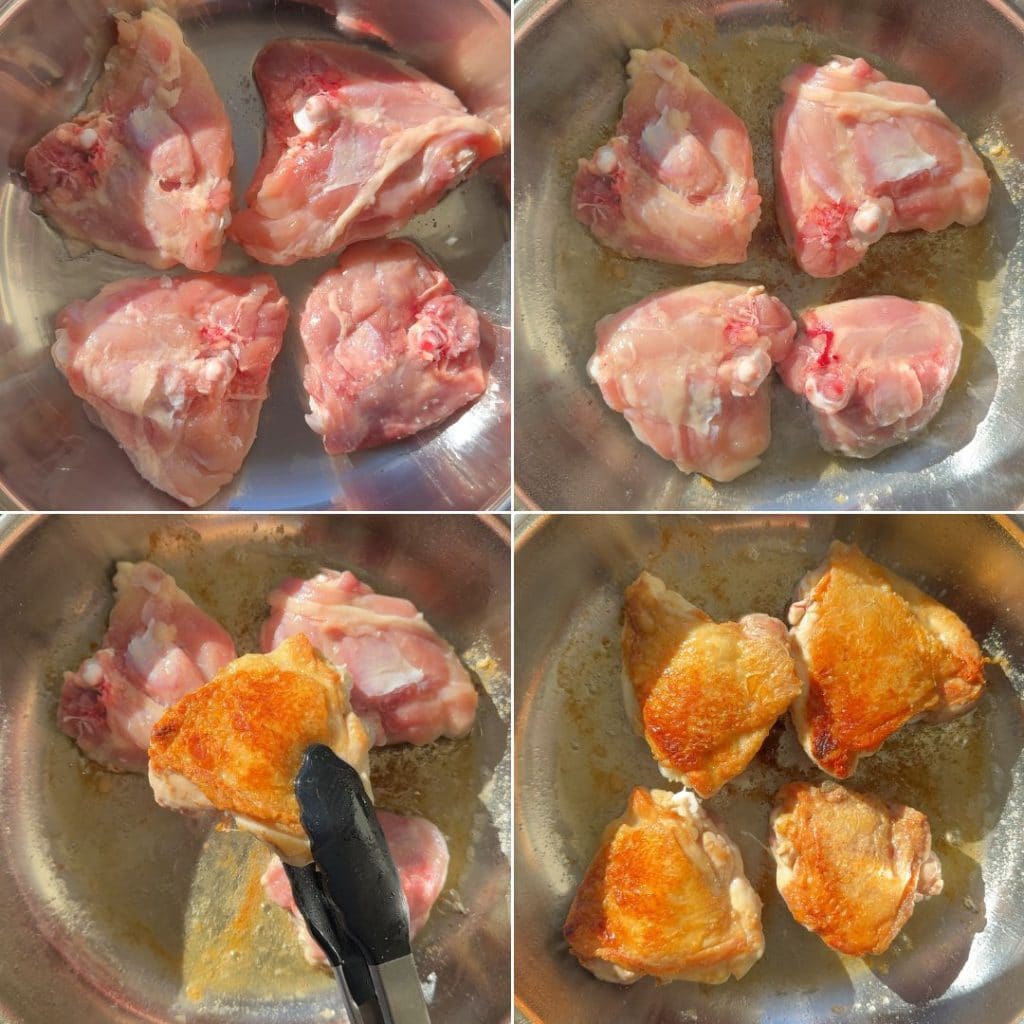
Rendering the chicken skin sets the tone for the entire curry. Skin-on thighs release fat slowly as they cook, producing a rich, chicken-forward base that you simply can’t replicate later.
To get this right, start with dry chicken and a hot pan. Moisture interferes with browning and delays rendering. Place the thighs skin-side down and resist the urge to move them. Ten minutes gives the fat time to render fully and the skin time to turn deeply golden.
Once you flip and briefly seal the underside, remove the chicken but leave all the fat behind. That rendered fat carries flavour through every subsequent stage, giving this Caramelised Onion Chicken Curry its savoury backbone.

How to Caramelise Onions for this Chicken Curry
Caramelising onions properly takes time and restraint. Thin slicing helps them cook evenly, but patience matters more than knife work here.
- Add the onions to the rendered fat with a generous pinch of salt. Salt draws out moisture, helping the onions soften before they brown. Cook them over medium heat, stirring occasionally rather than constantly. Letting them sit encourages colour.
- Rushing this stage leaves you with softened onions, not caramelised ones. You’re aiming for deep golden colour and a savoury sweetness that balances the richness of the coconut milk later.
In this Caramelised Onion Chicken Curry recipe, the onions don’t just add flavour. They also give body to the sauce, thickening it naturally as they break down.
The Importance of Fresh Curry Leaves
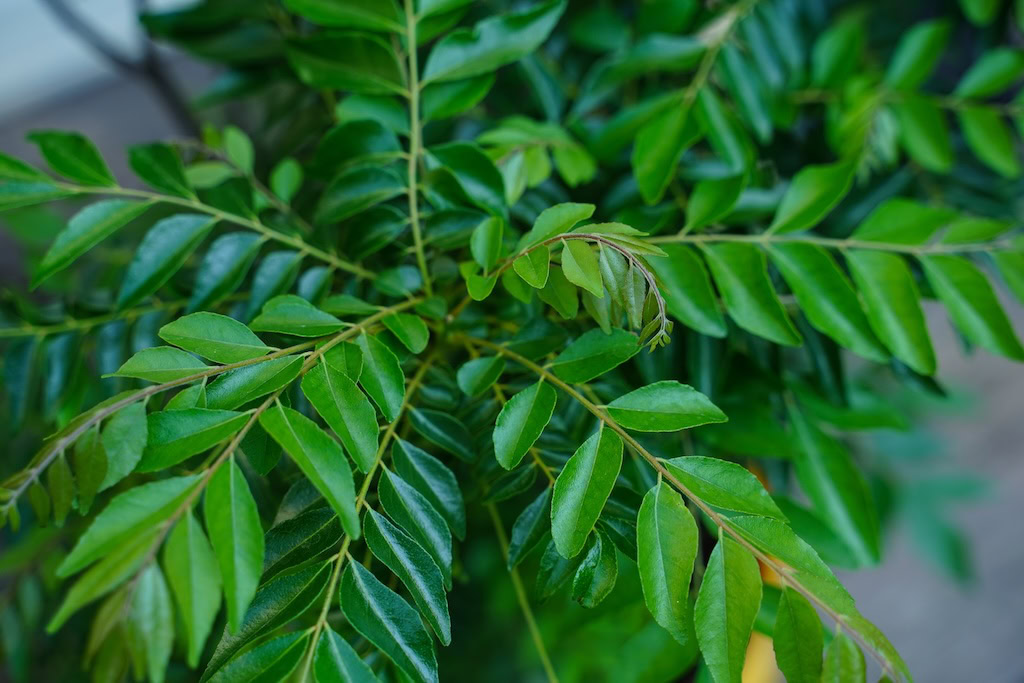
Fresh curry leaves play a central role in this Caramelised Onion Chicken Curry. Their aroma sits somewhere between citrus and savoury, adding a layer that feels both fresh and grounding. They go in once the onions are fully caramelised, when the pan is hot enough to fry them briefly. This short contact with heat releases their fragrance without dulling it. A minute is all they need.
Curry leaves are a staple in South Indian cooking, prized for good reason. There’s no true substitute. Dried curry leaves exist, but they lack the freshness and impact needed here, to the point where I don’t think they’re worth using.
If you’re UK-based, you’ll find fresh curry leaves in most South Asian supermarkets. Some larger Waitrose and M&S stores stock them too. For this Caramelised Onion Chicken Curry recipe, they’re essential.
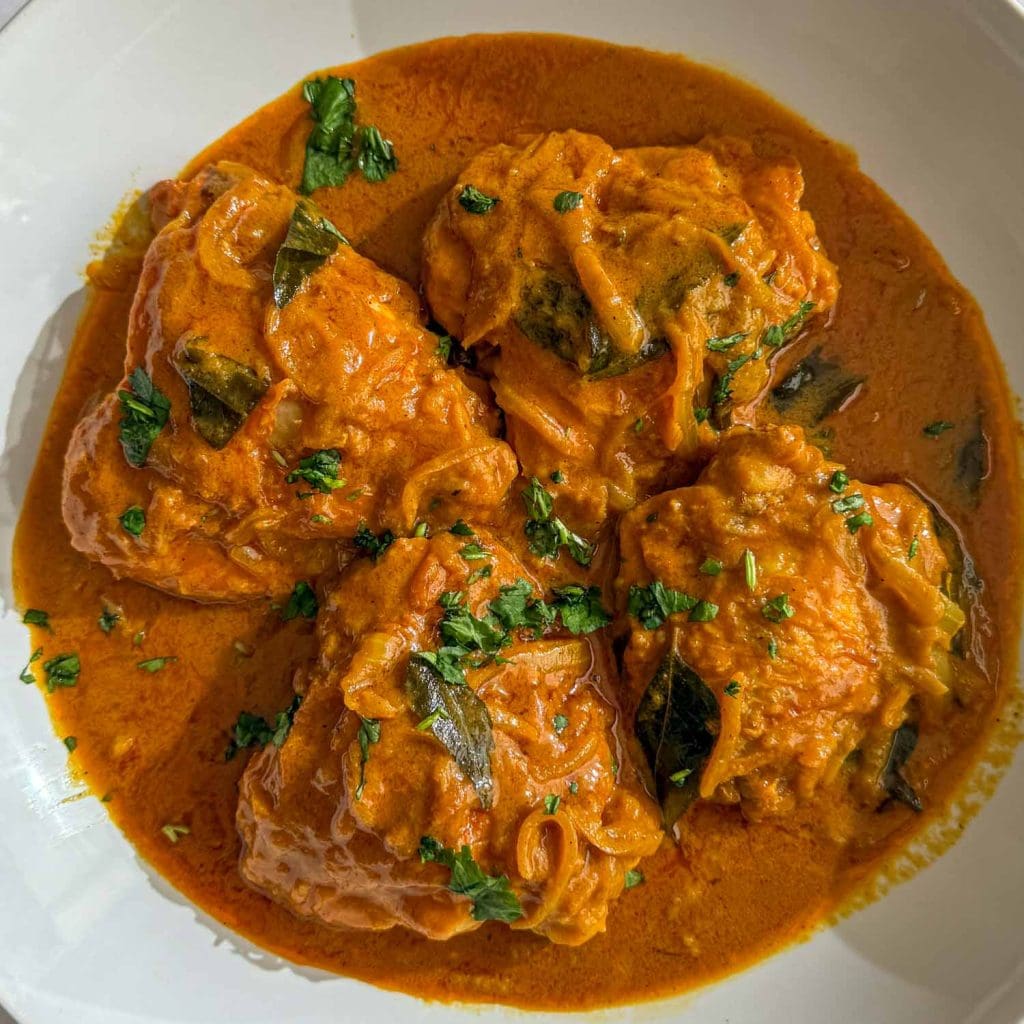
Bringing the Caramelised Onion Chicken Curry Together
Once the curry leaves have released their aroma, the tomato purée goes in. Cooking it until it darkens removes raw acidity and deepens savouriness. This step also enriches the colour of the sauce.
Garlic, ginger and spices follow, and this stage should be brief. Stir frequently and keep the heat under control. You want warmth and aroma, not bitterness.
The coconut milk softens the intensity of the base and ties everything together. When the chicken returns to the pan, along with its resting juices, the curry simmers gently until the meat is tender and the sauce cohesive.
At this point, the Caramelised Onion Chicken Curry should taste rounded and deeply savoury, with no single element dominating.
What to Serve with Caramelised Onion Chicken Curry
Caramelised Onion Chicken Curry pairs best with simple accompaniments that let the sauce shine.
- Steamed basmati rice, which absorbs the sauce beautifully
- Coconut Rice, for a slightly richer, aromatic pairing
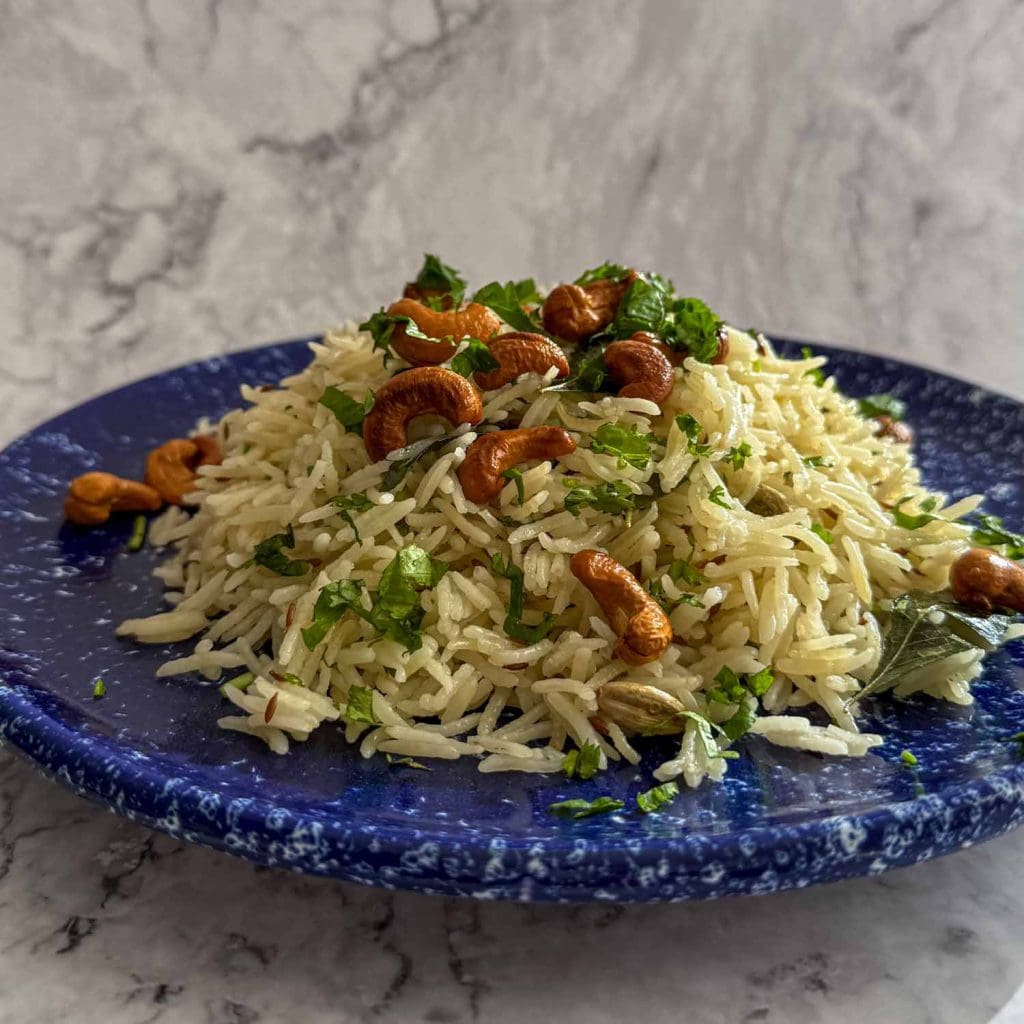
- Spiced Curry Leaf Rice, to double down on that curry leaf flavour.
- Quick and Easy Flatbreads, ideal if you’re short on time
- Soft Fluffy Flatbreads, perfect for scooping up the sauce
Common Questions about Caramelised Onion Chicken Curry
Can I use boneless chicken?
You can, but you’ll lose flavour and richness.
Can I speed up the onions?
No! The onions define the dish and they need time to properly caramelise.
Is it spicy?
That depends on your curry powder choice but generally, no. Feel free to add chillies if you want it spicy!
Does it reheat well?
Yes, and the flavour improves overnight.
Can I freeze it?
Yes, though the sauce may loosen slightly when reheated, which isn’t a bad thing!
This Caramelised Onion Chicken Curry is a reminder that depth comes from process. When you give each stage the attention it deserves, the dish takes care of the rest.
Caramelised Onion Chicken Curry
You’ll likely have had a chicken curry before, but this Caramelised Onion Chicken Curry does things a little differently. Almost all of its flavour comes from two places: deeply caramelised onions cooked down in rendered chicken fat, and a generous amount of fresh curry leaves. It’s a little labour-intensive, but the result is a deeply savoury, rounded curry that doesn’t rely on an overloaded spice list to taste rich and complex.
- Prep Time: 20 minutes
- Total Time: 1 hour 45 minutes
- Yield: 4 1x
Ingredients
- 4 large bone-in, skin-on chicken thighs
- 1 tbsp vegetable oil
- 2 large onions, thinly sliced
- 5g fresh curry leaves (around 40 leaves)
- 2 tbsp double concentrated tomato purée
- 1 tbsp garlic and ginger paste
- 2 tsp curry powder (mild, medium or hot)
- 1 tsp ground turmeric
- 1 x 400g tin good-quality coconut milk
Instructions
- Pat the chicken thighs dry and season well with salt on both sides.
- Heat the vegetable oil in a large saucepan or sauté pan over medium-high heat, then arrange the chicken skin-side down in a single layer. Cook for 10 minutes, or until the skin is deeply golden and the fat has rendered out.
- Flip and cook for a further 2 to 3 minutes just to seal the underside, then transfer the chicken to a plate, leaving the fat behind in the pan.
- Return the pan to a medium heat and add the onions with a generous pinch of salt. Cook, stirring occasionally, for 30 to 40 minutes, or until softened and caramelised. This stage takes patience, but it’s where most of the flavour develops.
- Add the curry leaves and cook, stirring almost constantly, for 1 minute, or until fragrant, then stir in the tomato purée and cook for 2 minutes, or until it darkens slightly. Add the garlic and ginger paste, curry powder and turmeric and cook, stirring frequently, for another minute.
- Pour in the coconut milk, season with salt and pepper and stir to combine. Return the chicken to the pan along with any resting juices, turning to coat it in the sauce. Bring to a gentle simmer over medium-high heat, then cover, reduce the heat to medium to medium-low and simmer for 30 minutes, or until the chicken is tender and cooked through. Serve with rice, naan or both.