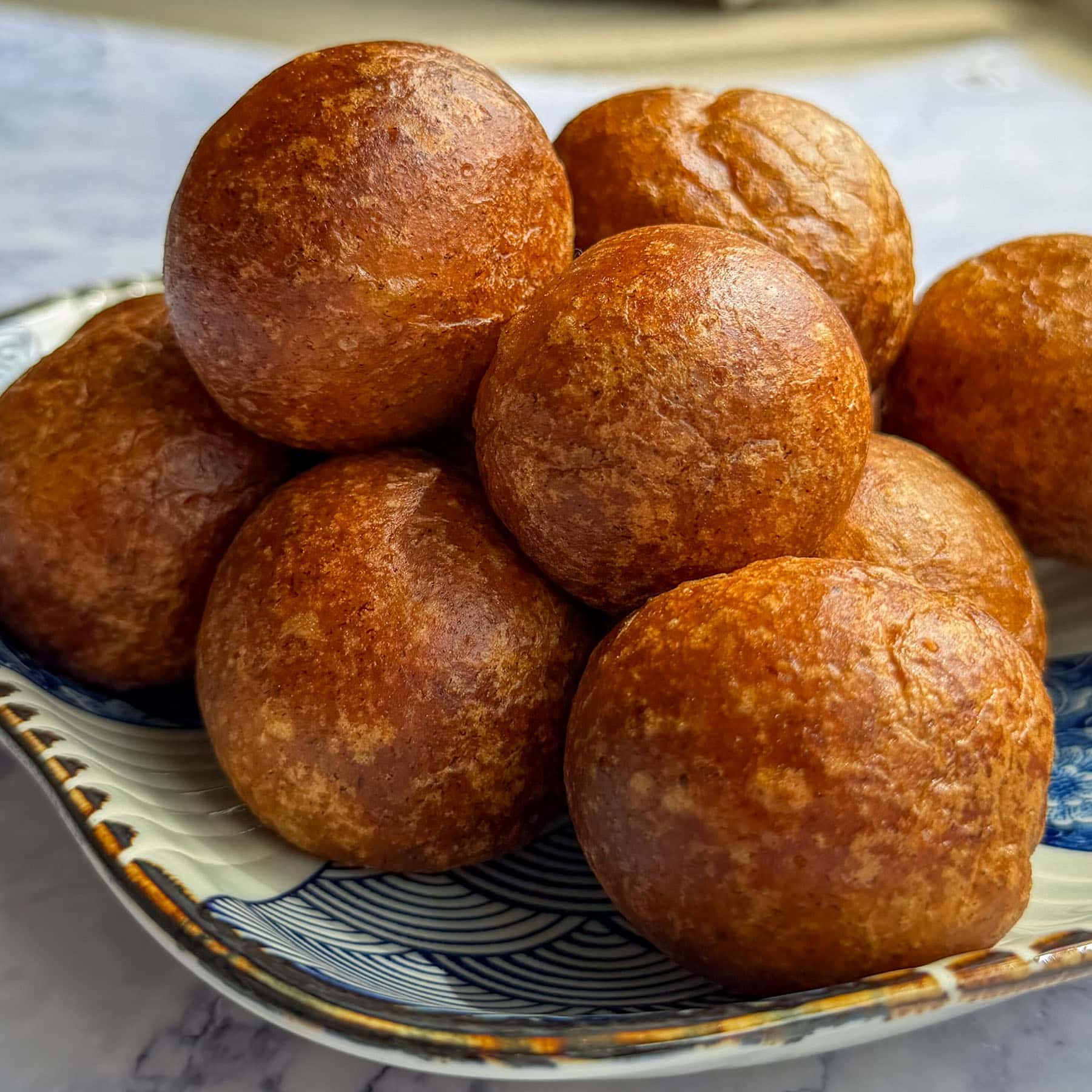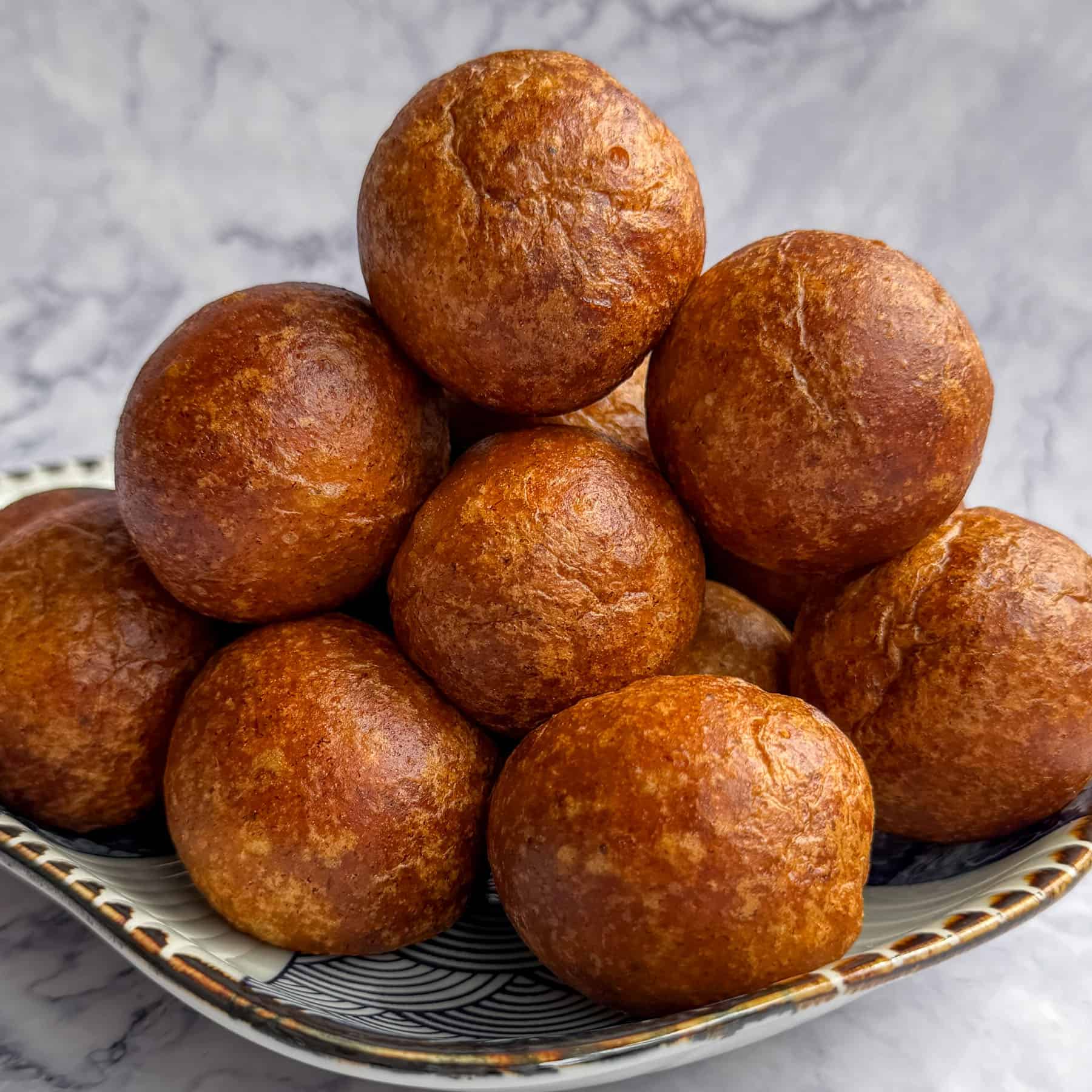
Plantain Puff Puff is my sweet, plantain-packed twist on one of my favourite West African treats. Being half Nigerian and half Cameroonian, I grew up eating these golden fried doughnuts, known as puff puff in Nigeria and beignets in Cameroon. Light, airy and gently spiced with nutmeg, they’ve long been one of my favourite things to make and eat.
This version came about when I found myself with a couple of very overripe plantains on the kitchen counter. I already prefer a slightly sweeter puff puff, so it felt like a natural way to put them to good use. The plantains add a subtle sweetness and depth of flavour that works beautifully here, making these Plantain Puff Puff even more moreish.
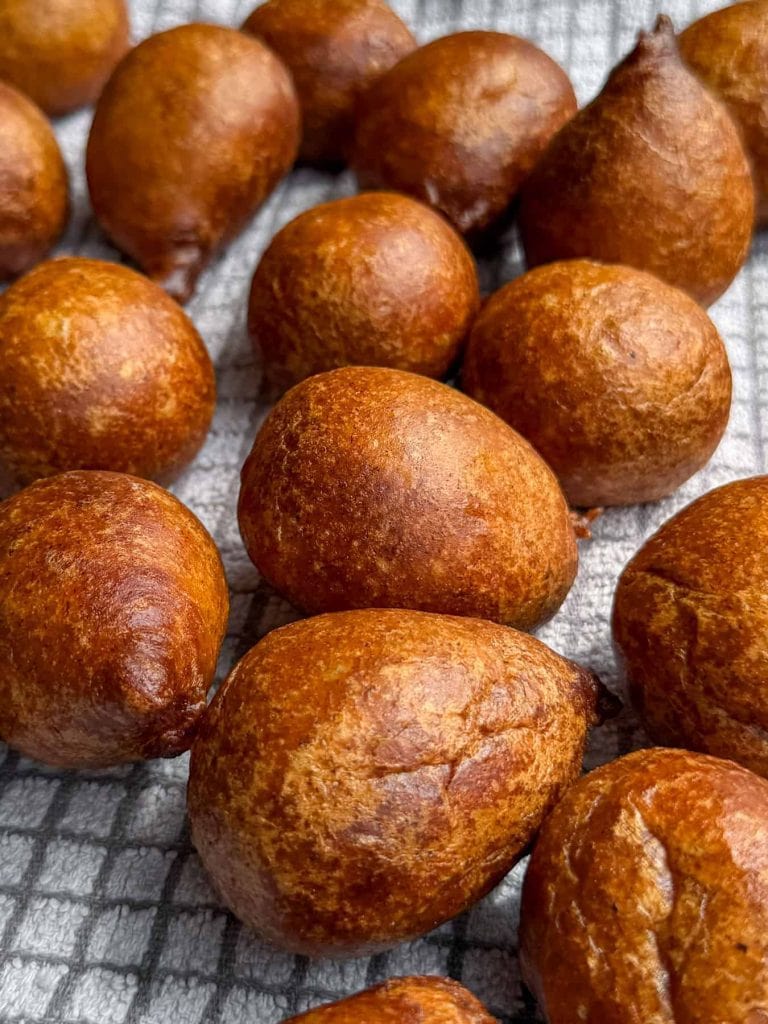
Why You’ll Love This Plantain Puff Puff
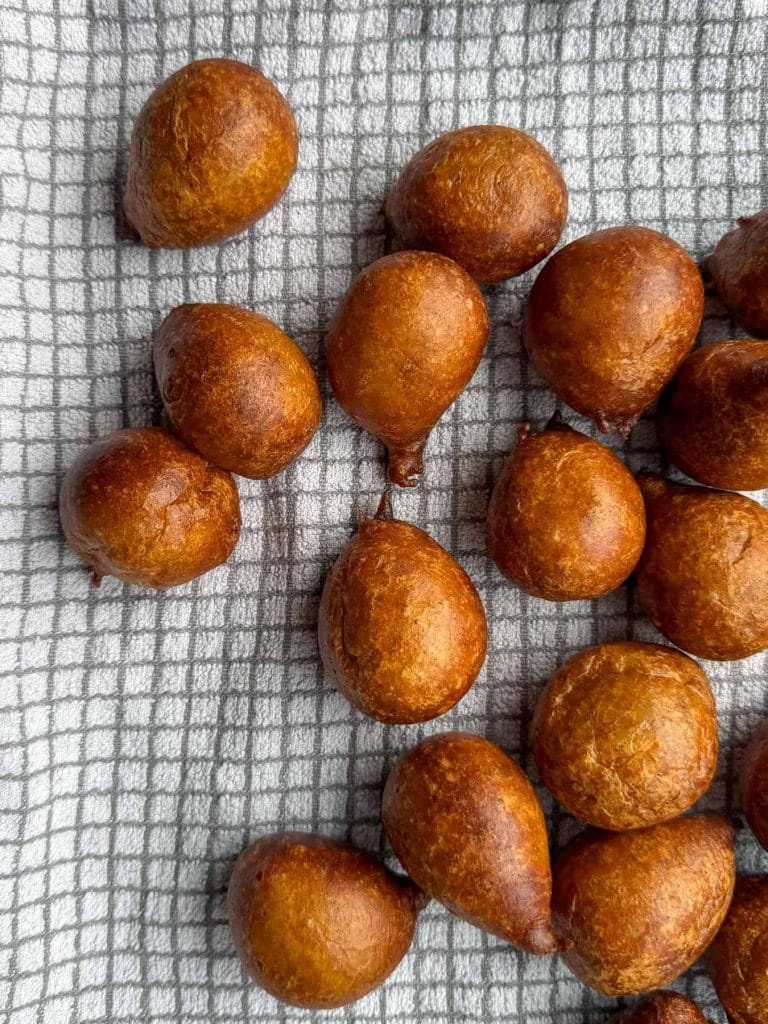
If you’re already a fan of puff puff, this Plantain Puff Puff recipe is well worth trying. The addition of ripe plantains brings natural sweetness, a subtle fruity flavour and a little extra richness to the batter. The result is a puff puff that’s crisp on the outside, light and airy within and packed with flavour.
It’s also a fantastic way to use up overripe plantains. In much the same way that overripe bananas make excellent banana bread, very ripe plantains are perfect for baking and frying. As they ripen, their starches convert to sugars, making them sweeter, softer and more flavourful.
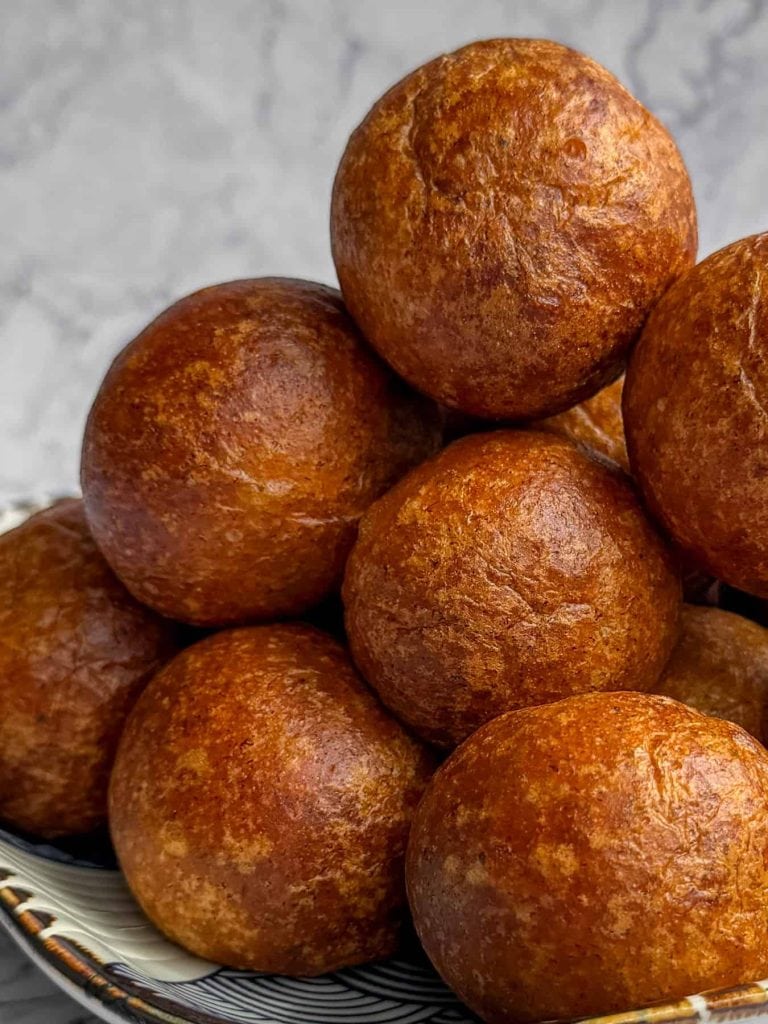
Why Plantain Works So Well in Puff Puff
The key to great Plantain Puff Puff lies in the ripeness of the fruit. For this recipe, you want plantains that are mostly black, or at the very least very heavily speckled. While they may look past their best, they’re actually at their sweetest and most flavourful stage.
Blending the plantains directly into the batter distributes that sweetness evenly throughout the puff puff. Rather than tasting strongly of plantain, the finished doughnuts have a deeper, more rounded flavour that complements the nutmeg beautifully. The plantain also helps keep the centres soft and tender while the exterior fries up beautifully golden.
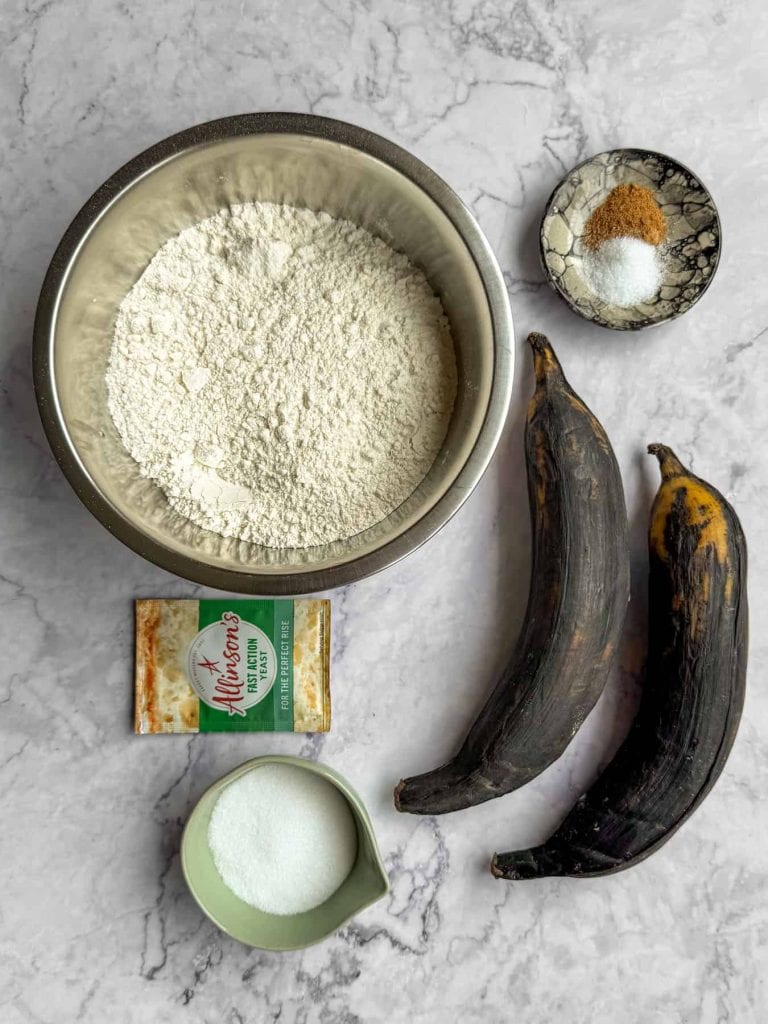
Ingredient Breakdown
- Active dried yeast – Provides the lift that gives puff puff its signature light, airy texture.
- Warm water – Activates the yeast and helps bring the batter together.
- White granulated or caster sugar – Feeds the yeast and adds sweetness.
- Very ripe plantains – Add natural sweetness, moisture and depth of flavour.
- Plain flour – Forms the structure of the puff puff.
- Fine sea salt – Balances the sweetness and enhances flavour.
- Ground nutmeg – Adds warmth and the classic flavour associated with puff puff.
- Vegetable oil – Ideal for deep-frying thanks to its neutral flavour and high smoke point.
The Secret to Light and Airy Plantain Puff Puff
The most important step in this Plantain Puff Puff recipe happens long before the frying begins. Taking the time to activate the yeast properly and allowing the batter to rise fully will give you lighter, fluffier results.
When you combine the yeast, warm water and sugar, the mixture should become foamy or at least frothy within 5 to 10 minutes. This tells you the yeast is active. If nothing happens, it’s best to start again rather than risk a dense batch of puff puff.
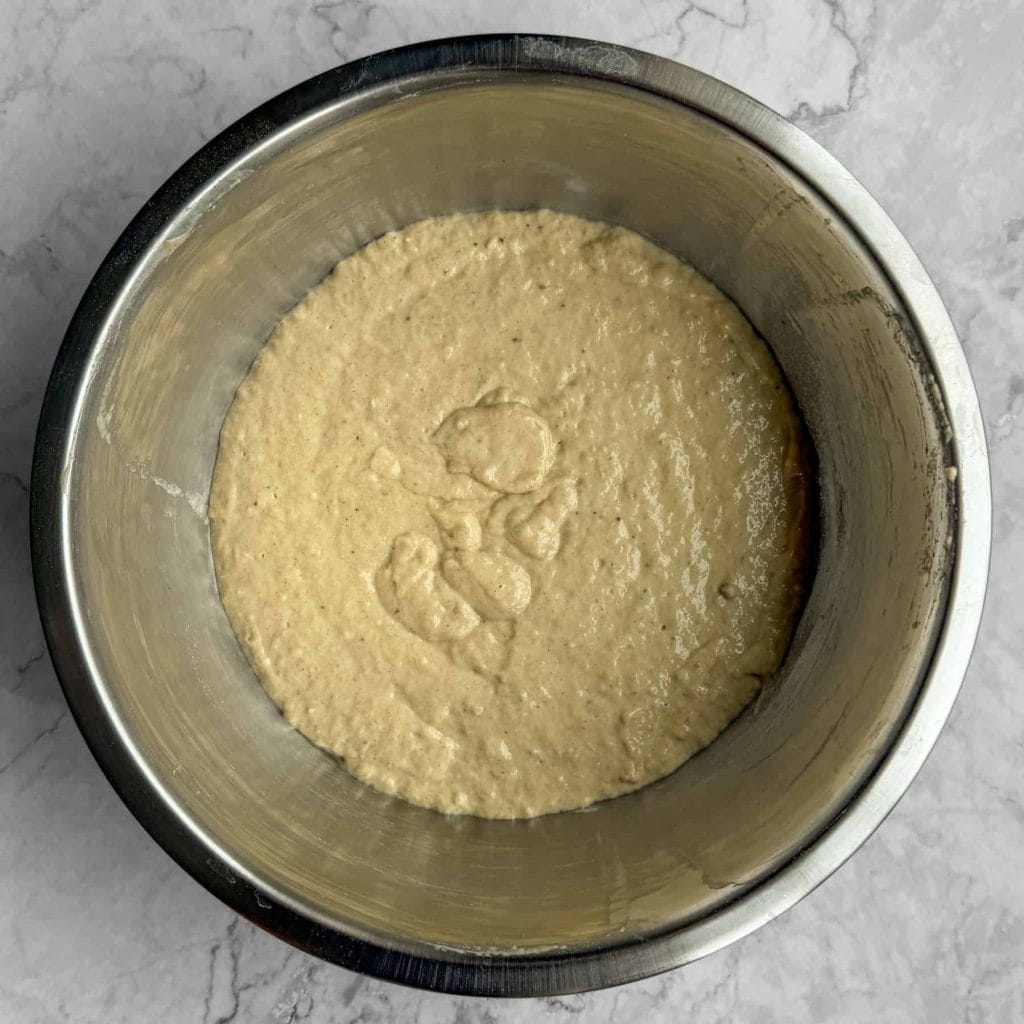
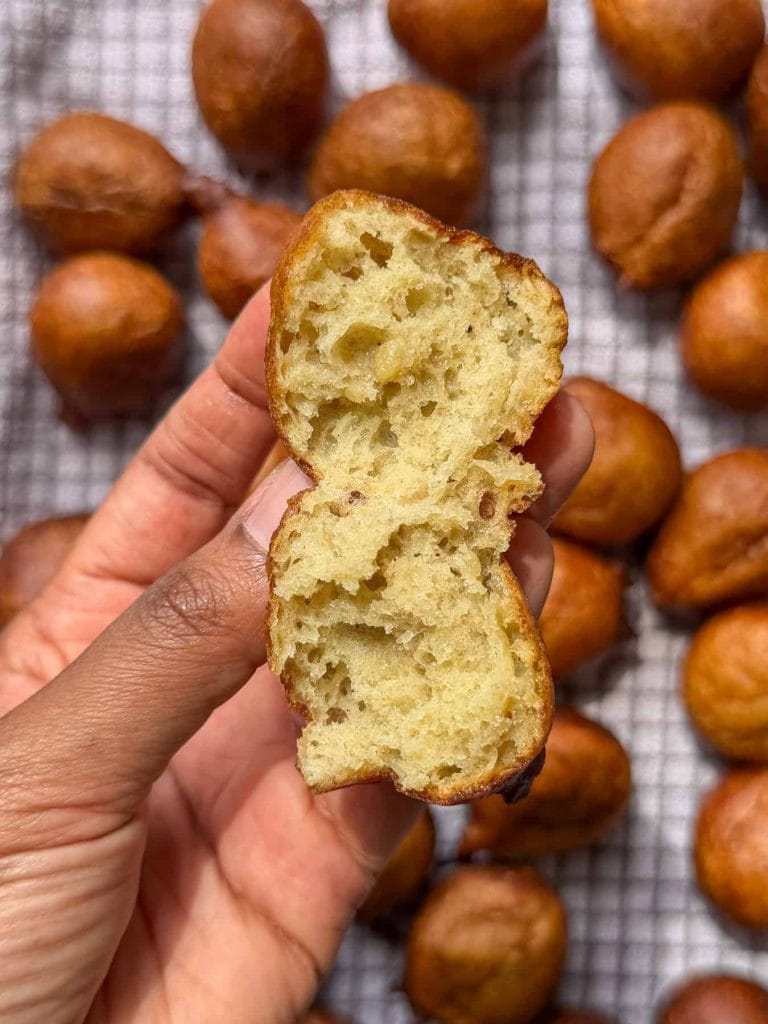
The batter should be thick, sticky and stretchy before proving. After rising, it should look noticeably puffed up and roughly doubled in size. The exact timing will depend on the temperature of your kitchen, so use visual cues rather than relying solely on the clock.
Two Ways to Shape Plantain Puff Puff
One of the things that puts people off making puff puff at home is shaping the batter. Because the batter is very wet, it can feel a little intimidating at first. Fortunately, there are two easy ways to do it.
The traditional method involves wetting one hand, scooping up some batter and squeezing it between your thumb and forefinger so that a small ball drops directly into the oil. It’s a technique that becomes surprisingly easy with a little practice.
If you’d prefer a more beginner-friendly approach, use a small cookie scoop or tablespoon. While you may not end up with perfectly round puff puff, they’ll still taste just as delicious. In fact, slightly irregular puff puff often look more homemade and charming.
Frying Plantain Puff Puff Successfully
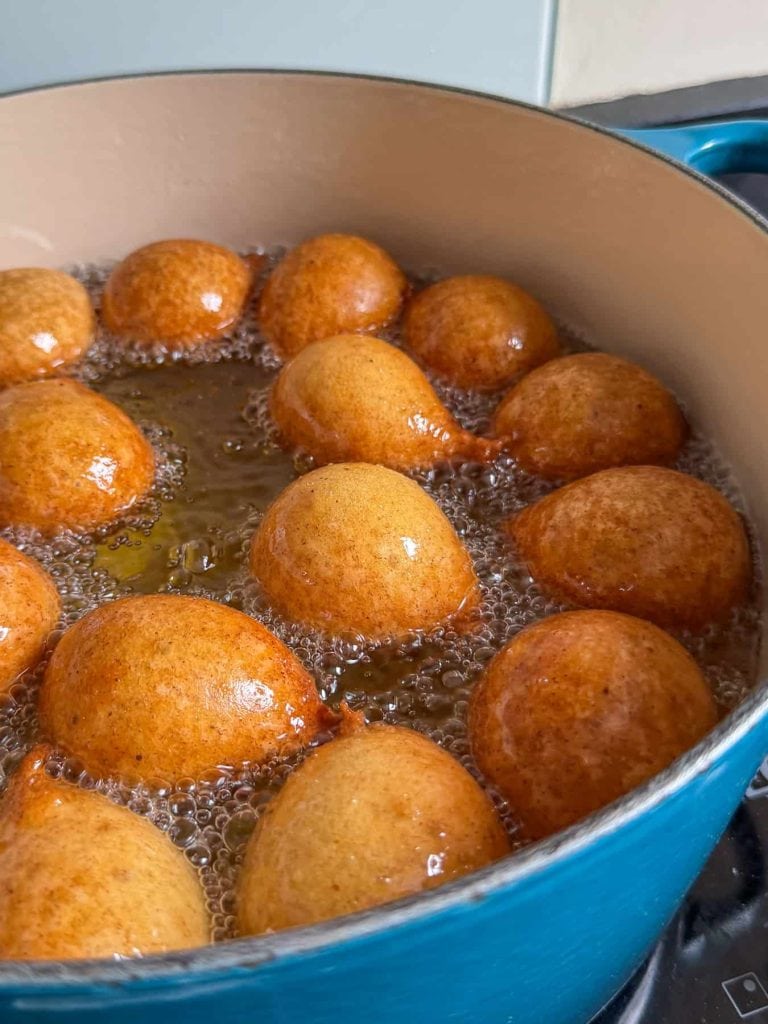
Oil temperature is the key to perfectly cooked Plantain Puff Puff. Too cool and the batter will absorb excess oil, resulting in greasy puff puff. Too hot and the outsides will brown before the centres have had a chance to cook through.
Aim for an oil temperature of around 170°C. If you don’t have a thermometer, drop a small amount of batter into the oil. It should sizzle immediately and float to the surface within a few seconds.
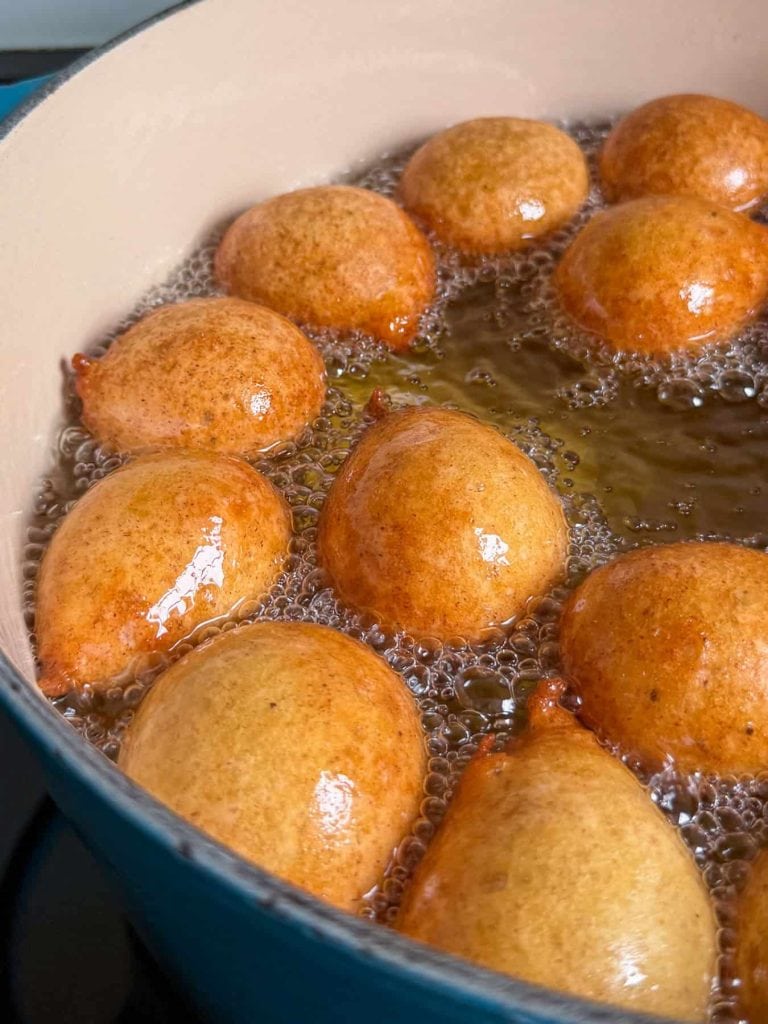
Avoid overcrowding the pan, as this can cause the oil temperature to drop. Fry in batches if necessary, turning the puff puff regularly so they brown evenly on all sides. If your batter has risen particularly well, some of the puff puff may even flip themselves over as they cook.
Frequently Asked Questions
Can I use yellow plantains instead of very ripe plantains?
You can, but the flavour won’t be quite the same. Very ripe plantains are much sweeter and softer, which is exactly what you want in Plantain Puff Puff. The darker and more speckled they are, the better.
Why didn’t my puff puff rise?
Inactive yeast is the most common culprit. It’s also possible that your water was too hot, which can kill yeast, or that the batter was left to rise in a room that was too cold. Always make sure your yeast becomes foamy or frothy before continuing with the recipe.
Why is my puff puff raw in the middle?
This usually happens when the oil is too hot. The exterior browns quickly while the inside remains undercooked. Maintaining a steady temperature of around 170°C will help ensure the puff puff cooks evenly all the way through.
Can I make the batter ahead of time?
Yes. Once the batter has risen, you can refrigerate it overnight. The next day, let it sit at room temperature for 30 minutes before frying.
Do I need to use the traditional shaping method?
Not at all. A small cookie scoop or tablespoon works perfectly well and is often easier for beginners.
More Nigerian Recipes to Try
If you enjoyed this Plantain Puff Puff recipe, here are a few more Nigerian favourites from my kitchen. From smoky jollof rice to spicy suya and rich pepper stews, these recipes celebrate some of the flavours I grew up eating and loving.
- My Mum’s Jollof Rice: My family recipe for Nigeria’s most iconic rice dish, made with a rich pepper and tomato base and plenty of flavour.
- Oven-Baked Jollof Rice: An easier, largely hands-off approach to jollof rice that still delivers the smoky, deeply savoury flavour it’s known for.
- One-Pot Jollof Rice and Chicken: A complete meal where tender chicken cooks alongside the rice, soaking up all those incredible jollof flavours.
- Nigerian Beef Suya: Thinly sliced beef coated in a fragrant, spicy suya seasoning and cooked until beautifully charred.
- Ayamase (Designer Stew): A rich and intensely flavourful green pepper stew traditionally served with Ofada rice.
You can also find some of favourite Nigerian recipes in my debut cookbook, Dinner Time. Grab your copy today here!
Final Thoughts
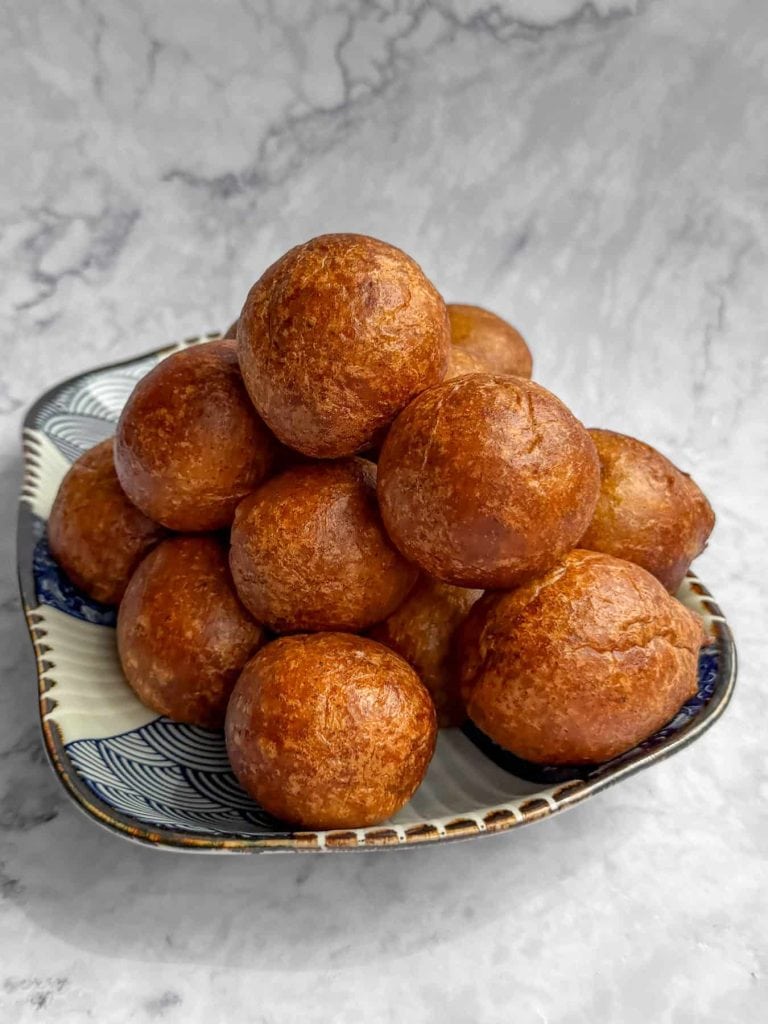
This Plantain Puff Puff recipe combines everything I love about traditional puff puff with the natural sweetness of overripe plantains. The result is a light, airy and deeply moreish treat that’s perfect for sharing with family and friends. If you happen to have a couple of overripe plantains sitting on your counter, I can’t think of a better way to use them.
Plantain Puff Puff
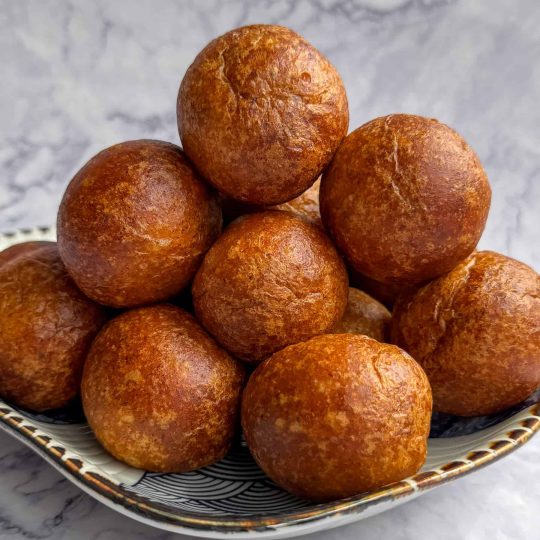
Puff puff holds a very special place in my heart. Being half Nigerian and half Cameroonian, I grew up eating these sweet, golden fried doughnuts, known as puff puff in Nigeria and beignets in Cameroon. Light, airy and gently spiced with nutmeg, they’ve long been one of my favourite treats.
This plantain version came about when I found myself with a couple of very overripe plantains on the kitchen counter. I already prefer a slightly sweeter puff puff, so it felt like a natural way to put them to good use. The plantains add a subtle sweetness and depth of flavour that works beautifully here, making these puff puff even more moreish.
- Prep Time: 20 minutes
- Total Time: 3 hours, including rise time
- Yield: 8 to 10 1x
- Category: Dessert
- Method: Frying
- Cuisine: Nigerian
- Diet: Dairy-Free, Pescatarian, Vegan, Vegetarian
Ingredients
- 7g active dried yeast
- 250ml warm water (around 43°C)
- 2 tbsp white granulated or caster sugar
- 400g plain flour
- ¾ tsp fine sea salt
- ½ tsp ground nutmeg
- vegetable oil, for deep-frying
For the blended plantain:
- 2 very, very ripe medium plantains
- 50ml water
Instructions
- In a large mixing bowl, whisk together the active dried yeast, warm water and sugar. Leave the mixture to sit for 5 to 10 minutes. It should become foamy, or at the very least frothy, which is how you’ll know the yeast is alive and well. If nothing happens, you’ll need to start again with fresh yeast.
- Meanwhile, place the plantains and water in a blender and blitz until completely smooth. Add the blended plantain to the yeast mixture and whisk until fully combined.
- Add the plain flour, salt and ground nutmeg and mix with a wooden spoon, rubber spatula or your hand (if you’d like to do it the traditional way) until a thick batter forms. The batter should be soft, sticky and stretchy.
- Cover the bowl with cling film and leave somewhere warm until the batter doubles in size. This can take as little as 45 minutes on a very hot day or up to 2½ hours on a very cold one.
- Fill a large, deep Dutch oven or saucepan halfway with vegetable oil and place over a medium-high heat. Heat the oil to 170°C. If you don’t have a thermometer, drop a small amount of batter into the oil. It should sizzle immediately and float to the surface within a few seconds.
- Give the batter a couple of stirs to knock out some of the air.
- The trickiest part of this recipe is frying the puff puff. Not so much the frying itself, but shaping the very wet batter into balls. The traditional method is to wet your hand, scoop up some batter and squeeze it between your thumb and forefinger, allowing a small, ping-pong-sized ball of batter to drop directly into the oil. Continue until the pot is comfortably full but not overcrowded. Depending on the size of your Dutch oven, you may need to fry in batches.
- If that feels a little daunting, use a small cookie scoop or tablespoon instead. Dip it briefly into the hot oil, scoop up some batter and carefully drop it into the oil, keeping it as close to the surface as possible to minimise splashing. Repeat until the pot is full but not overcrowded. Whichever method you choose, don’t worry too much about achieving perfect spheres; whether they’re beautifully round or a little misshapen, they’ll still taste fantastic.
- Fry the puff puff for 5 to 7 minutes, turning regularly, until golden brown all over. If the batter has risen well, some of them may even flip themselves over as they cook, but don’t worry if they don’t. Keep an eye on the oil temperature throughout. If it gets too hot, the outsides will brown too quickly, leaving the centres undercooked.
- Using a slotted spoon, transfer the puff puff to a paper towel-lined plate and leave to drain.
- Repeat with the remaining batter. Plantain puff puff is best enjoyed warm, so try not to leave them waiting too long before diving in.