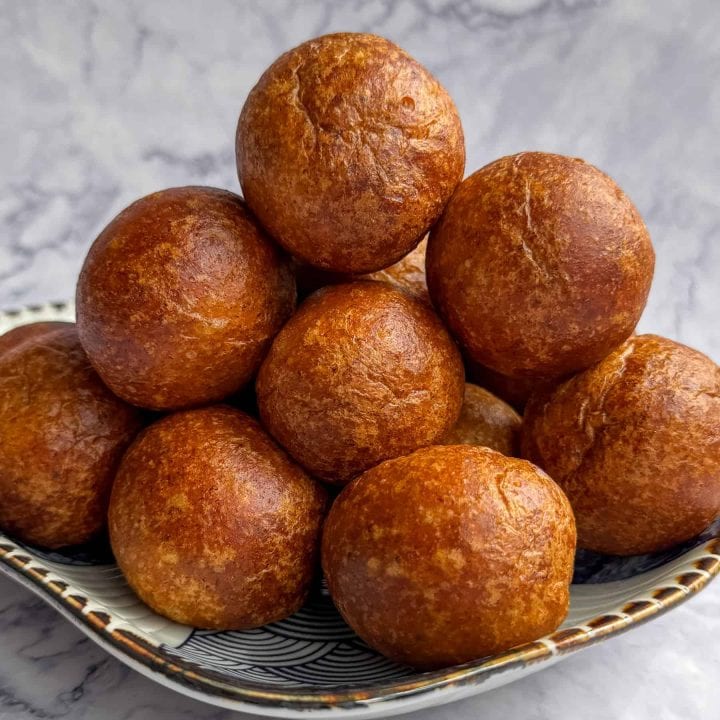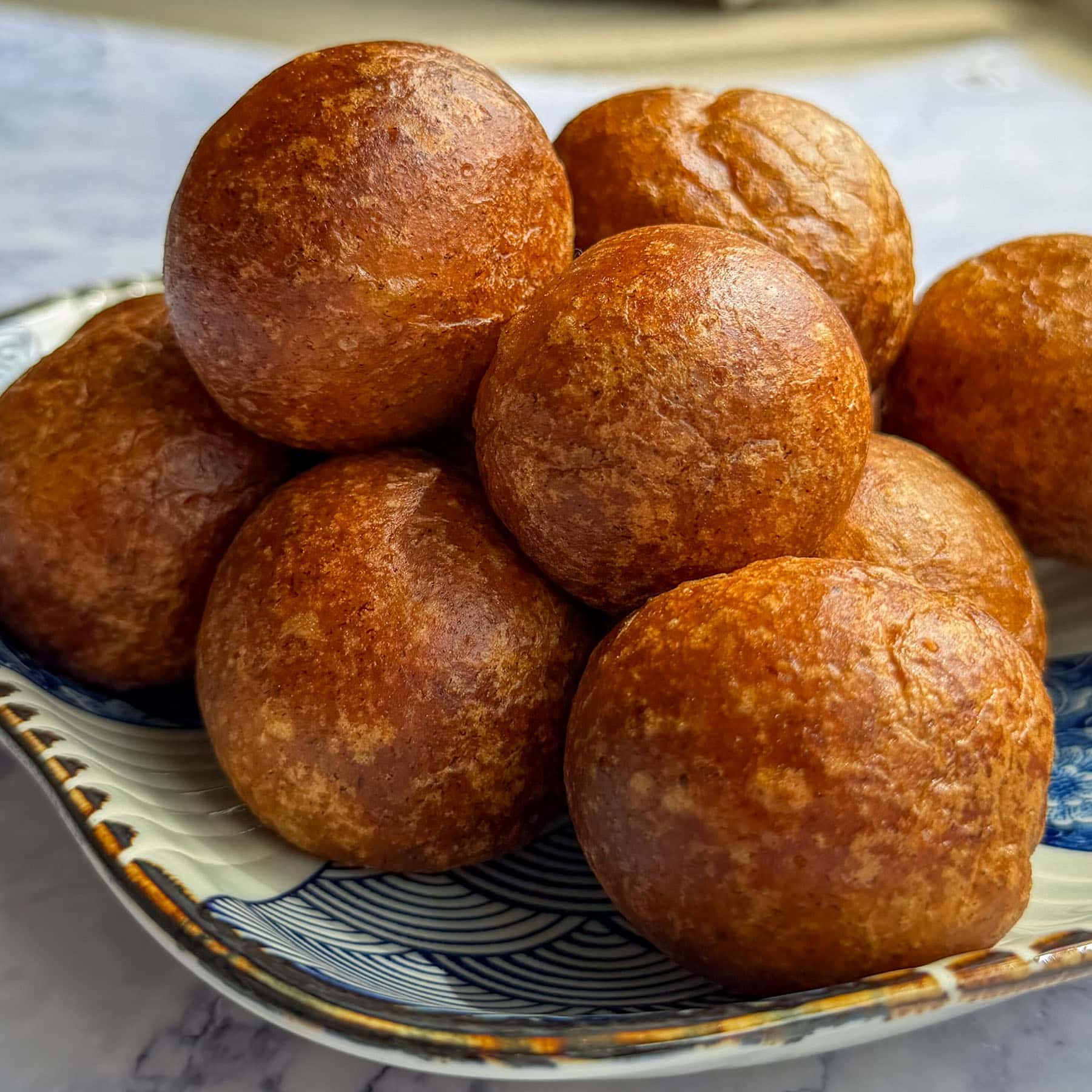
This Puff Puff recipe holds a very special place in my heart. Growing up half Nigerian and half Cameroonian, I knew these soft, golden fried doughnuts by two different names: puff puff in Nigeria and beignets in Cameroon. Although they’re incredibly similar, the main difference, at least in my experience, is how they’re served. Puff puff is often enjoyed as a snack on its own and is a staple at parties, family gatherings and even after church. Beignets are also eaten as a snack but are more commonly served alongside stewed beans (beignet haricots), making them more of a complete meal.
This is my grandmother Mémé’s recipe. She taught me everything I know about making beignets, from mixing the batter by hand to feel for the right consistency to pinching it into perfect little spheres before frying. Every time I make them, I think of her. I only wish she were here to try my version.
Why You’ll Love This Puff Puff Recipe
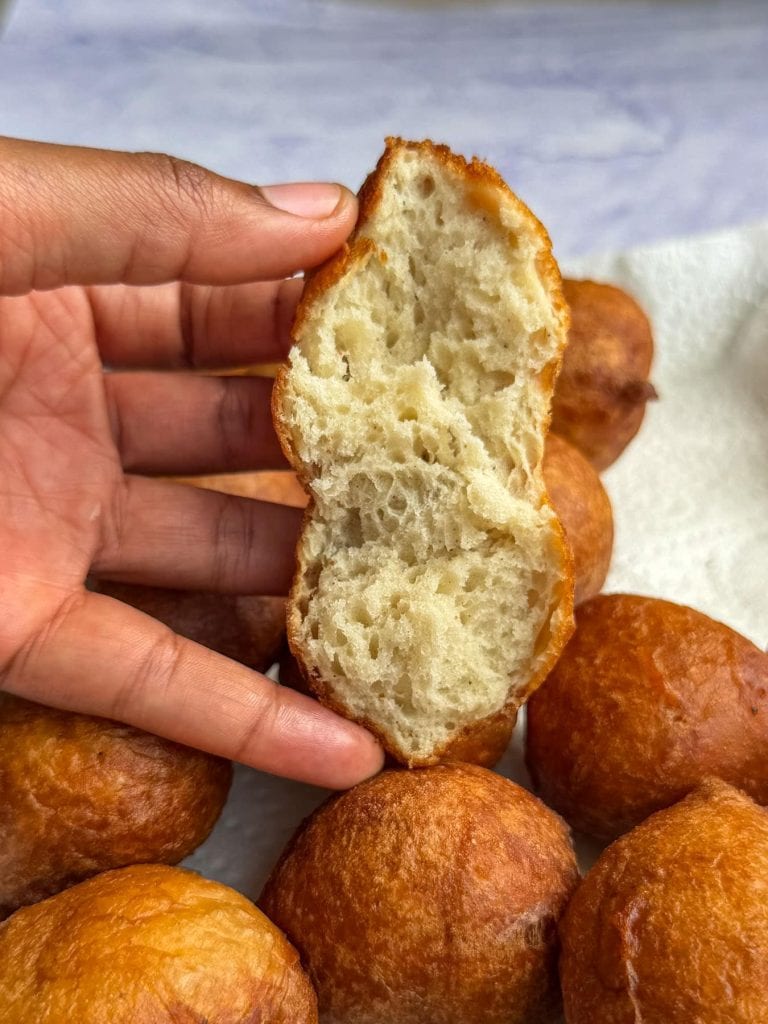
- Soft and fluffy every time. A soft, well-hydrated batter creates puff puff with a beautifully light and airy interior.
- Made with everyday ingredients. This Puff Puff recipe comes together with simple pantry staples.
- Perfectly golden, never greasy. Frying at the right temperature gives you crisp, golden puff puff with a soft centre.
- A treasured family recipe. My Cameroonian grandmother passed this recipe down to me, and I’ve been making it ever since.
- Perfect for sharing. Enjoy puff puff as a snack, dessert or serve it with stewed beans for a more substantial meal.
Did you know?
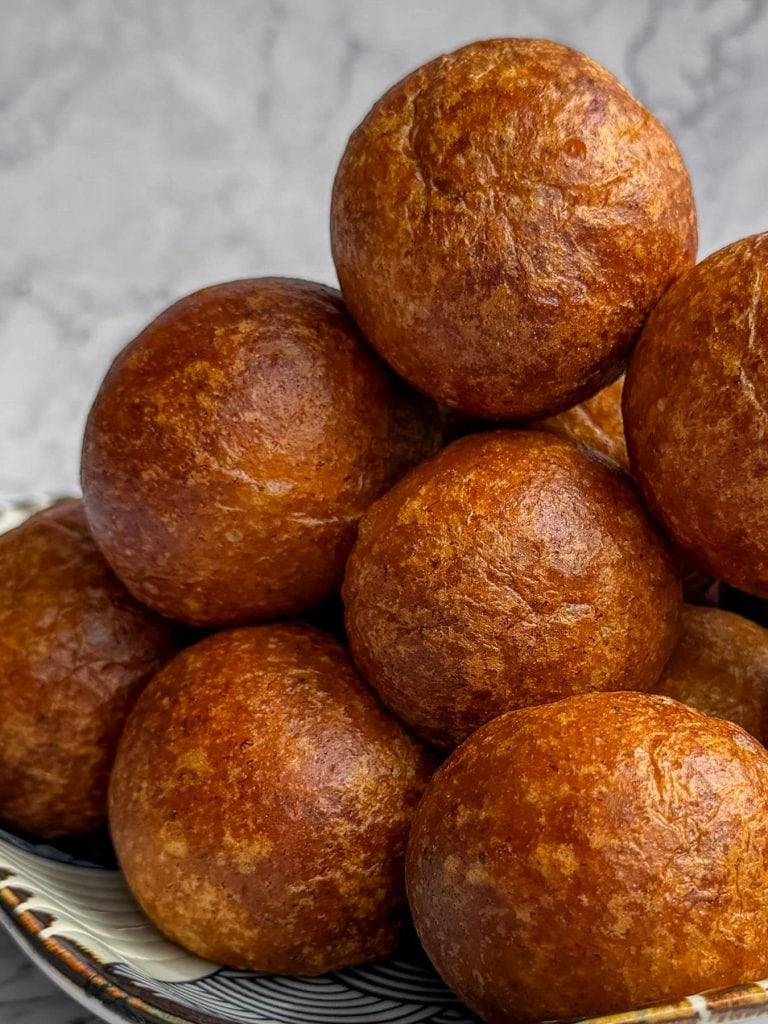
Growing up, I knew these by two different names: puff puff in Nigeria and beignets in Cameroon. They share the same roots, but people often serve them differently. If you’d like another twist on this West African classic, try my Plantain Puff Puff, made with ripe plantains for extra sweetness.
Nigerian Puff Puff vs Cameroonian Beignets: What’s the Difference?
One of the questions I get asked most often is whether Nigerian puff puff and Cameroonian beignets are actually different. The short answer is: not really.
Growing up, I ate them in both Nigeria and Cameroon, and the recipes were remarkably similar. Both use a lightly sweetened yeasted batter flavoured with nutmeg before frying until golden and fluffy. Whether you call them puff puff or beignets, you’ll end up with the same soft, airy treat.
The biggest difference, at least in my experience, is how people serve them. In Nigeria, puff puff is usually eaten on its own or as part of a small chops spread—a selection of bite-sized party foods that’s a staple at weddings, birthdays and celebrations. In Cameroon, people also enjoy beignets as a snack, but they’re just as often served with stewed beans (beignet haricots), creating a filling meal that’s loved just as much.
This Puff Puff recipe celebrates both sides of my heritage. My Cameroonian grandmother taught me the recipe and the techniques I still use today. My Nigerian family gave me countless memories of eating puff puff together. That’s why you’ll see me use both names throughout this article.
3 Keys to Perfect Puff Puff
Making great Puff Puff isn’t difficult, but three simple techniques make all the difference. Follow them and this Puff Puff recipe will reward you with light, fluffy puff puff every time.
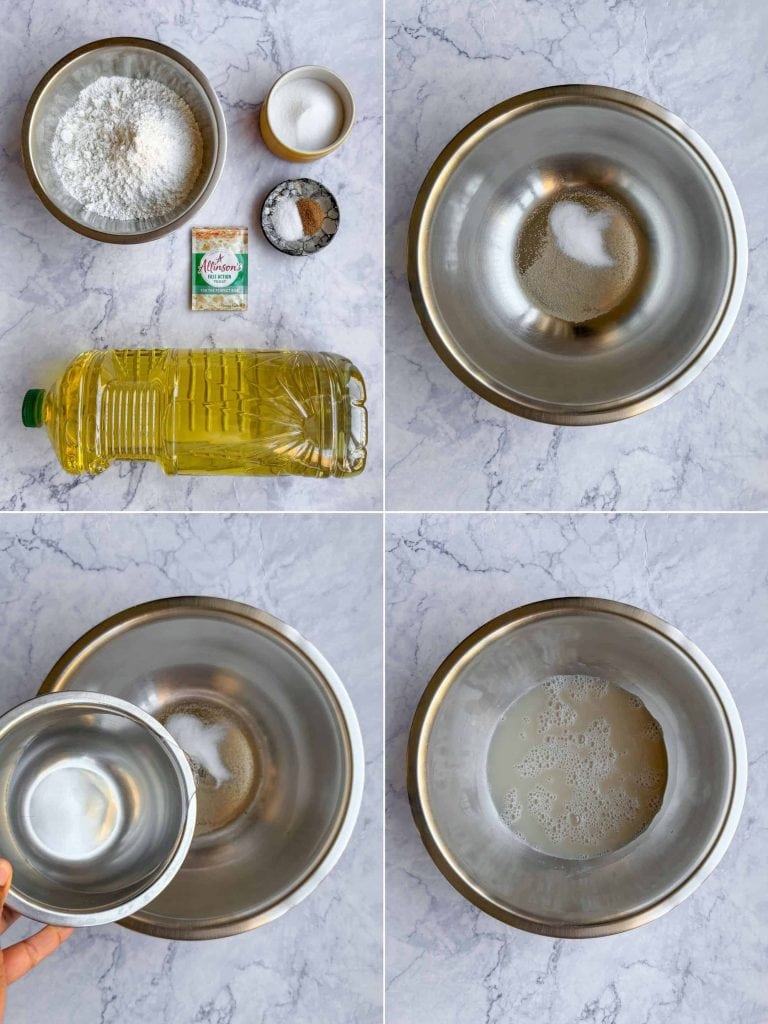
- Start with active yeast. Whisk the yeast with the warm water and a teaspoon of the sugar before adding the flour. Leave it for 5 to 10 minutes. By then, it should look foamy or at least frothy. If nothing happens, discard the mixture and start again with fresh yeast.
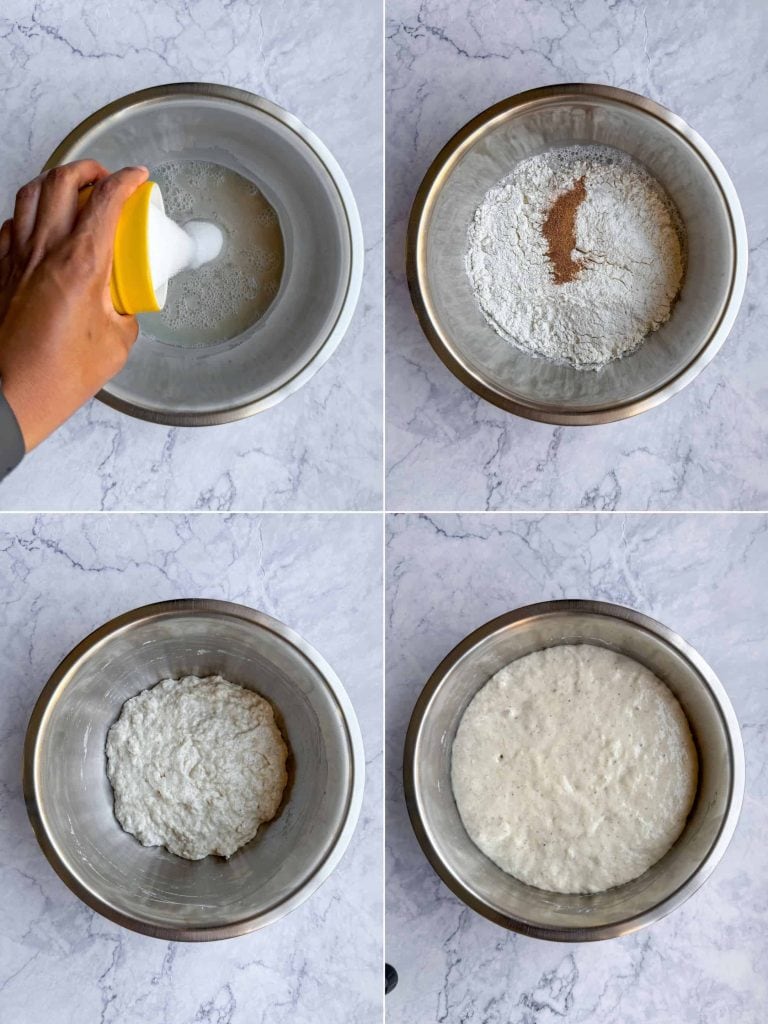
- Keep the batter soft and sticky. Puff puff batter should feel much softer and looser than bread dough. It might look too wet if you’ve never made puff puff before, but that’s exactly what you want. Resist the temptation to add more flour, as a soft batter creates the light and airy texture that makes puff puff so good.
- Fry at the right temperature. Aim for an oil temperature of around 170°C. Oil that’s too cool makes the puff puff absorb excess oil. Oil that’s too hot browns the outsides before the centres have cooked through.
Why the Batter Should Be Soft and Sticky
If you’ve never made a Puff Puff Recipe before, the batter might look much wetter than you expected. That’s completely normal. In fact, it’s one of the biggest signs you’re on the right track!
Unlike bread dough, puff puff batter isn’t designed to be kneaded or shaped by hand. Instead, it should be soft, sticky and stretchy enough to drop easily into the hot oil. That higher level of hydration is what allows the batter to expand as it fries, creating puff puff that are wonderfully light, airy and fluffy inside.
It can be tempting to add more flour, especially if you’re used to baking bread. Resist the urge. A stiffer batter produces heavier, denser puff puff with a tighter crumb, whereas a softer batter gives you the delicate texture that makes this Puff Puff recipe so special.
Don’t worry if handling the batter feels a little messy at first. That’s simply the nature of a good puff puff batter. In the next section, I’ll show you two easy ways to shape it, whether you’d like to use the traditional hand method or a beginner-friendly cookie scoop.
Two Ways to Shape Puff Puff
One of the trickiest parts of making a Puff Puff recipe is shaping the batter. Because it’s so soft and sticky, it takes a little practice to achieve those classic round balls. Don’t let that put you off, though. Even if your first batch isn’t perfectly shaped, it’ll still taste just as delicious.
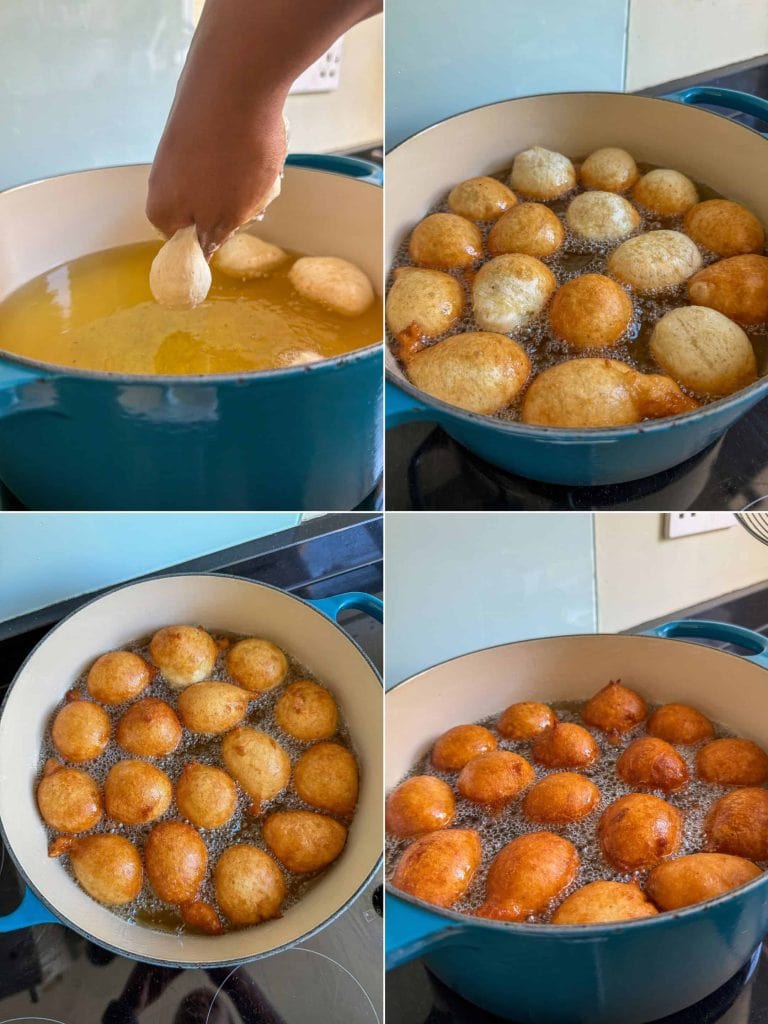
My grandmother always used the traditional method. Wet one hand, scoop up some batter and squeeze it between your thumb and forefinger so that a small ball drops directly into the hot oil. It looks effortless when you’ve watched someone do it for years, but it definitely takes practice. I’ve been making puff puff for years and I still don’t get perfectly round ones every time!
If you’re making this Puff Puff recipe for the first time, I recommend using a small cookie scoop instead. Dip the scoop into the hot oil before each portion, then fill it with batter and lower it as close to the surface of the oil as possible before releasing it. The results won’t be perfectly round, but it makes handling the batter much easier and helps minimise splashing.
Above all, don’t chase perfection. Whether your puff puff come out as neat little spheres or wonderfully wonky blobs, they’ll still be light, fluffy and utterly delicious.
Frying Tips
Getting the frying right is just as important as making the batter. A few small adjustments can make the difference between puff puff that’s light, golden and fluffy and puff puff that’s greasy or undercooked.
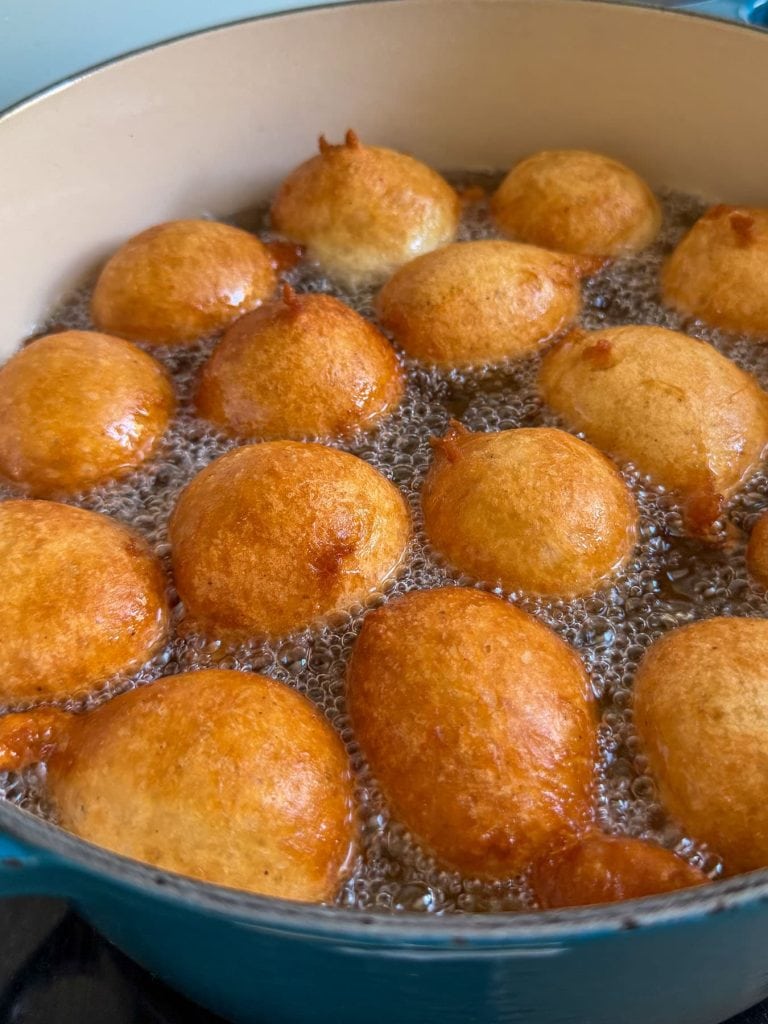
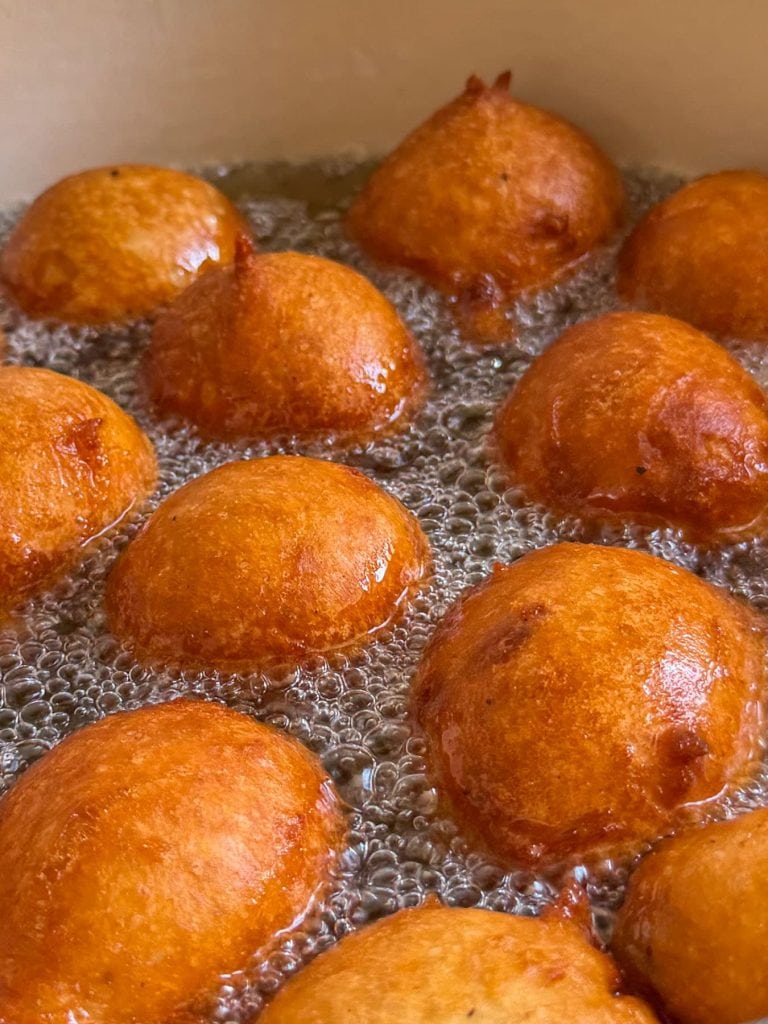
- Keep the oil at around 170°C. This is the sweet spot for perfectly cooked puff puff. If the oil is too cool, the batter will absorb excess oil and become greasy. If it’s too hot, the outsides will brown before the centres have had a chance to cook through.
- No thermometer? Use the batter test. Drop a small amount of batter into the oil. It should sizzle immediately and float to the surface within a few seconds. If it sinks without much activity, the oil isn’t hot enough. If it browns almost instantly, the oil is too hot.
- Fry in batches. Avoid overcrowding the pan, as this causes the oil temperature to drop and prevents the puff puff from cooking evenly. Give them a little room to move around the pan.
- Turn them regularly. Rotate the puff puff as they cook so they brown evenly on all sides. If your batter has risen particularly well, you might even find some of them flip themselves over without any help.
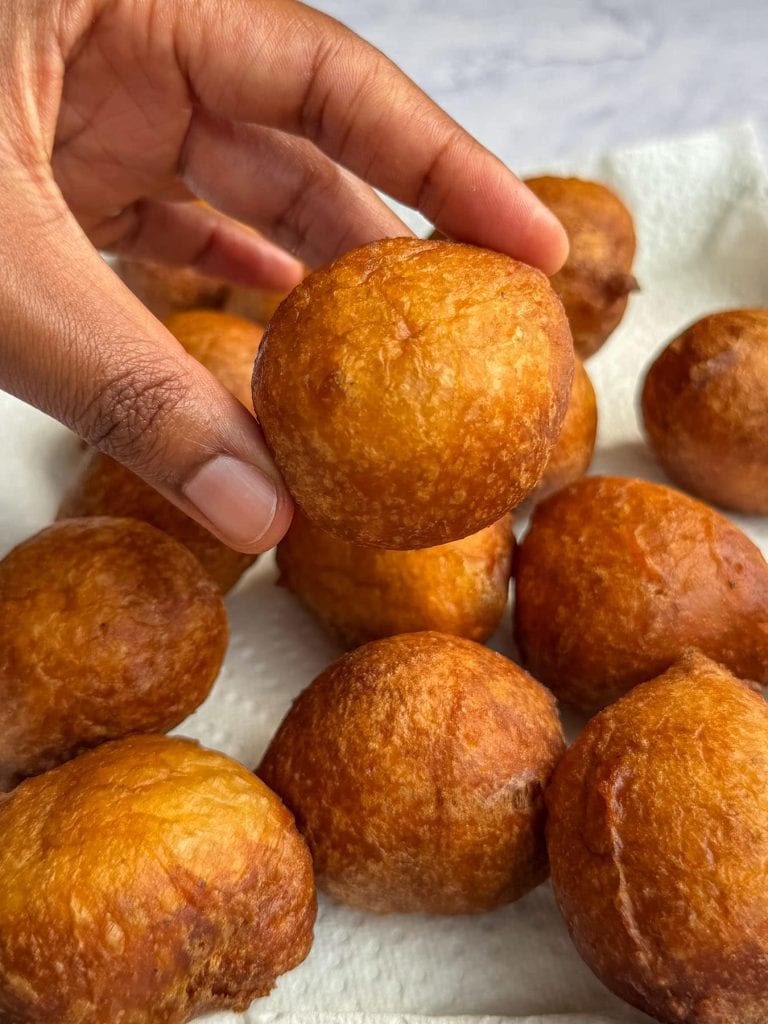
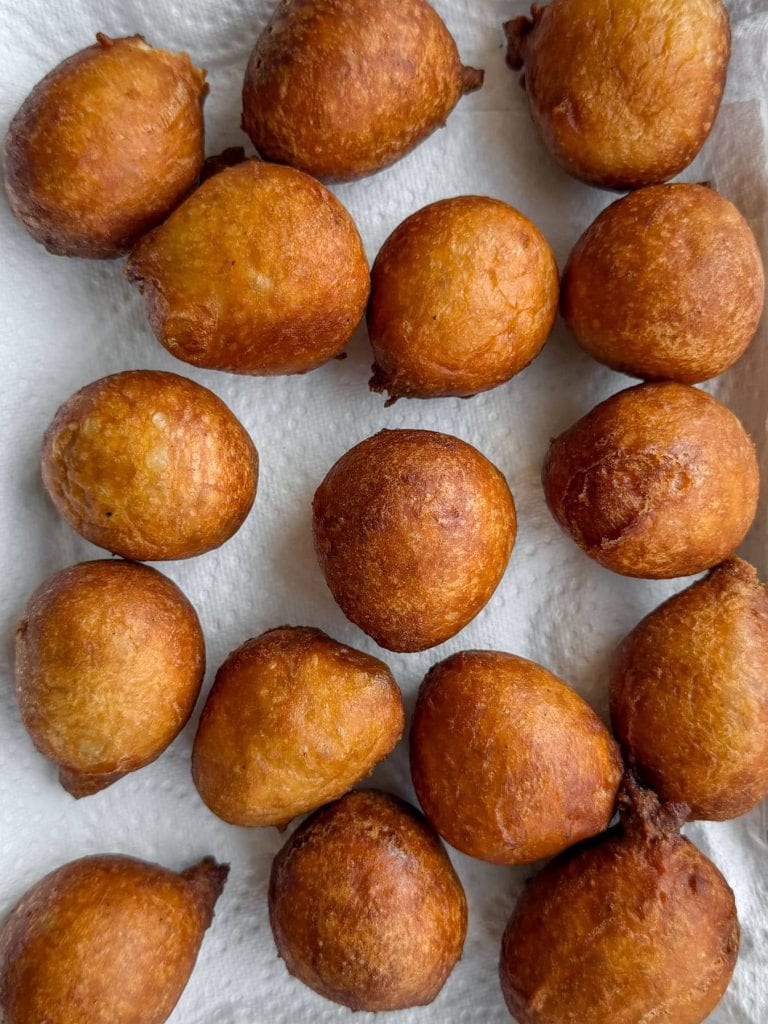
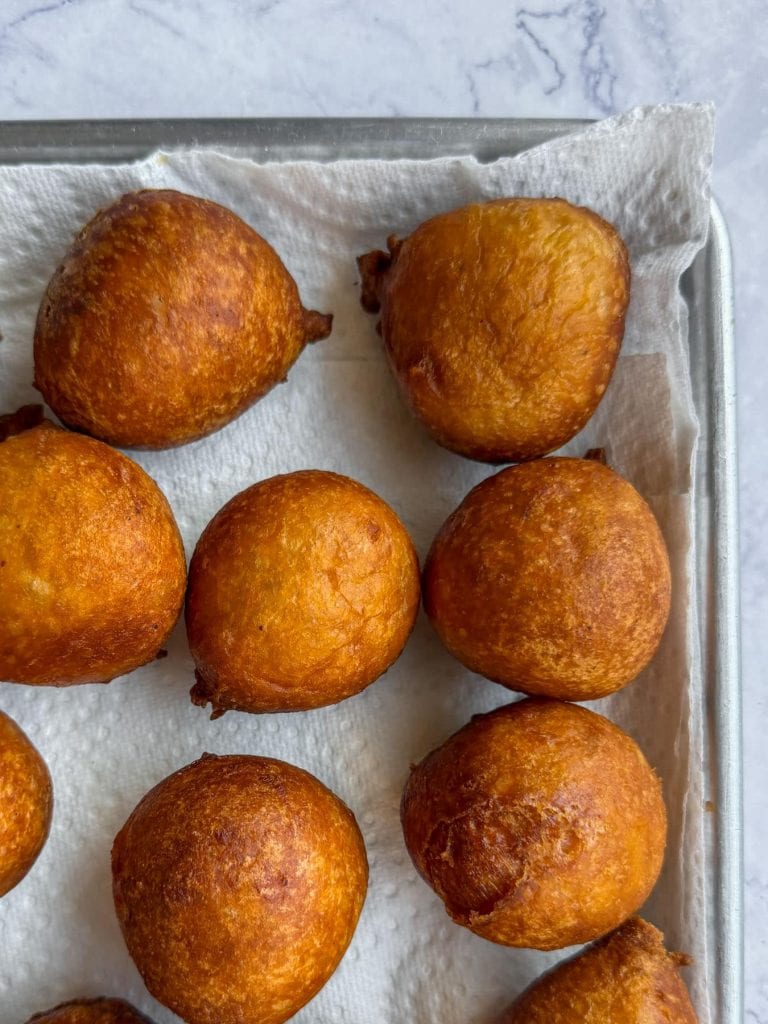
- Serve them while they’re warm. Once the puff puff are beautifully golden, transfer them to a plate lined with kitchen paper to drain any excess oil. They’re at their absolute best while still warm, when the outside is lightly crisp and the inside is soft, fluffy and airy.
What to Serve with Puff Puff
One of the things I love most about this Puff Puff recipe is how versatile it is. Enjoy puff puff as a snack, pair it with a hot drink or serve it as part of a more substantial meal.
- Simply as they are. Freshly fried puff puff are delicious served warm, either plain or with a light sprinkle of sugar.
- With tea or coffee. Their soft, fluffy texture makes them the perfect afternoon treat.
- With stewed beans. In Cameroon, people often serve Cameroonian beignets with stewed beans (beignet haricots), creating a hearty and satisfying meal.
- For celebrations. Puff puff are a staple at parties, family gatherings and festive occasions across West Africa, making them perfect whenever you’re feeding a crowd.
Frequently Asked Questions
Why didn’t my puff puff rise?
Inactive yeast is usually the cause. Before adding the flour, make sure the yeast becomes foamy or at least frothy after sitting in the warm water with a little sugar. If nothing happens, start again with fresh yeast.
Why are my puff puff greasy?
Oil that’s too cool is usually the culprit. Aim for 170°C and avoid overcrowding the pan, as this lowers the oil temperature.
Why are my puff puff raw in the middle?
Your oil was probably too hot. The outsides browned too quickly, leaving the centres undercooked. Lower the heat slightly and keep an eye on the oil temperature between batches.
Do my puff puff need to be perfectly round?
Not at all! Traditional Nigerian puff puff and Cameroonian beignets naturally vary in size and shape. I actually think those slightly wonky ones have the most charm.
More West African Recipes You’ll Love
If you enjoyed this Puff Puff recipe, here are a few more West African recipes I think you’ll love.
- Plantain Puff Puff – A delicious twist on the classic, made with ripe plantains for an even softer texture and natural sweetness.
- Nigerian Jollof Rice (My Mum’s Recipe) – My family’s traditional recipe for rich, smoky jollof rice, passed down from my mum.
- One-Pot Jollof Rice & Chicken – An easy one-pot version that delivers all the classic flavours with less effort.
- Nigerian Beef Suya – Smoky, spicy skewered beef coated in an irresistible suya spice blend.
Puff Puff (Cameroonian Beignets)
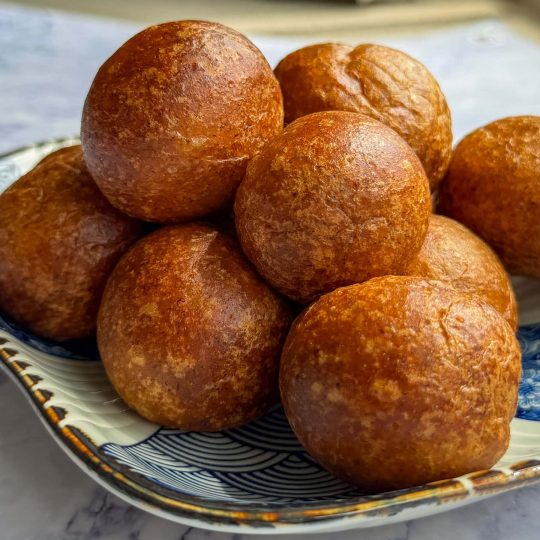
Puff puff, aka soft, golden fried doughnuts with a hint of nutmeg, hold a very special place in my heart. Being half Nigerian and half Cameroonian, I grew up knowing them by two different names: puff puff in Nigeria and beignets in Cameroon. The main difference, at least in my experience, is how they’re served. Puff puff is usually enjoyed as a snack on its own and is a staple at parties, family gatherings and even after church. Beignets are also eaten as a snack but are more commonly served alongside stewed beans (beignet haricots), making them more of a complete meal.
- Prep Time: 20 minutes, plus proving
- Total Time: 2 hours 20 minutes
- Yield: 6 servings 1x
Ingredients
- 7g active dried yeast
- 320ml warm water (around 43°C)
- 100g white granulated or caster sugar
- 400g plain flour
- 6g fine sea salt
- ½ tsp ground nutmeg
- vegetable oil (or any neutral oil), for deep frying
Instructions
- In a large mixing bowl, whisk together the active dried yeast, warm water and 1 teaspoon of the sugar. Leave to stand for 5 to 10 minutes, or until foamy. At the very least, the mixture should look frothy. If nothing happens, your yeast is no longer active and you’ll need to start again with a fresh packet.
- Add the remaining sugar, flour, salt and nutmeg. Using a rubber spatula, wooden spoon or your hand (if you’d like to do it the traditional way), mix until a smooth, thick batter forms. It should be soft, sticky and stretchy.
- Cover the bowl with cling film and leave somewhere warm until the batter has doubled in size. This can take as little as 45 minutes on a hot day or up to 2 hours on a colder one.
- Fill a large, deep Dutch oven or heavy-based saucepan halfway with vegetable oil and heat it to 170°C. If you don’t have a thermometer, drop a small amount of batter into the oil. It should sizzle immediately and float to the surface within a few seconds.
- The trickiest part of this recipe isn’t frying the puff puff – it’s shaping the very soft batter. The traditional method is to wet one hand, scoop up some batter and squeeze it through your thumb and forefinger directly into the hot oil to form small, ping-pong-sized balls.
- If that feels a little daunting, a small cookie scoop works brilliantly too. Dip the scoop into the hot oil first, then scoop up the batter and carefully lower it as close to the oil as possible before releasing it. Work in batches, filling the pot without overcrowding it.
- Whichever method you use, don’t worry if your puff puff aren’t perfectly round. Mine certainly aren’t! They’ll still taste just as delicious.
- Fry the puff puff for 2 to 3 minutes per side, turning them occasionally with a slotted spoon or tongs, until they’re evenly golden brown. Keep an eye on the oil temperature throughout. If it gets too hot, the outsides will brown before the centres have cooked through.
- Transfer the cooked puff puff to a plate lined with kitchen paper to drain any excess oil.
- Serve warm, either as they are or with an extra sprinkle of sugar.
Notes
Check your yeast before you begin. If the yeast doesn’t become foamy or at least frothy after 5 to 10 minutes, it’s no longer active and the batter won’t rise properly.
The batter should be sticky. It will be much softer than bread dough, so resist the temptation to add extra flour.
Don’t overcrowd the pan. Frying in batches helps the puff puff cook evenly and prevents the oil temperature from dropping too much.
They’re best served fresh. Puff puff are at their absolute best while still warm, when the outside is lightly crisp and the inside is soft and fluffy.