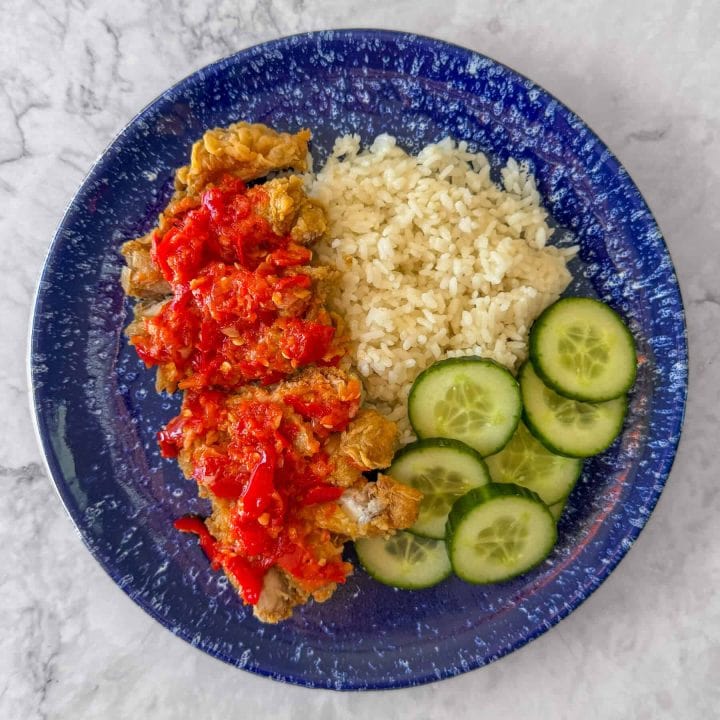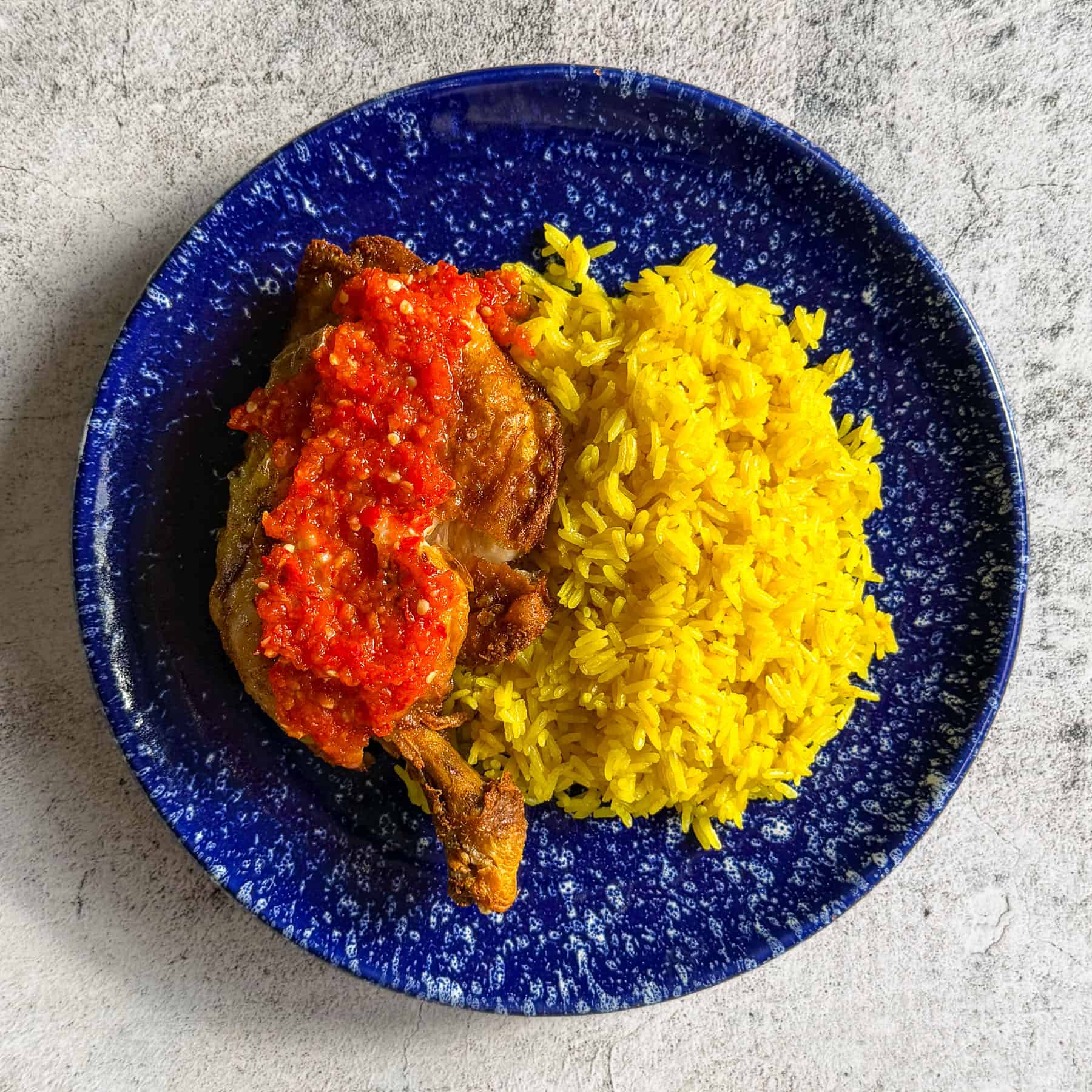
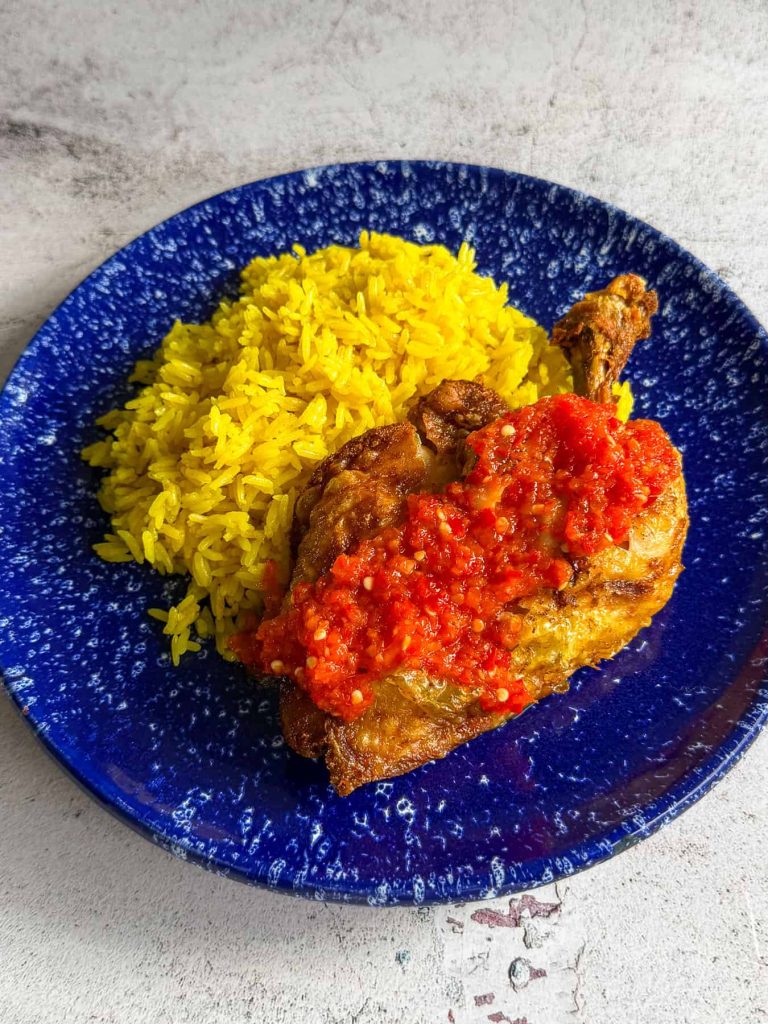
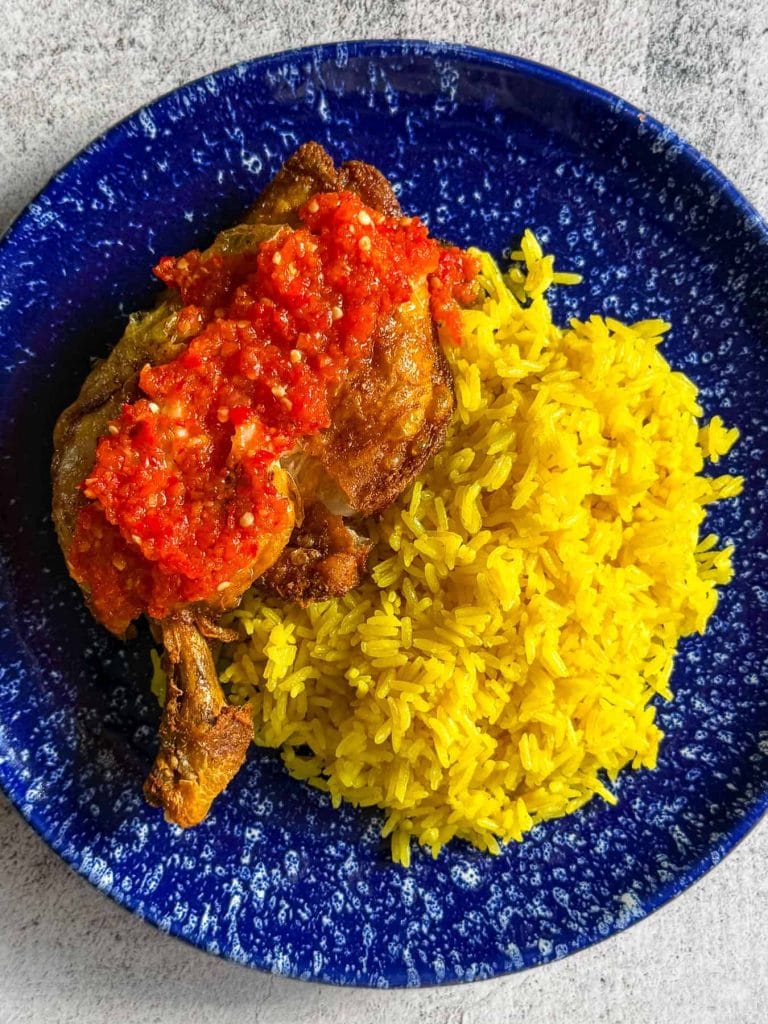
Ayam Penyet is an Indonesian fried chicken dish that gets gently smashed and served with a fiery sambal. The name literally translates to smashed chicken, and that final step is what makes it so distinctive. Smashing the chicken cracks the skin and exposes the tender meat, allowing the sambal to seep into every nook and cranny.
My version starts with chicken legs marinated in fresh turmeric, ginger, garlic and coriander. I then gently simmer them with lemongrass and lime leaves before frying them until golden and crisp. I serve the chicken with my go-to sambal and fragrant golden rice cooked in the leftover broth. It’s an incredibly satisfying combination of crispy yet juicy chicken, punchy chilli and deeply savoury rice, and making the most of that gorgeous cooking broth is an absolute must.
Why You’ll Love This Ayam Penyet Recipe
- Incredibly flavourful chicken. Marinating and simmering the chicken in aromatic spices infuses it with flavour before it even hits the hot oil.
- Crispy outside, juicy inside. Simmering the chicken first means the meat is already tender and cooked through. The final fry is all about developing that golden exterior.
- A punchy homemade sambal. I pound fresh chillies, garlic and shallots together before finishing them with hot oil, lime juice and fish sauce. It’s spicy, savoury and wonderfully zingy.
- The most delicious golden rice. Rather than throwing away the turmeric-infused chicken broth, I use it to cook the jasmine rice. It’s such a simple way to add another layer of flavour.
- An air-fryer option. You can skip the deep-frying if you’d prefer, although the skin won’t get quite as crispy.
What Is Ayam Penyet?
Ayam penyet is a popular Indonesian dish featuring fried chicken that you gently smash or press before serving with sambal. It’s particularly associated with East Java, although you’ll find variations throughout Indonesia and neighbouring countries.
Unlike Western-style fried chicken, which often has a seasoned flour coating, ayam penyet typically starts with chicken simmered in aromatic spices and herbs. This initial cooking stage develops flavour and tenderises the meat. You then fry the chicken until golden before gently smashing it, traditionally with a pestle and mortar.
The smashing isn’t about completely flattening the chicken. Instead, it breaks open the exterior and loosens the meat, creating little crevices for the sambal to cling to. And given how delicious the sambal is, you definitely want as much of it on your chicken as possible.
Ayam Penyet vs Ayam Goreng vs Ayam Geprek: What’s the Difference?
These three Indonesian chicken dishes share some similarities, but there are important differences in how you prepare and serve them.
- Ayam goreng simply means fried chicken in Indonesian. It’s a broad category rather than one specific recipe, with different preparations across the country. Many traditional versions involve simmering chicken in a fragrant spice mixture before frying it. Indonesians call this technique ungkep, and it’s also central to making ayam penyet.
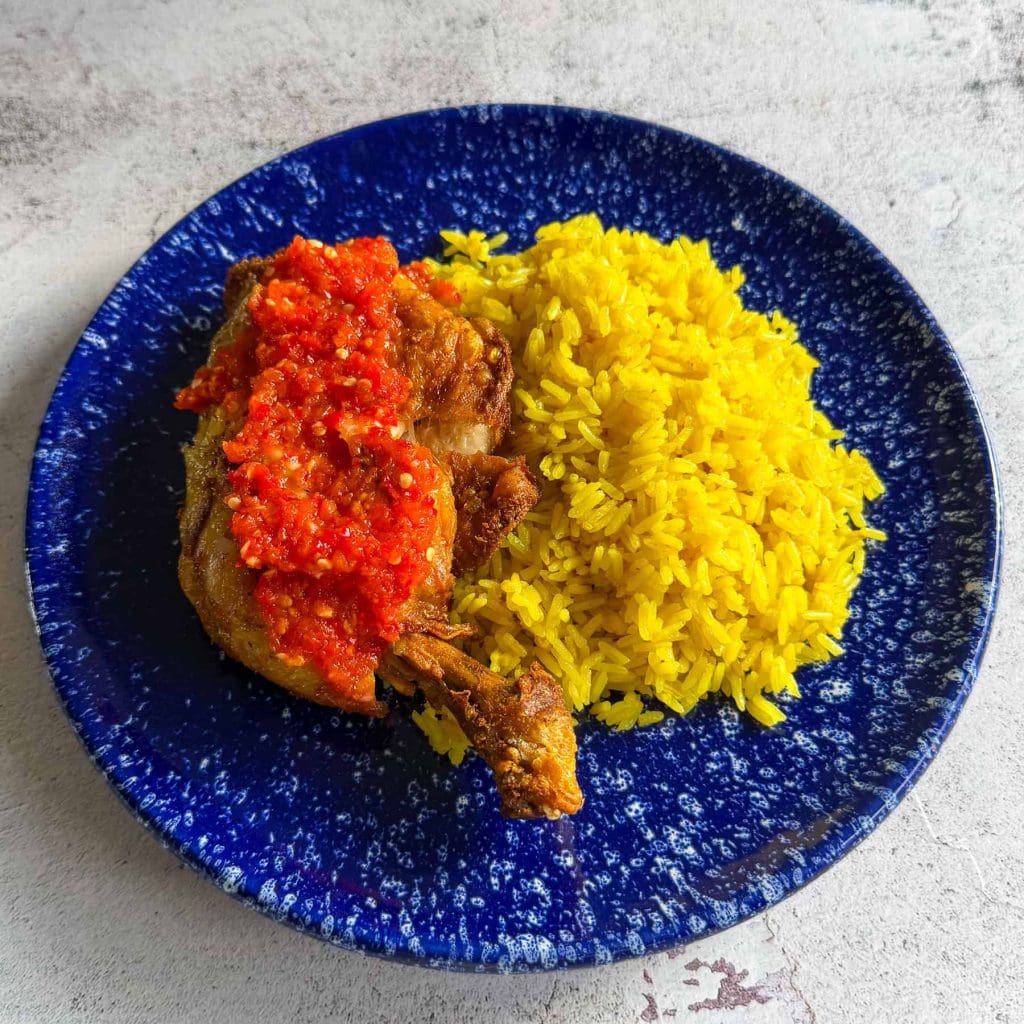
- Ayam penyet builds on that style of fried chicken. You typically simmer the chicken with aromatics, fry it without a flour coating, then smash it and serve it with sambal. The result is tender, deeply flavoured meat with a golden exterior and plenty of chilli.
- Ayam geprek, meanwhile, generally starts with flour-coated fried chicken, giving it a thicker, crunchier crust. You smash the chicken more vigorously and often mix it directly with a fiery sambal. I’ve actually got a recipe for Ayam Geprek on the website if you’d like to try that version too.
So while ayam penyet shares its aromatic simmering technique with many versions of ayam goreng, it also shares the signature smashing technique with ayam geprek. The differences lie in the coating, texture and how the chicken and sambal come together.
Why Simmer the Chicken Before Frying?
If you’re used to Western-style fried chicken, simmering the chicken before frying it might seem a little unusual. However, many Indonesian fried chicken recipes use this technique, and it serves two important purposes.
- Firstly, it allows the chicken to absorb flavour as it cooks. The marinade contains fresh turmeric, ginger, garlic, shallots and coriander, while lemongrass and lime leaves bring citrusy, aromatic notes to the broth. As the chicken gently simmers, those flavours work their way into the meat, rather than sitting solely on the surface.
- Secondly, it cooks the chicken through before frying. This means the final fry can be relatively short, focusing on developing a golden exterior rather than cooking the meat all the way to the bone. It’s particularly useful when working with whole chicken legs, which would otherwise need considerably longer in the oil.
The key is to keep the simmer gentle. You want the chicken to cook through and become tender without boiling aggressively or falling apart. Around 20 minutes works for smaller chicken legs, although larger pieces may need longer.
And there’s another reason I love this method: the cooking broth is far too delicious to waste. Once the chicken is ready, I strain the broth and use it to cook the jasmine rice. The grains absorb all that turmeric, ginger, lemongrass and chicken flavour, creating a gorgeous golden rice that complements the finished dish beautifully.
How to Fry Ayam Penyet Without Excessive Spluttering
Because the chicken has already simmered in liquid, it carries quite a bit of surface moisture. When that moisture meets hot oil, things can get messy very quickly. I learnt this the hard way while testing this recipe!
A few things will help:
- Dry the chicken. Leave it uncovered on a wire rack for at least 20 minutes, then gently pat away any remaining moisture with kitchen paper. If you have time, an hour or overnight in the fridge is even better.
- Keep the oil at 170°C. The chicken is already cooked through, so you’re only frying it to develop a golden, crispy exterior.
- Use a deep, heavy-bottomed pan. Never fill it more than one-third full, and fry in batches.
- Consider a splatter guard. A fine-mesh screen helps contain hot oil droplets while allowing steam to escape.
Some spluttering is inevitable, but these precautions will help keep it manageable.
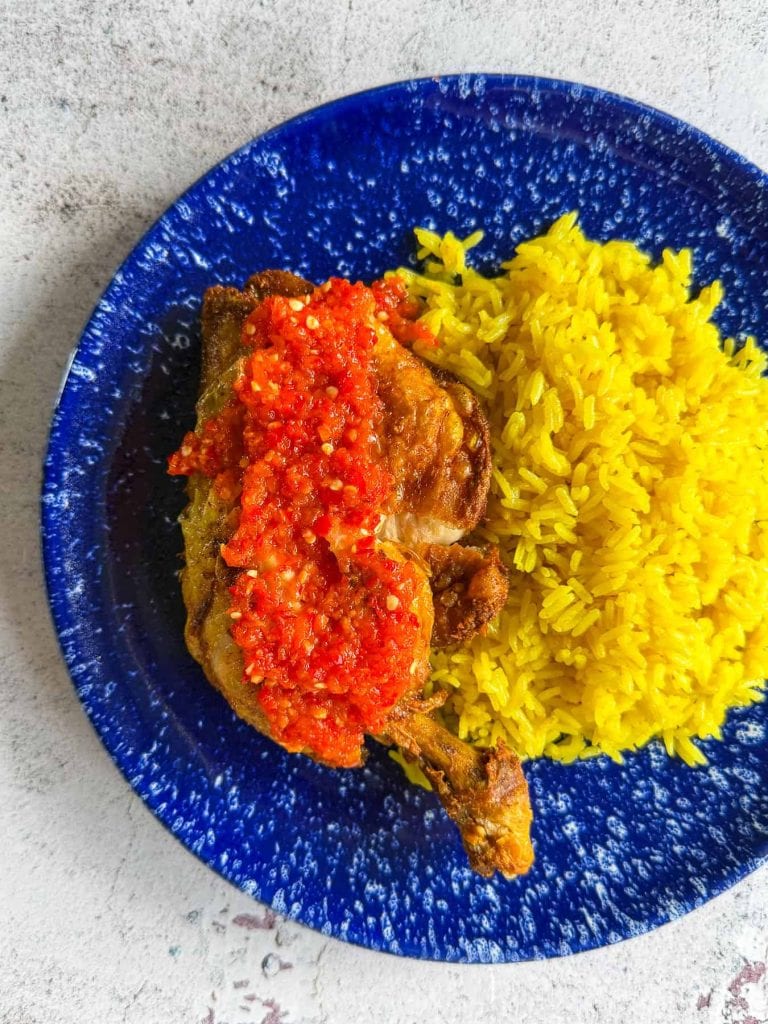
How to Make the Best Sambal for Ayam Penyet
I use the same sambal as my Ayam Geprek, combining fresh chillies, garlic and shallots with hot oil, sugar, fish sauce and lime juice. Two things make a difference:
- Pound the ingredients by hand. A pestle and mortar crushes the aromatics and releases their juices, creating a more textured sambal. A food processor works too, but I prefer the results from pounding.
- Bloom the aromatics with hot oil. The heat releases their fragrance and softens some of the harsh, raw edge. Pour carefully into a heatproof bowl, as the mixture will sizzle.
Taste before serving, adjusting the sugar, fish sauce and lime until you have a good balance of heat, sweetness, saltiness and acidity.
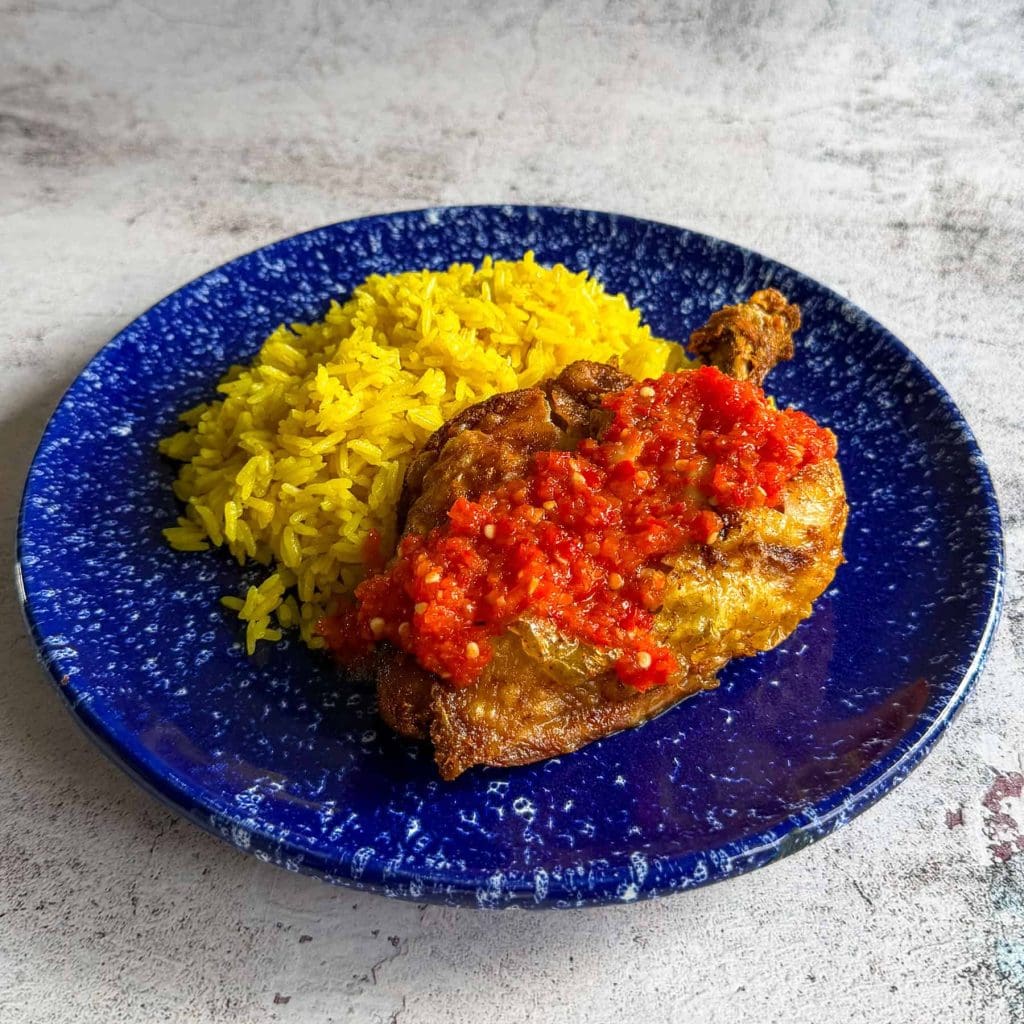
Don’t Waste the Broth: Make Golden Rice
The leftover ayam penyet chicken broth is packed with turmeric, ginger, lemongrass and lime leaf flavour, so I use it to cook the jasmine rice.
Simply strain the broth and measure out 500ml for 350g jasmine rice. Rinse the rice until the water runs almost clear, then bring it to a boil with the broth. Cover, reduce the heat to low and cook for 12 minutes. Turn off the heat and leave it covered for another 5 minutes.
You’ll end up with beautifully fragrant, golden rice that complements the chicken and sambal perfectly.
Can You Make Ayam Penyet in an Air Fryer?
Absolutely, although deep-frying gives you crispier skin.
- Preheat your air fryer to 240°C for 5 minutes. Arrange the chicken skin-side down and cook for 5 minutes. Flip, lightly spray with oil and cook for another 5–10 minutes until golden.
- Once cooked, gently smash the chicken with a pestle, rolling pin or meat mallet. You want to crack the skin and expose the meat without splintering the bones.
Make Ahead & Storage
- Raw marinated chicken: Marinate the chicken for up to 48 hours in the fridge. I wouldn’t go beyond that, as prolonged exposure to salt can affect the texture of the meat.
- Simmered chicken: Once cooked, transfer the chicken to a wire rack and let it cool before refrigerating. If time allows, leave it uncovered in the fridge for an hour or overnight to dry out the skin, much like you would with confit duck. This helps reduce splattering and encourages a crispier finish when frying.
- Fried chicken: Best enjoyed immediately, while the skin is still golden and crisp. Refrigerate any leftovers for up to 48 hours and reheat in the oven or air fryer until piping hot.
Frequently Asked Questions
Can I use chicken thighs instead of whole legs?
Yes! Bone-in, skin-on thighs work beautifully. Adjust the simmering time according to their size.
Can I use ground turmeric instead of fresh?
Absolutely. Substitute 30g fresh turmeric with 2 teaspoons of ground turmeric.
Can I make the sambal less spicy?
Yes. Use fewer chillies or remove some of their seeds and membranes.
What do you serve with ayam penyet?
I serve mine with golden jasmine rice and sambal. Traditionally, ayam penyet often comes with lalapan, fresh vegetables such as cucumber, cabbage and herbs.
More Fried Chicken Recipes You’ll Love
If you love this Ayam Penyet recipe and are a big fried chicken fan, here are you other recipes I think you’ll love.
- Ayam Geprek (Indonesian Smashed Fried Chicken): Crunchy, flour-coated fried chicken with fiery sambal.
- Lemongrass Fried Chicken: Aromatic fried chicken with a lemongrass hot honey drizzle.
- Tom Yum Fried Chicken: Crispy chicken infused with fragrant tom yum flavours.
- Crispy Coconut Chicken: Golden, coconut-crusted chicken with a Thai-inspired salad.
- Chicken Katsu: Juicy chicken with a shatteringly crisp panko coating.
Ayam Penyet (Indonesian Fried Chicken)
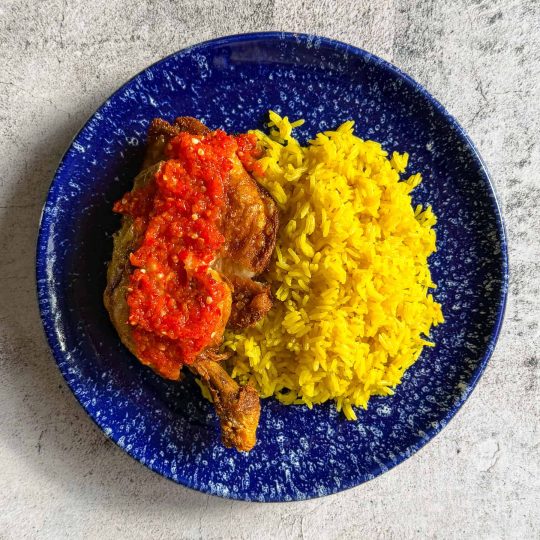
Ayam Penyet is an Indonesian dish of fried chicken that’s gently smashed so the fiery sambal can seep into every nook and cranny. My version features chicken legs simmered in a fragrant turmeric, ginger and lemongrass broth before being fried until golden and crisp. I serve it with my go-to sambal and golden jasmine rice cooked in the leftover chicken broth, which is far too delicious to waste.
- Prep Time: 20 minutes, plus optional marinating
- Total Time: 1 hour 10 minutes, plus optional marinating
- Yield: 4 1x
Ingredients
For the chicken:
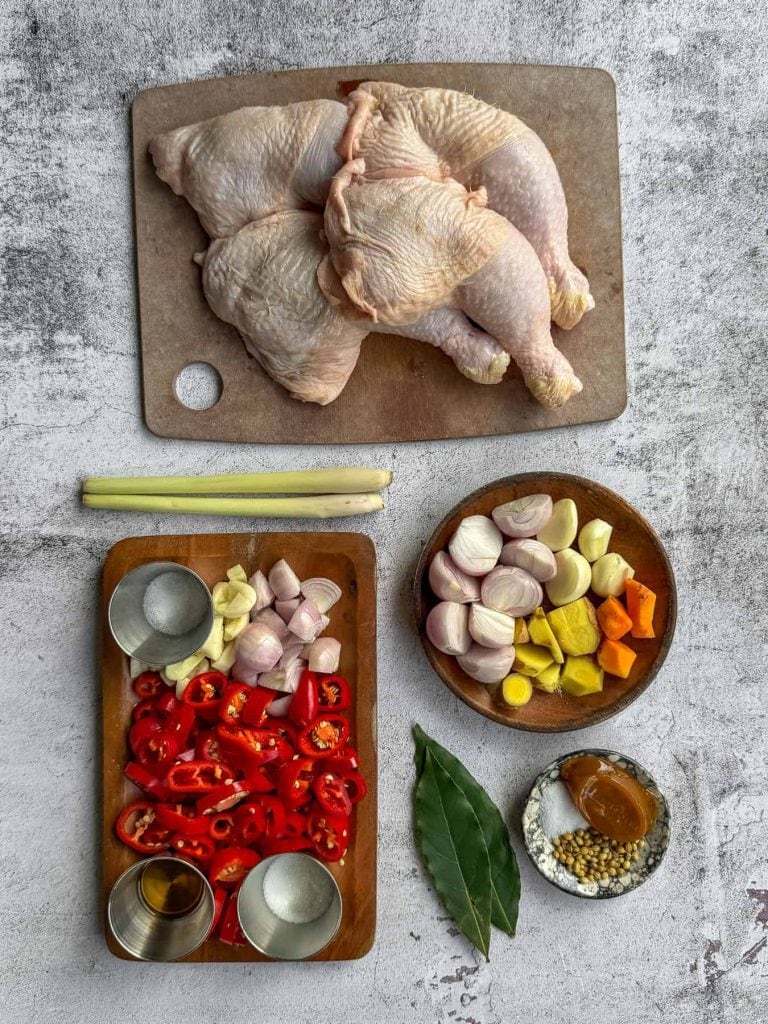
- 4 small round shallots, quartered
- 4 large garlic cloves
- 30g fresh ginger (peeled weight), roughly chopped
- 30g fresh turmeric (peeled weight), roughly chopped, or 2 tsp ground turmeric
- 1 tsp coriander seeds
- 2 tsp salt
- 4 tbsp water
- 1kg bone-in, skin-on chicken legs (thigh and drumstick attached)
- 500ml chicken stock
- 2 lemongrass stalks, tough outer layers removed and bruised
- 4 fresh lime leaves, roughly torn
- vegetable oil (or any neutral oil), for deep-frying
For the sambal:
- 8 red chillies, roughly chopped
- 4 garlic cloves, roughly chopped
- 2 small round shallots, roughly chopped
- ½ tsp salt
- 75ml vegetable oil
- 2 tsp sugar
- 1 tsp fish sauce
- juice of ½ lime, or more to taste
For the golden rice:
- 350g jasmine rice
Instructions
- Make the marinade. Place the shallots, garlic, ginger, turmeric, coriander seeds, salt and water in a blender. Blitz until smooth.
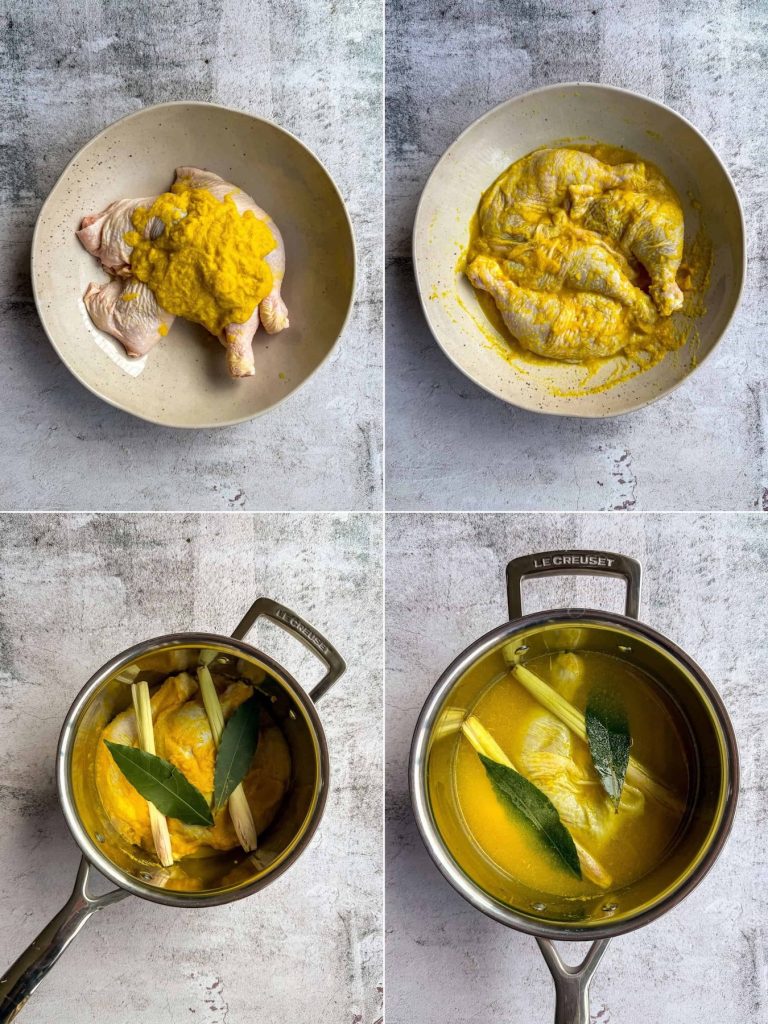
- Marinate the chicken. Place the chicken in a large saucepan (this saves on washing up!) and add the marinade. Rinse the blender with a couple of tablespoons of water to get every last bit out, then carefully toss the chicken until evenly coated. A word of warning: fresh turmeric stains! If you have time, leave the chicken to marinate in the fridge for at least 1 hour, or preferably overnight. It really does make a difference. If you’re short on time, you can continue straight away.
- Simmer the chicken. Add the chicken stock, lemongrass and lime leaves. Bring to a gentle simmer over a medium-high heat, stirring to incorporate the marinade into the stock and prevent it from sticking to the bottom of the pan. As soon as the liquid starts to simmer, reduce the heat to medium-low and cook gently for 20 minutes, or until the chicken is cooked through (larger legs may need longer).
- Make the sambal. Meanwhile, place the chillies, garlic, shallots and salt in a pestle and mortar. Pound into a rough paste. This takes a little while, so consider it your arm workout for the day! If you don’t have a pestle and mortar, or simply want to make life easier, you can use a food processor. That said, I much prefer the texture of a hand-pounded sambal.
- Finish the sambal. Heat the vegetable oil in a small saucepan until shimmering, then carefully pour it over the chilli paste. Stir well, then add the sugar, fish sauce and lime juice. Taste and adjust as needed: more sugar for sweetness, lime for zing, or fish sauce or salt for savoury depth. Set aside.
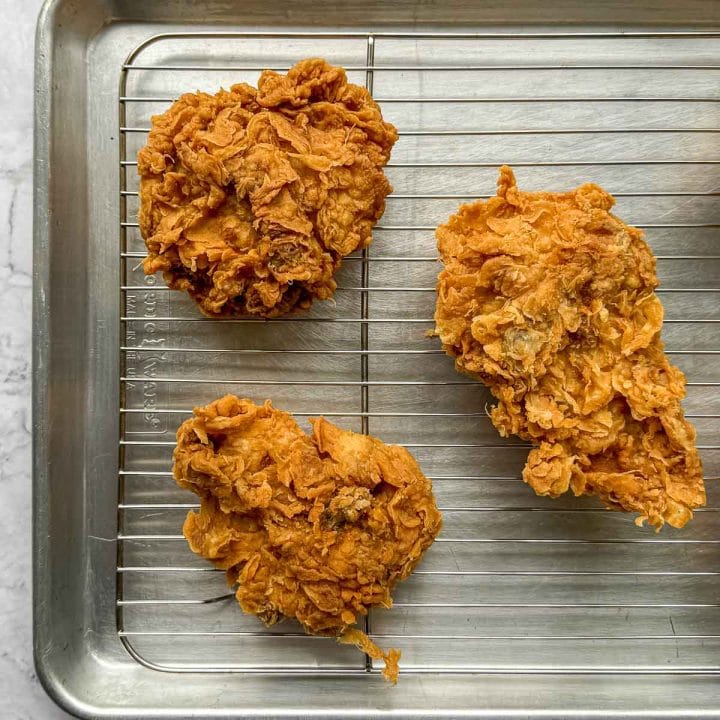
- Dry the chicken. Carefully lift the chicken out of the broth and transfer it to a wire rack. Leave to dry for 20 minutes. Water and hot oil don’t mix, so this step is important for minimising spluttering when you fry the chicken.
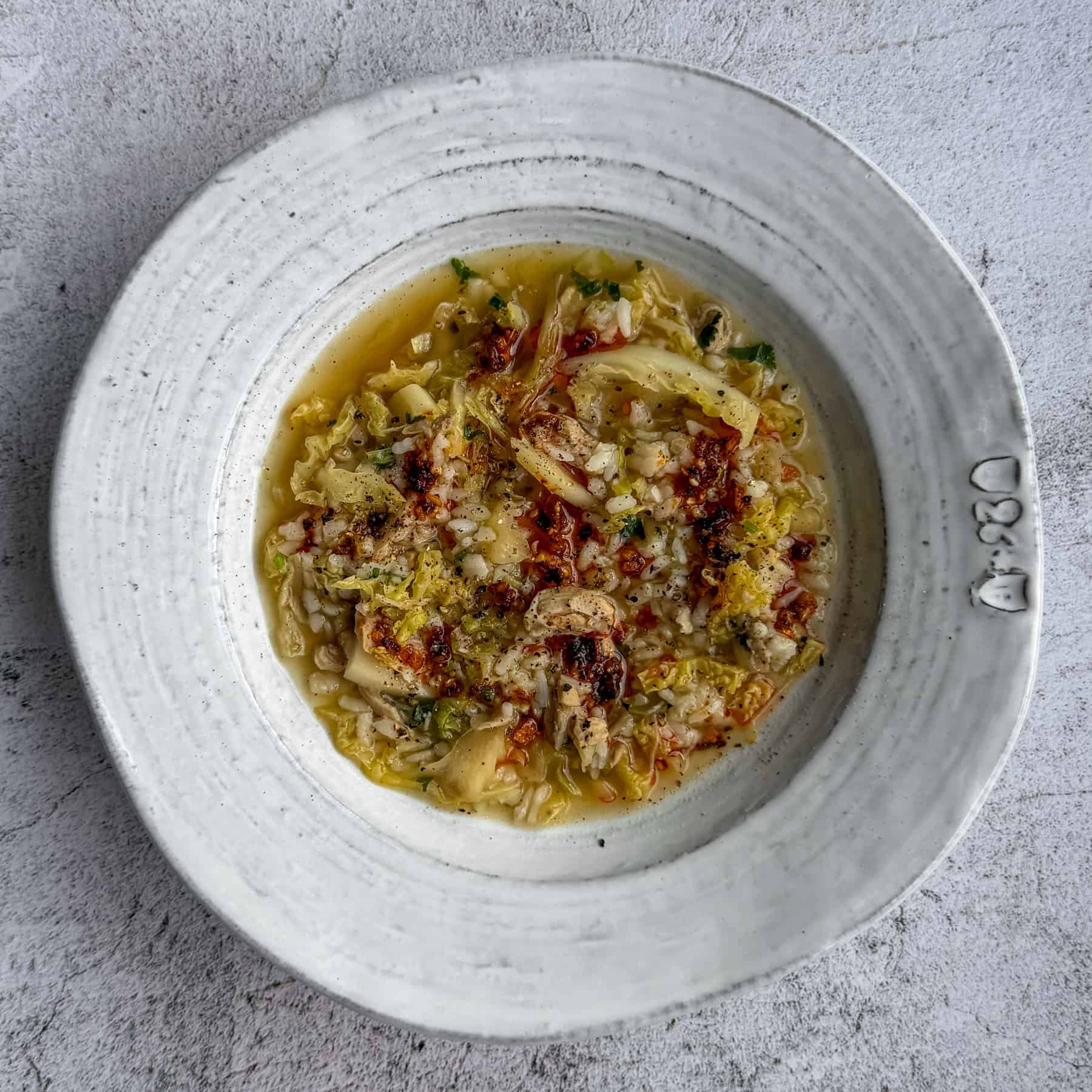
- Prepare the broth for the rice. Meanwhile, strain the cooking broth into a bowl or jug, discarding the aromatics. Measure out 500ml for the rice. If you have any broth left over, you can serve it hot alongside the meal as a little soup.
- Cook the golden rice. Rinse the jasmine rice until the water runs almost clear, then add it to the saucepan you used to cook the chicken. Pour in the reserved 500ml of broth and bring to a simmer over a medium-high heat. Cover, reduce the heat to low and cook for 12 minutes. Remove the saucepan from the heat and leave the rice to steam, covered, for 5 minutes before fluffing with a fork.
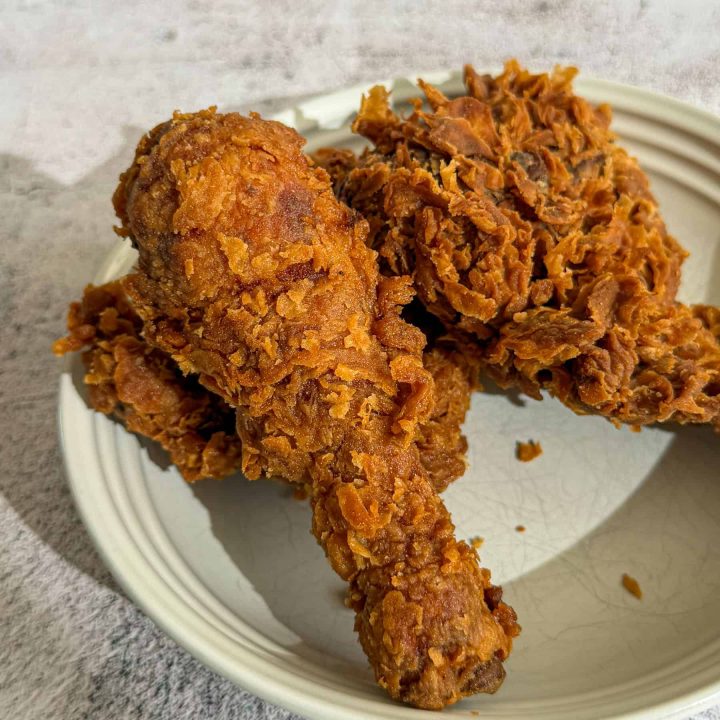
- Fry the chicken. While the rice cooks, fill a large, wide, deep saucepan or Dutch oven one-third full with vegetable oil. Heat to 170°C. Carefully lower the chicken into the hot oil, working in batches if necessary. The oil will bubble vigorously at first, so take care. Fry for 2 to 3 minutes per side, or until golden and crisp all over. Transfer to a wire rack to drain.
- Alternatively, air-fry the chicken. If you’d rather not deep-fry, preheat your air fryer to 240°C for 5 minutes. Arrange the chicken in a single layer, skin-side down, and air-fry for 5 minutes. Flip, lightly spray with oil and cook for a further 5 to 10 minutes, or until golden brown and beginning to crisp. It won’t be quite as crispy as the deep-fried version, but it’ll still be delicious.
- Smash the chicken. Transfer the chicken to a chopping board and gently smash each piece with a pestle, rolling pin or meat mallet. You want to crack the skin and expose the tender meat without completely flattening it.
- Serve. Spoon over as much sambal as you like and serve immediately with the fragrant golden rice.
Notes
Marinate ahead if you can. One hour makes a difference, but overnight is even better.
Don’t skip the drying step. Excess moisture causes hot oil to splutter. Giving the chicken time to dry on a wire rack makes frying safer and helps the skin crisp up.
Use the cooking broth for the rice. It’s packed with turmeric, ginger, lemongrass and chicken flavour. If you have any left over after measuring out 500ml, serve it hot alongside the meal.
Adjust the sambal to taste. The heat will depend on the chillies you use. Add more sugar for sweetness, lime for acidity or fish sauce for extra savouriness.
Smash, don’t flatten. You only need to crack the skin and loosen the meat slightly. The chicken should still hold its shape.