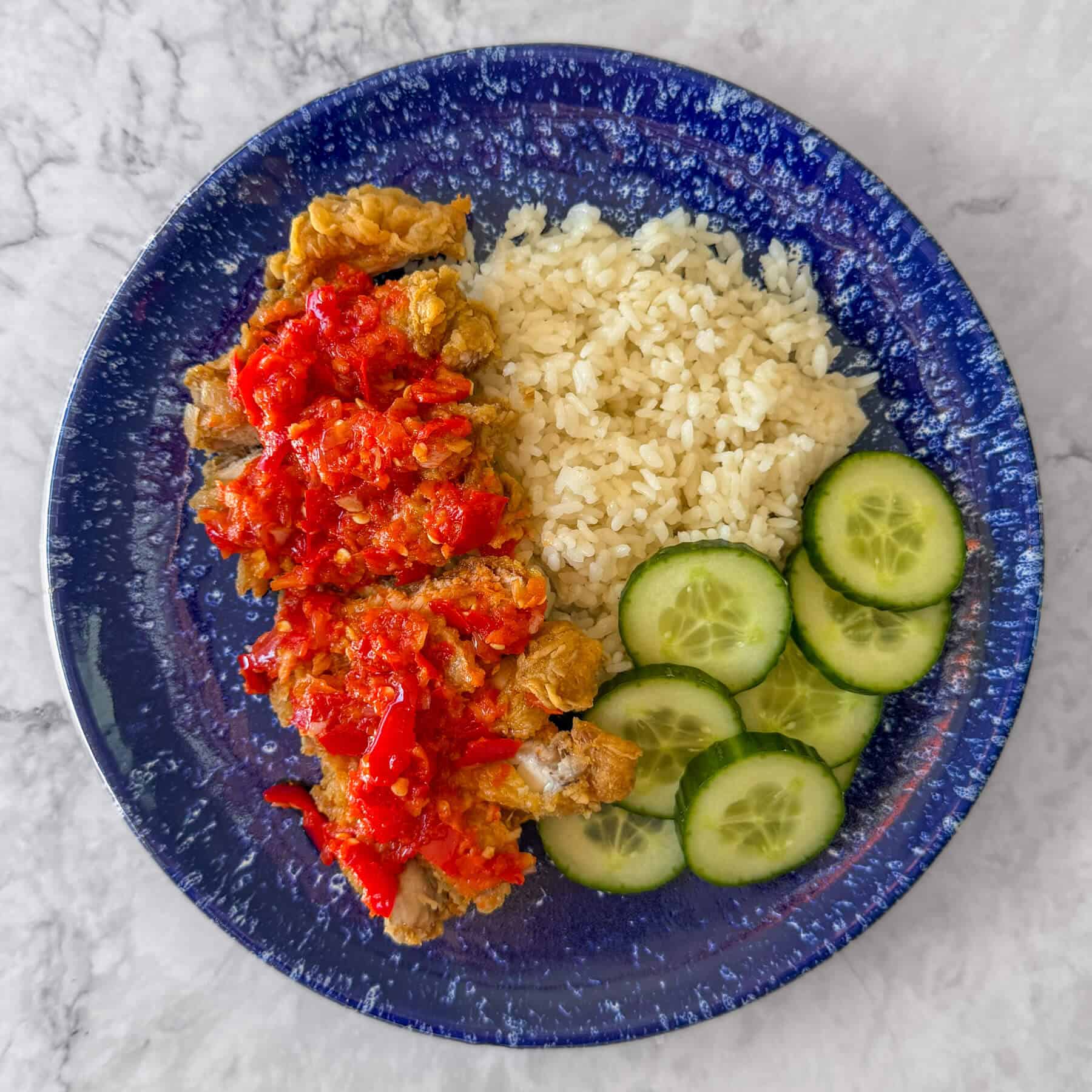
Ayam Geprek is all about contrast — crisp, craggy fried chicken smashed just enough to open it up, then dressed with a punchy, garlicky sambal while it’s still hot. The chicken absorbs it, softening slightly in places, while the edges stay crisp. It’s messy in the best way.
It’s a staple across Indonesia, usually served simply with rice and something fresh on the side. What defines it is that final step — smashing the chicken before adding the sambal. It’s not just for effect; it creates uneven surfaces for the sambal to cling to, so the flavour works its way into every bite.
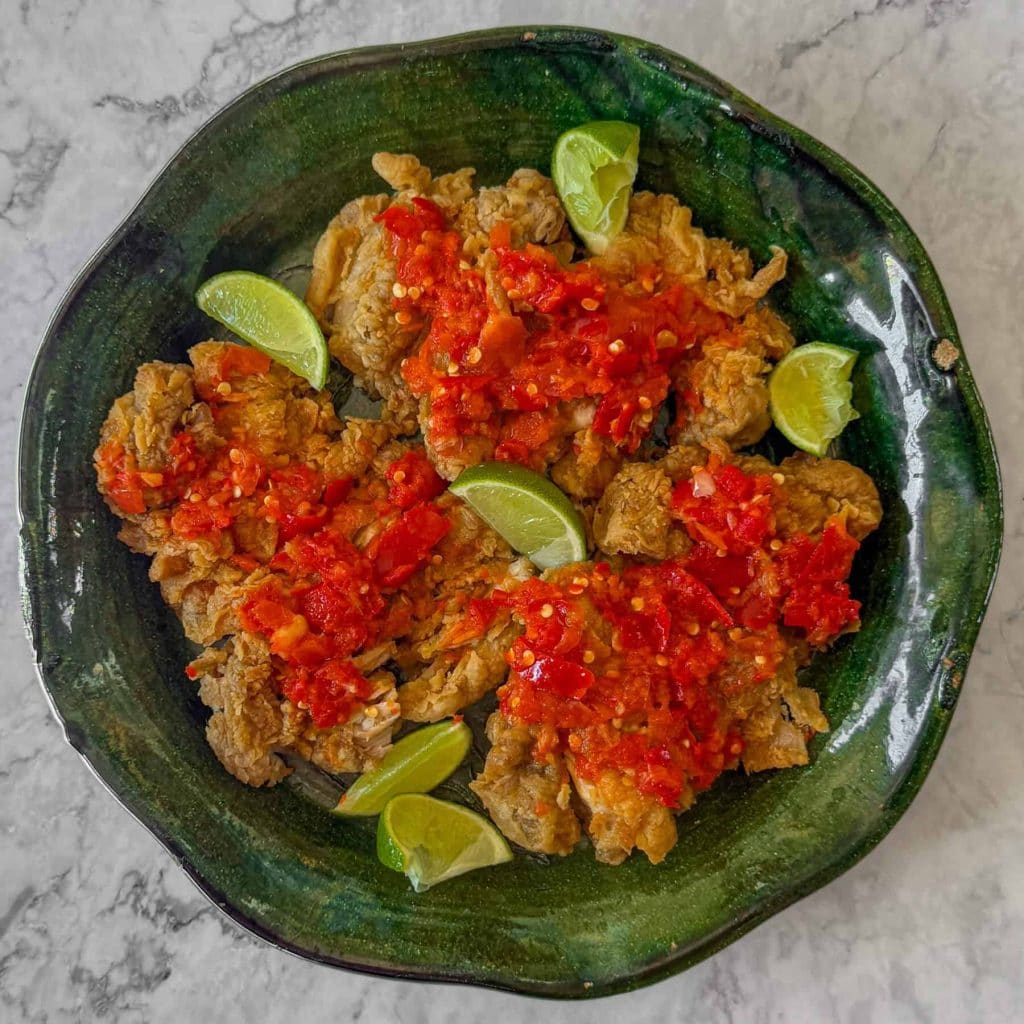
The sambal here is bright and balanced — heat from the chillies, sharpness from lime, depth from fish sauce, and just enough sugar to round it out. Spoon it over generously and let it settle into the crust.
Watch me make it here!
Ingredient Breakdown
- Chicken thighs: Juicy, forgiving, and far better suited to frying than breast.
- Salt, white pepper, coriander, turmeric: A simple marinade that seasons the chicken throughout.
- Plain flour and cornflour: This combination gives you the best texture — plain flour for structure, cornflour for lightness and crispness.
- Ice water: Used to create that uneven, craggy coating. It hydrates the flour irregularly, which is what gives you those crisp, jagged edges.
- Red chillies: The backbone of the sambal. They bring heat and a fresh, slightly fruity sharpness.
- Garlic and shallots” Provide depth and savouriness.
- Vegetable oil: Used both for frying the chicken and blooming the sambal. Pouring hot oil over the paste softens the raw aromatics and rounds out the heat.
- Sugar: Balances the heat and sharpness.
- Fish sauce: Adds saltiness and umami depth.
- Lime juice: Cuts through the richness with acidity and keeps the sambal tasting bright.
What is Ayam Geprek?
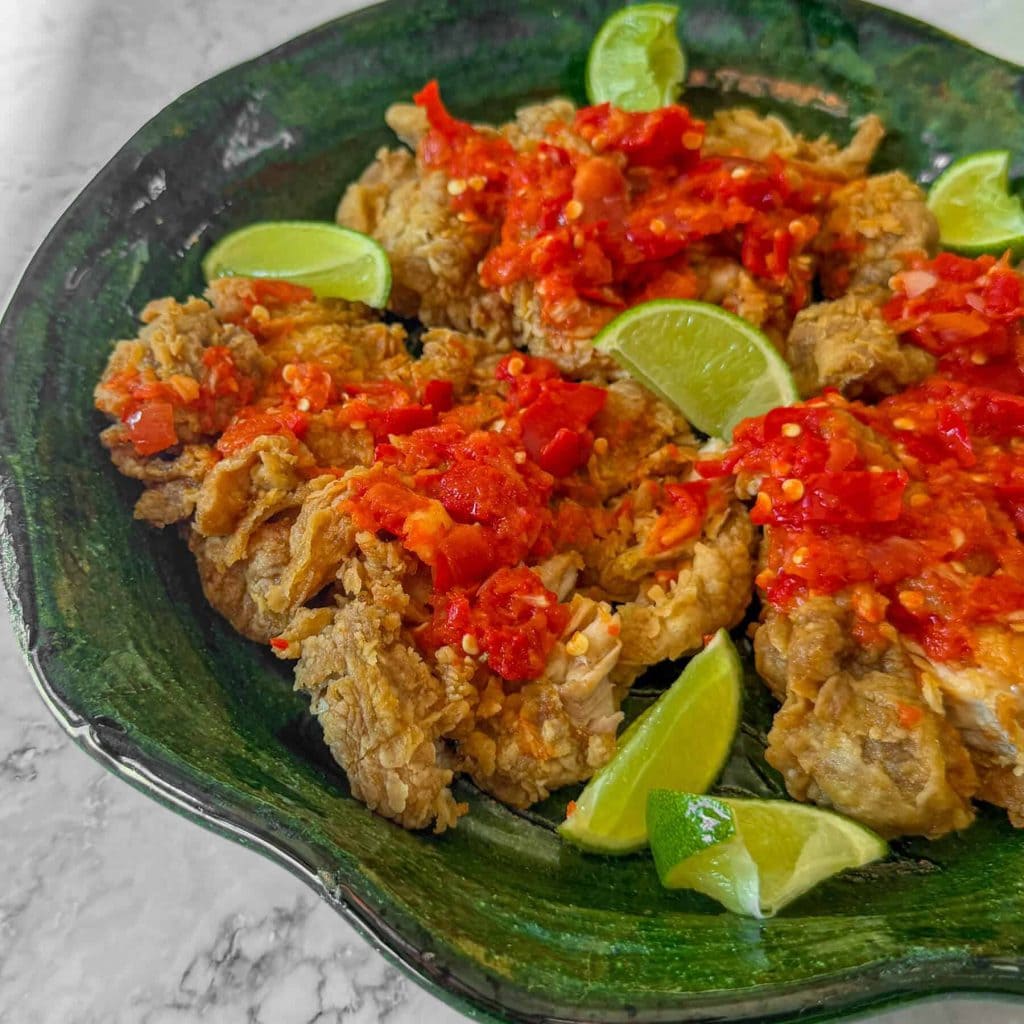
Ayam Geprek is a popular Indonesian fried chicken dish where the chicken is smashed (“geprek”) and dressed with sambal. Unlike standard fried chicken, the goal here isn’t just crispiness — it’s texture and absorption. Smashing the chicken after frying creates cracks in the crust and uneven surfaces, which allow the sambal to cling to and soak into the meat.
That’s what gives Ayam Geprek its signature finish: spicy, juicy, crunchy, and slightly messy.
PS: If you love the sound of this, you will also love my Lemongrass Fried Chicken — it’s juicy, deeply aromatic and irresistibly crispy.
How to Make Perfectly Crispy Fried Chicken for Ayam Geprek
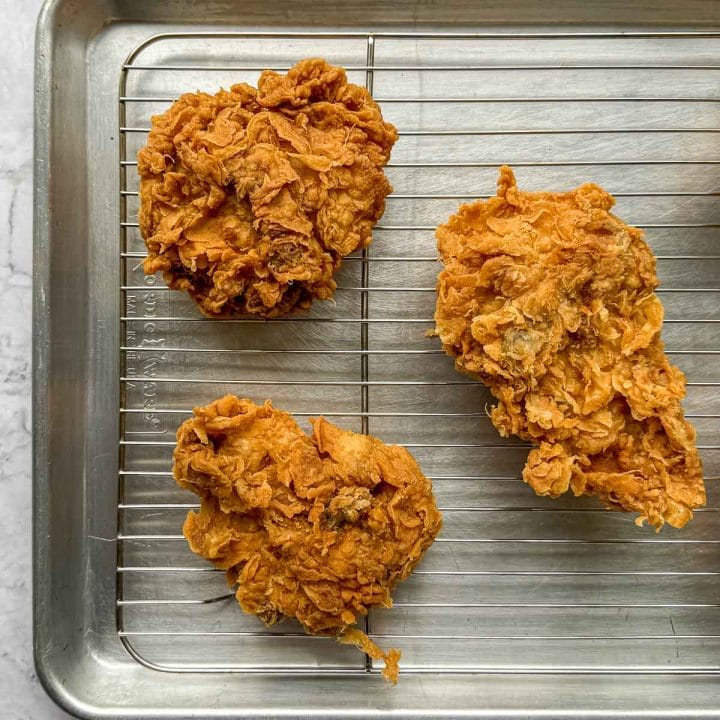
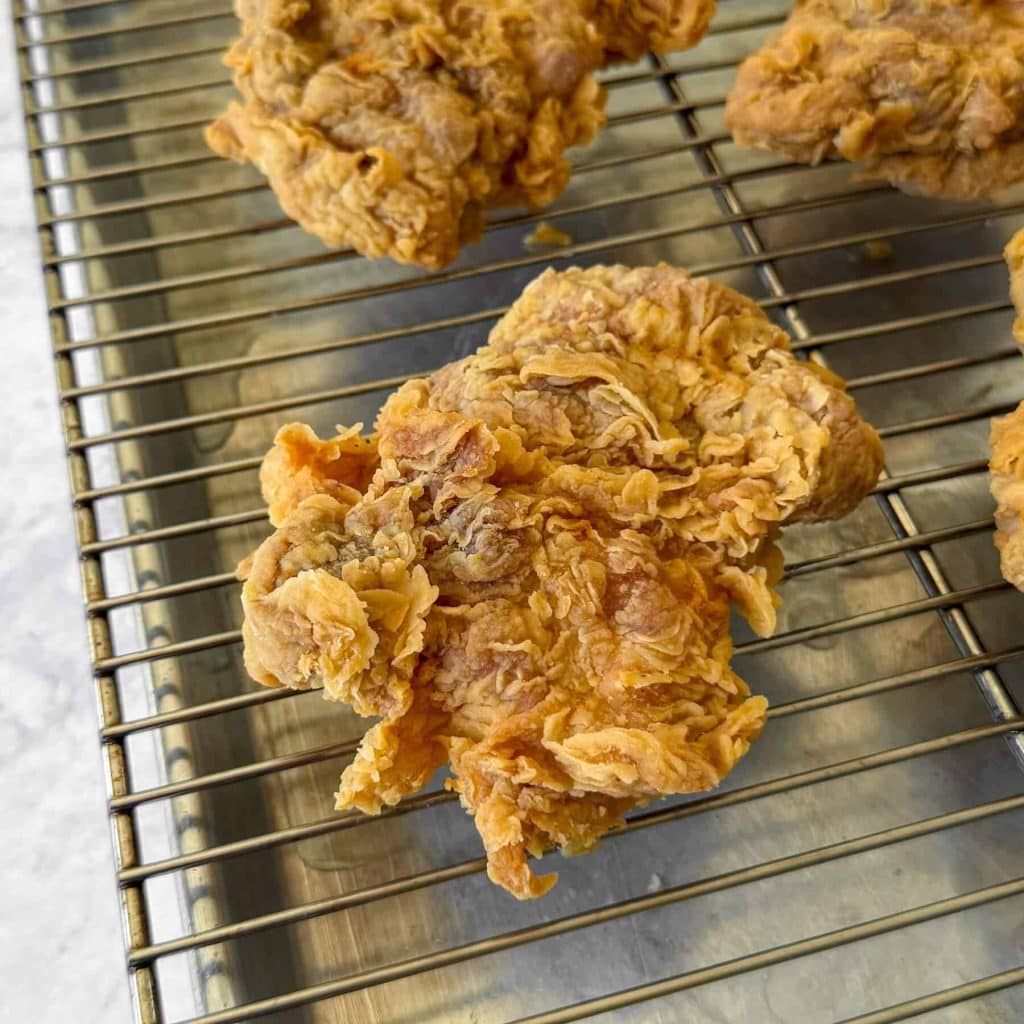
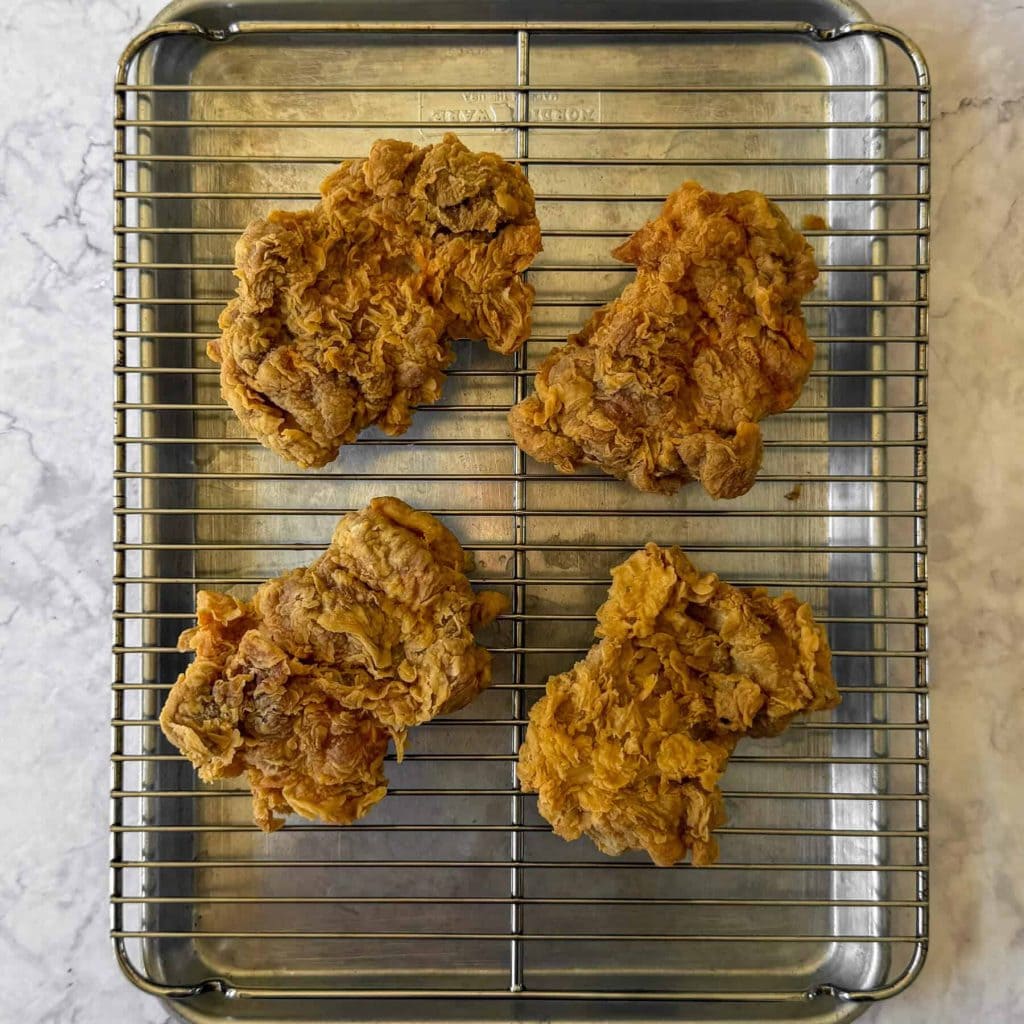
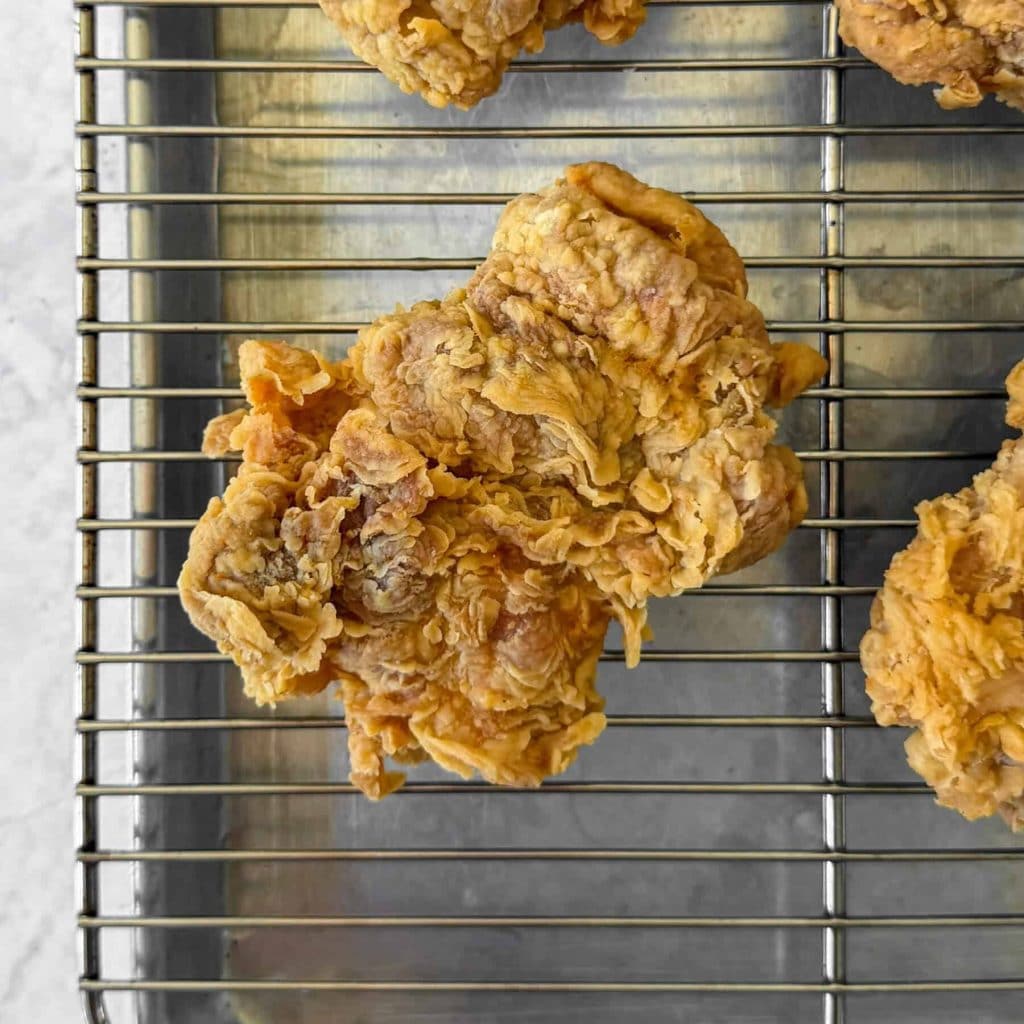
The best fried chicken is juicy, deeply flavourful and irresistibly crispy, and this Ayam Geprek delivers on all three. Because this dish is all about texture, the focus is on creating a coating that’s crisp, craggy and light. Four things make that happen: the claw method, an ice water dip, resting the chicken, and getting the oil temperature right.
- Claw method: This involves pressing the flour firmly into the chicken with your fingers shaped like a claw. You’re not simply coating it; you’re packing the flour in, building the texture that gives fried chicken its crunch. As you press, the flour catches unevenly, creating those rough, jagged edges that crisp in the hot oil. Each piece should look almost shaggy, like it’s covered in torn fabric.
- Ice water dip: Dipping the chicken in ice water exaggerates this shaggy texture. It hydrates the coating unevenly, so when the chicken goes back into the flour, it creates ridges and flakes that fry up crisp and light rather than dense.
- Resting the chicken: Letting the chicken rest before frying gives the coating time to hydrate and adhere properly. Skip this and the coating can slip or fry unevenly.
- Oil temperature: If the oil is too cold, the coating absorbs oil instead of crisping. If you overcrowd the pan, the temperature drops and you lose that crunch. Keep it at 180°C and fry in batches if needed. It’s well worth using a thermometer here — they’re inexpensive and take all the guesswork out. This is the one I use.
Follow these steps and you’ll make perfectly crispy Ayam Geprek every single time!
What is Sambal? And Why It Matters Here
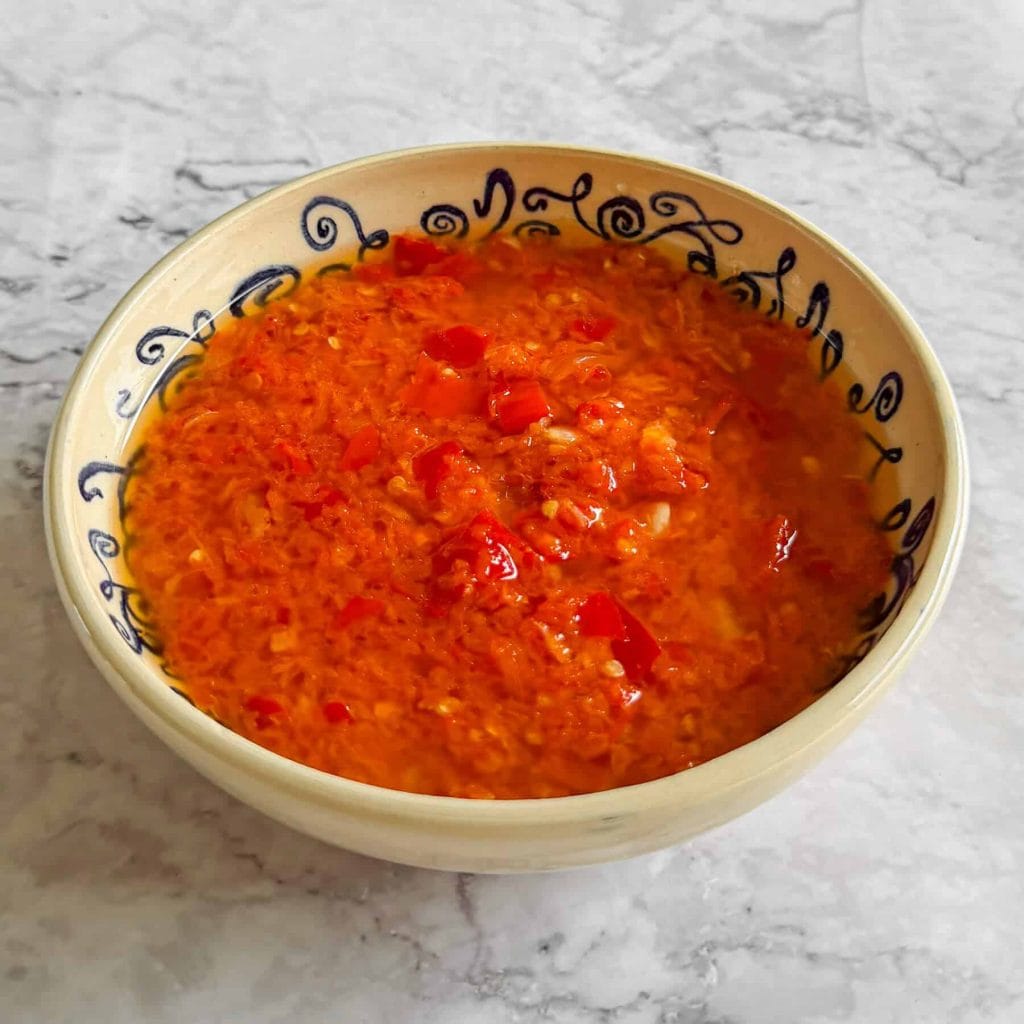
Ayam Geprek is as much about the crispy fried chicken as it is about the sambal. Sambal is a staple Indonesian chilli condiment made from chillies, aromatics and seasoning. There are dozens of variations, but the core idea is the same: heat, depth and balance.
Here, it’s made by pounding chillies, garlic and shallots into a coarse paste, then pouring hot oil over the top. That step softens the raw edge of the aromatics and helps the chillies bloom, giving you a deeper, rounder heat. It’s finished with sugar, lime juice and fish sauce, so it’s not just spicy — it’s sharp, savoury and balanced.
How to Make Sambal Less Spicy for Ayam Greprek
If you’re worried about heat, you can adjust the sambal without flattening it:
- Add 1–2 ripe vine tomatoes to the chilli paste to dilute its intensity
- Increase the sugar slightly to round out the heat
- Add more lime juice to brighten and balance
The goal isn’t to remove the heat entirely — it’s to make it feel balanced and tailored to your palate.
Frequently Asked Questions
What’s the best chicken to use for Ayam Geprek?
Chicken thighs are the best choice. They stay juicy, they’re more forgiving, and they hold up better once smashed and dressed. Boneless, skinless thighs work well, but boneless skin-on are even better for flavour and texture. Chicken breast isn’t ideal here.
Why isn’t my fried chicken crispy?
It’s usually down to oil temperature. If the oil isn’t hot enough, the coating absorbs oil instead of crisping. If you overcrowd the pan, the temperature drops and you lose that crunch. Aim for 180°C and fry in batches if needed — a thermometer is really helpful here and takes out the guesswork.
How do I make sambal less spicy?
You can mellow the heat by adding 1–2 vine tomatoes to the paste or increasing the sugar slightly. More lime juice will brighten it, and a little extra fish sauce will deepen the flavour. The goal isn’t to remove the heat entirely — just to balance it.
How should I serve ayam geprek?
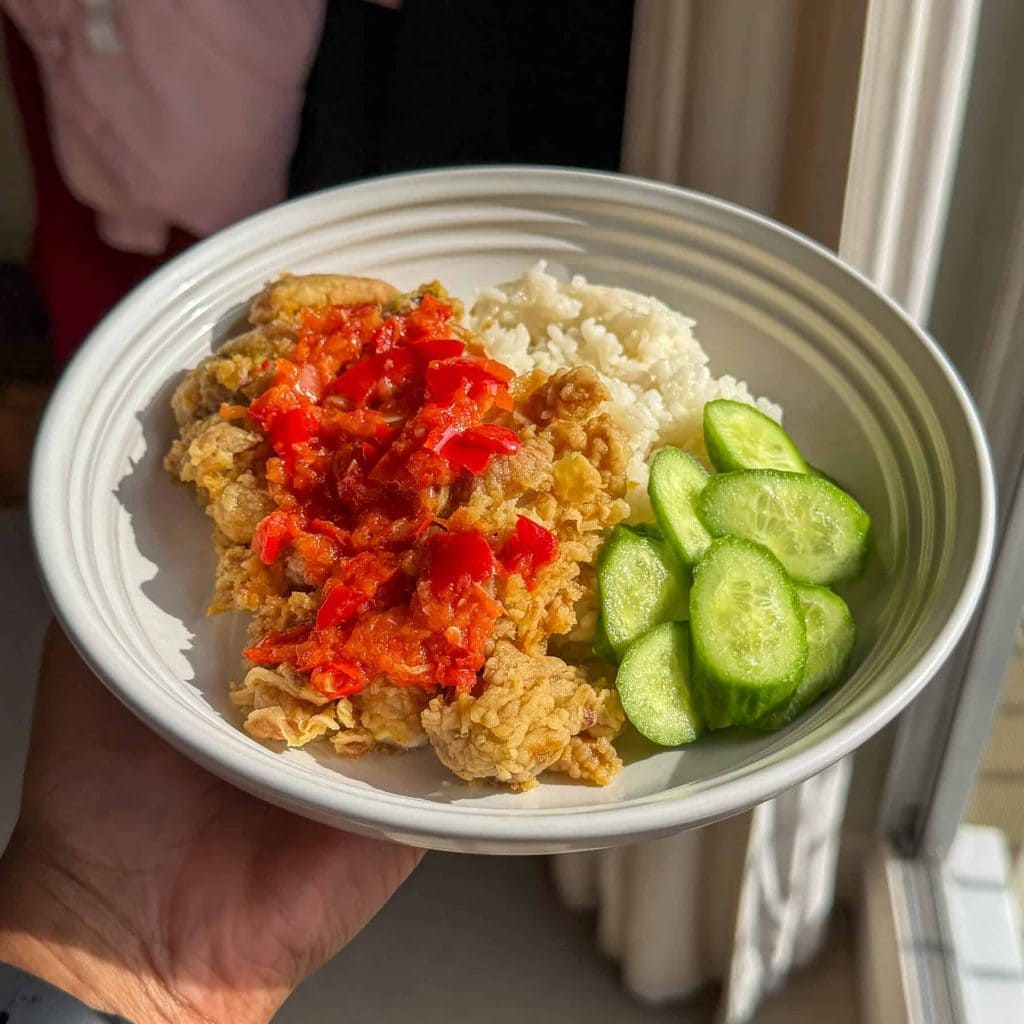
Serve it straight away, while the chicken is still hot and crisp. Keep it simple — rice and cucumber are all you need. The freshness cuts through the heat and richness and brings everything into balance.
Can I make ayam geprek ahead of time?
Fried chicken is always best fresh, especially here where the texture matters. You can make the sambal ahead and keep it in the fridge for up to a few days, but fry and smash the chicken just before serving so it stays crisp.
Can I use an air fryer instead of deep frying?
You can — air fry at 200°C for 15–20 minutes, flipping halfway and spraying with oil to help it crisp. That said, it won’t be quite the same (not nearly as good!). The coating won’t develop those craggy, irregular edges, so you lose a lot of the texture that makes ayam geprek what it is. Expect it to be less crisp and a bit denser.
Ayam Geprek (Indonesian Smashed Fried Chicken)
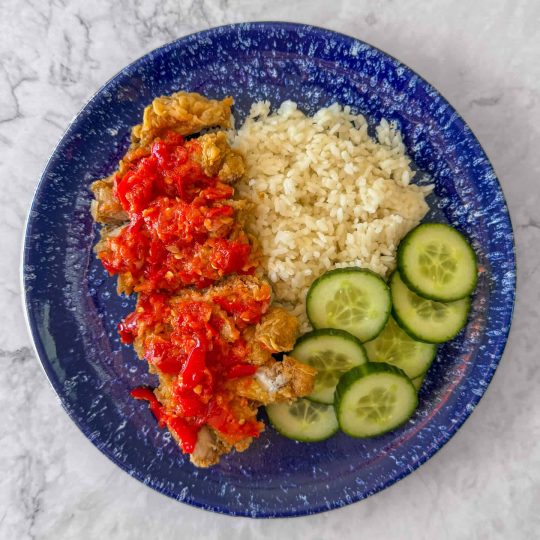
This is one of those dishes that’s all about contrast – crispy, craggy fried chicken smashed just enough to open it up, then topped with a punchy, garlicky sambal. The chicken soaks it all in, softening slightly in places, while the edges stay nice and crunchy. It’s simple, bold, and best served with rice and cucumber to cut through the heat.
- Prep Time: 30 minutes
- Total Time: 1 hour
- Yield: 4 1x
Ingredients
For the chicken:
- 4 boneless, skinless chicken thighs (skin-on if you can find them)
- ½ tsp salt
- ½ tsp ground white pepper
- ½ tsp ground coriander
- ¼ tsp turmeric
- 1 tsp vegetable oil
For the sambal:
- 8 red chillies, roughly chopped
- 4 garlic cloves, peeled
- 2 small shallots, roughly chopped
- ½ tsp salt
- 75ml vegetable oil
- 2 tsp sugar
- 1 tsp fish sauce
- ½ lime, juiced
For frying:
- 200g plain flour
- 50g cornflour
- 1 tsp salt
- ice water
- vegetable oil, for deep frying
To serve:
- cooked rice
- cucumber slices
Instructions
- Place the chicken, salt, white pepper, coriander, turmeric and oil in a bowl and mix well to coat. Leave to marinate for 30 minutes at room temperature, or a couple of hours in the fridge.
- Meanwhile, to make the sambal, add the chillies, garlic, shallots and salt to a pestle and mortar and pound into a rough paste. This will take a little while – consider it your arm workout for the day! If you don’t have a pestle and mortar, or just want to simplify things, you can use a food processor, though the flavour is better when everything is pounded by hand.
- Heat the oil until shimmering, then carefully pour it over the paste. Mix well, then add the sugar, fish sauce and lime juice. Stir to combine, then taste and adjust – more sugar for sweetness, more lime for zing, more fish sauce or salt for savoury depth. Set aside.
- Fill a large, deep pan or Dutch oven halfway with oil and heat to 180°C. Set a wire rack over a tray – this is where the cooked chicken will rest, allowing air to circulate and keeping it crisp.
- In a large mixing bowl, combine the plain flour, cornflour and salt. In a medium mixing bowl, add cold water and a handful of ice.
- Working with one piece of chicken at a time, coat it in the flour mixture using your “dry” hand. Shape your hand into a claw and press the flour firmly into the chicken so it adheres and forms a textured surface. Shake off any excess, then use your “wet” hand to dip the chicken into the ice water, letting the excess drip off. Return the chicken to the flour mixture and repeat the claw motion to coat thoroughly. Take your time here – pressing in the flour creates those light, craggy edges that fry up beautifully. Set aside and let the coating hydrate slightly for 10 minutes.
- When the oil reaches 180°C, carefully lower the chicken pieces into the oil, being careful not to overcrowd the pan. Work in batches if necessary.
- Fry the chicken for 10 minutes, or until golden and cooked through. Transfer to the rack to drain. If frying in batches, keep the cooked chicken warm in a low oven.
- Place the chicken on a board and lightly smash with a pestle, rolling pin or meat mallet. You want to crack the crust and expose the meat without completely flattening it.
- Spoon over the sambal – as much or as little as you like – and serve with rice and cucumber.