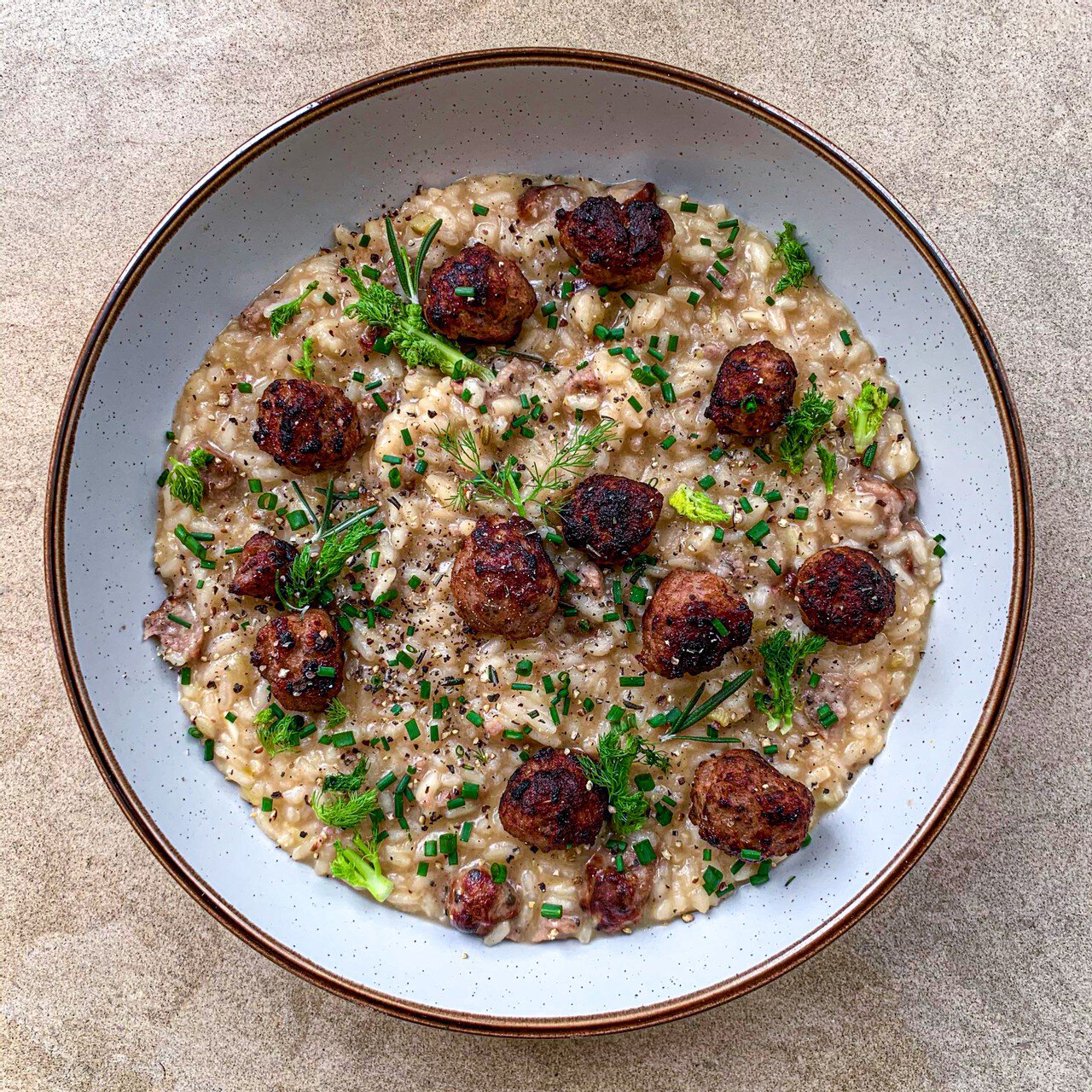
Sausage and Fennel Risotto is a dish that brings warmth and comfort to any chilly evening. Packed with the rich, savoury flavours of pork sausage and the subtly sweet, aniseed-like fennel, this dish strikes the perfect balance between hearty and luxurious. The risotto itself is creamy and satisfying, with just the right amount of bite to the rice, making every spoonful a comforting experience. Although it requires attention during the cooking process, the results are more than worth it. Whether for a weeknight meal or a special gathering, this dish promises to please.
Table of Contents
Ingredient Breakdown
- Pork Sausages: High-quality pork sausages provide the rich, meaty flavour that is essential to this dish. The sausages are rolled into mini meatballs, allowing for even cooking and enhancing their flavour in every bite.
- Chicken or Vegetable Stock: The stock is the backbone of the risotto, providing a base of flavour and moisture that is slowly absorbed by the rice.
- Extra-Virgin Olive Oil: Used to sauté the fennel and meatballs, olive oil adds a gentle fruitiness and richness to the dish.
- Fennel Bulbs: The fennel offers a subtle, sweet, aniseed flavour that pairs beautifully with the richness of the sausage, adding depth and balance to the dish.
- Garlic Cloves: Garlic adds a fragrant, aromatic base to the risotto, giving it an extra layer of flavour.
- Fennel Seeds: These seeds elevate the fennel flavour, giving a slightly sharper, more pronounced taste that complements the other ingredients.
- Arborio or Carnaroli Rice: Both varieties of rice are perfect for risotto, absorbing liquid gradually to become tender and creamy while retaining a slight bite.
- Dry White Wine: The white wine brings a touch of acidity that balances the richness of the sausage and fennel, enhancing the overall depth of flavour.
- Grana Padano or Parmigiano Reggiano: These cheeses add a sharp, nutty flavour to the risotto, contributing to its creamy texture and elevating the taste.
- Unsalted Butter: Butter provides a smooth finish, enriching the risotto with its velvety texture and creamy flavour.
Choosing the Right Sausage
The sausage you select for your Sausage and Fennel Risotto plays a critical role in defining the dish’s flavour profile. When choosing sausages, the key is quality over quantity. Opt for good-quality pork sausages with a generous fat content. These will provide a deep, savoury flavour to the risotto. Sausages with a natural casing can often be difficult to work with. Removing the meat and rolling it into mini meatballs ensures even cooking and enhances the texture. The fat rendered from the sausages adds richness to the dish, infusing the rice with its flavour.
For the best results, look for sausages that feature fennel seeds or fennel as one of their ingredients. This subtle aniseed-like taste complements the fennel bulb in the risotto, creating a harmonious flavour. Sausages that are too lean might not impart enough flavour or moisture, while those with excessive fillers may overwhelm the dish. The key is finding a balance of pork and seasoning for a truly indulgent risotto.
Choosing the Right Rice
Rice plays a pivotal role in the texture and overall success of your Sausage and Fennel Risotto. For sausage and fennel risotto, you’ll need a high-starch, short-grain rice to achieve the creamy, velvety texture that characterises the dish. The most commonly used varieties for risotto are Arborio and Carnaroli. Both have a high starch content that helps create the signature creaminess without the need for added cream or cheese.
Arborio rice is the most widely available and affordable option. It holds its shape well during cooking and releases starch gradually, making it ideal for risotto. On the other hand, Carnaroli rice is slightly more expensive but considered by many chefs to be the gold standard for risotto. This is due to its higher starch content and slightly firmer texture, which results in a more luxurious mouthfeel. Whichever rice you choose, it’s essential to resist the temptation to rinse it. The natural starch on the rice helps create that smooth, creamy texture that’s the hallmark of a great risotto.
Mastering the Cooking Technique for Risotto
Making risotto may seem like an intimidating task, but with the right technique, it’s surprisingly easy to master. The key to a great risotto lies in the gradual absorption of liquid into the rice. It releases its starch and gives the dish its signature creaminess. The process begins with sautéing the base ingredients, the sausage and fennel, before adding the rice. This initial step ensures that the rice is well-coated in the fat, which helps it cook evenly and absorb the stock better.
Once the rice is added, it’s important to add stock in stages, one ladleful at a time. Stir the rice constantly, ensuring that each addition of stock is fully absorbed before adding more. This slow process allows the rice to release its starch, which thickens the liquid and results in that creamy consistency. It’s essential to use warm stock, as cold stock will lower the cooking temperature and result in uneven cooking. Throughout the process, be patient and attentive. The texture of the rice should be tender yet with a slight bite at the end. If you run out of stock before the rice is fully cooked, simply add hot water, a ladleful at a time, to continue the cooking process. This careful, step-by-step approach is what makes this Sausage and Fennel Risotto such a rewarding dish to make.
A Final Touch: Cheese and Butter
Once the rice has reached the perfect creamy consistency, the addition of Grana Padano or Parmigiano Reggiano and butter completes the dish. The cheese adds a rich, nutty flavour that enhances the overall taste of the risotto. Meanwhile the butter gives it a smooth, velvety texture. The combination of cheese and butter is key to achieving that luxurious mouthfeel that makes risotto so indulgent.
After the risotto has finished cooking, the heat is turned off, and the cheese and butter are stirred through. The cheese melts into the rice, adding a silky richness. Meanwhile the butter helps to bind everything together, creating a creamy and comforting dish. At this stage, the risotto should be creamy yet still have a slight bite to the rice. This is the ideal texture. Allowing the risotto to rest for a few minutes before serving helps to thicken it slightly. This will ensure it holds its shape when scooped onto plates.
More Risotto Recipes
If you’ve enjoyed this Sausage and Fennel Risotto recipe and are on the look for more to try your hand at, look no further!
- King Prawn Risotto: Packed with umami from homemade prawn stock, this risotto is simple yet deliciously rich and creamy.
- Saffron Risotto: This is my version of the great Milanese classic – it’s rich, creamy and absolutely delicious.
- Chorizo & Prawn Risotto: A classic risotto recipe, featuring everyone’s favourite – chorizo!
- Roasted Butternut Squash and Sage Risotto: A simple yet satisfying vegetarian main that gives a basic risotto a warm, autumnal twist
See how I make all these recipes and more over on my Instagram!
Sausage and Fennel Risotto

Warm up on chilly nights with this flavour-packed pork sausage and fennel risotto. The keys to a delicious risotto are gradual absorption and constant stirring. It’s what releases the creamy starches from the rice. So yes, this dish needs your undivided attention, but only for 25 to 30 mins. Once you try it, you’ll be glad you gave it the TLC it requires!
- Prep Time: 20 minutes
- Total Time: 1 hour 10 minutes
- Yield: 6 1x
- Category: Rice and Risotto
Ingredients
- 500 g good-quality pork sausages
- 1.5 litre good-quality chicken or vegetable stock
- 1 tbsp extra-virgin olive oil
- 2 fennel bulbs, finely chopped
- 2 large garlic cloves, finely chopped
- 1 tsp fennel seeds
- 500 g arborio or carnaroli rice
- 150 g dry white wine
- 80 g grana padano or parmigiano reggiano
- 2 tbsps unsalted butter
Instructions
- Remove the sausage meat from the casings and roll into mini meatballs. Aim for 4 mini meatballs per sausage.
- Bring the stock to a simmer in a medium saucepan over high heat. Reduce the heat to low and cover; you want to keep the stock warm over very low heat.
- Heat the extra-virgin olive oil in a large, non-stick saucepan or stockpot over medium heat.
- Add the mini sausage meatballs and cook for around 5 minutes, or until browned and cooked through. You may need to do this in two batches. You can either individually turn each meatball every couple of minutes or, to make things easier, simply give the pot a good shake every couple of minutes – this will ensure that they brown all over. Note: this will only work with a non-stick pot.
- Using tongs or a spider, transfer the meatballs to a chopping board, leaving the sausage-infused oil behind.
- Return the saucepan to the stove and heat over medium heat. Add the chopped fennel bulbs and season with a good pinch of sea salt and freshly-ground black pepper. Cook, stirring occasionally, until softened, 7 to 10 minutes.
- Add the garlic and fennel seeds and cook for 1 minute, stirring constantly.
- Add the rice and season well with sea salt and freshly-ground black pepper. Cook, stirring constantly, for 2 minutes.
- Add the white wine and cook, stirring often, until the pan is almost dry, 1 to 2 mins.
- Add one ladleful of the hot stock and cook, stirring almost constantly, until the stock is fully absorbed. Add another ladleful of stock and cook, stirring almost constantly, until the stock is fully absorbed. Repeat this process until the rice is cooked; it should be tender but with a slight bite. The whole process should take around 25 to 30 mins. If you run out of stock before the rice is cooked, add one ladleful of hot water at a time, stirring frequently until absorbed, until the rice is cooked to your liking.
- Remove the saucepan from the heat. Add the grana padano and butter and stir well to combine. Cover the saucepan and allow the risotto to sit for 3 to 5 minutes before serving. You might be tempted to skip this step but don’t! This is when the risotto becomes deliciously creamy.
- Adjust seasoning, to taste (if necessary) then serve and enjoy!