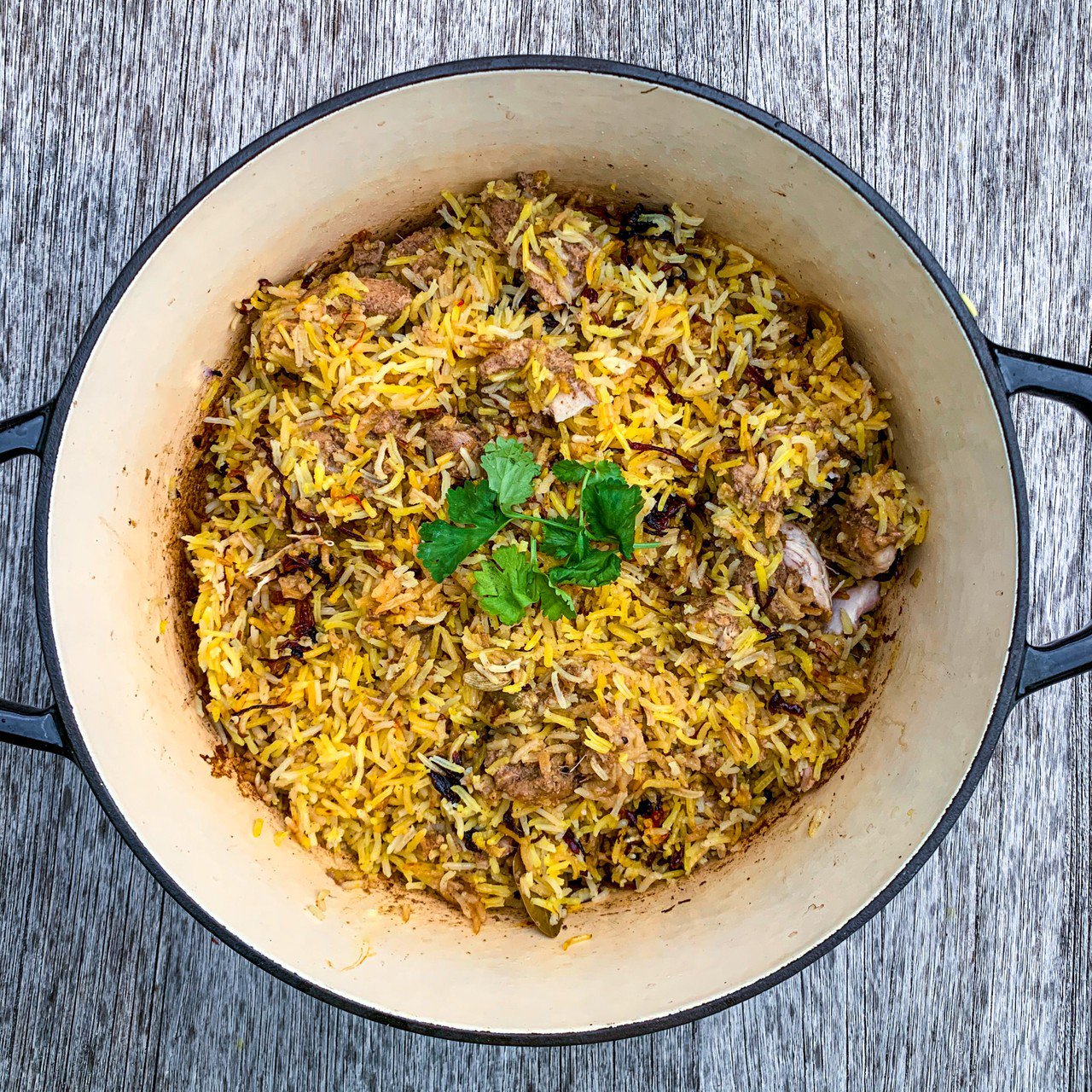
Chicken Biryani is not just a dish; it’s an experience. With its rich history and complex layers of flavour, it has earned a place in the hearts of food lovers around the world. This recipe is an homage to the iconic Hyderabadi Biryani, a perfect blend of Mughlai and Telugu culinary traditions. While no recipe can claim to be 100% authentic, this version comes incredibly close to what you would find in the streets of Hyderabad. Most importantly, it’s utterly delicious and easy to recreate at home. The star of this dish? The rice. By using high-quality aged basmati rice and ghee, you’ll be able to elevate the flavours to new heights.
Table of Contents
Ingredient Breakdown
- Natural Yoghurt: Adds creaminess and helps tenderise the chicken, allowing the spices to infuse deeply.
- Red Onion: Used in both the marinade and for frying, it imparts a sweet, caramelised depth of flavour.
- Ginger and Garlic Paste: Key aromatic ingredients, they provide a robust base of flavour.
- Cardamom Pods: These pods add a warm, slightly sweet note, characteristic of Indian cooking.
- Ground Cumin and Coriander: These spices provide earthy and citrusy undertones to the dish.
- Garam Masala: A traditional spice blend that adds warmth and complexity.
- Ground Cinnamon and Clove: Warm spices that bring a fragrant, almost sweet flavour to the biryani.
- Lemon Juice: Adds a tangy brightness that helps balance the richness of the ghee and spices.
- Sea Salt: Essential for bringing out the flavours in both the chicken and rice.
- Chicken Thigh Fillets: Chicken thighs provide a juicy, tender texture, soaking up the marinade beautifully.
- Bay Leaves: Used in the marinade, bay leaves lend an aromatic, slightly herbal flavour to the chicken.
- Ghee: A rich, clarified butter that imparts a subtle nutty flavour, perfect for frying onions and drizzling over the rice.
- Star Anise and Cinnamon Stick: Used in the rice, these spices provide a subtle warmth and complexity to the dish.
- Aged Basmati Rice: The base of the dish, aged basmati rice has a distinct fragrance and texture that complements the spices beautifully.
- Saffron Threads: A luxurious ingredient that adds colour, fragrance, and depth to the biryani.
Marinating the Chicken
The first step to making a fantastic Chicken Biryani is marinating the chicken. This step not only tenderises the meat but also infuses it with the bold flavours of the spices. The yoghurt in the marinade helps to break down the chicken, allowing the spices to penetrate deeply, resulting in a juicy, flavour-packed bite. The combination of ginger, garlic, and aromatic spices like cardamom, cumin, coriander, cinnamon, and garam masala is what gives this dish its signature taste.
The key to a perfect marinade is time. Marinate the chicken for at least two hours, but for the best results, leave it overnight. The longer the chicken sits in the marinade, the more the flavours develop and intensify. If you’re short on time, you can still achieve a great result, but patience really pays off here.
The Fried Onions
While the marinated chicken is soaking up all the flavour, the next important step is frying the onions. Onions play a dual role in this dish. They’re part of the marinade and also form the delicious crispy topping that adds texture and sweetness to the biryani.
In this recipe, the onions are thinly sliced and fried in ghee until golden brown and crisp. The ghee not only helps the onions to fry evenly, but it also infuses them with a rich, buttery flavour that’s hard to beat. Don’t be alarmed by the browned, caramelised bits at the bottom of the pot, they contribute to the dish’s depth of flavour. Once fried, set the onions aside, but make sure to leave a tablespoon of ghee in the pot. This will help in the final stages of cooking the biryani, imparting that irresistible richness.
Preparing the Rice
The rice is arguably the most important element of Chicken Biryani, and using the right type of rice is essential for getting that fluffy, aromatic result. Aged basmati rice is the preferred choice here. Its long, slender grains are perfect for absorbing the flavours of the spices while maintaining their integrity. Rinsing the rice before cooking helps to remove excess starch, ensuring the grains stay separate and fluffy rather than sticky.
When parboiling the rice, it’s important to flavour the water with star anise, cinnamon, and a good amount of salt. This gives the rice a subtle fragrance and ensures it’s well-seasoned. After rinsing the rice, it’s important not to overcook it. You want the grains to be slightly undercooked, as they will continue to cook when combined with the chicken and baked in the oven.
Assembling the Biryani
Now that the chicken, onions, and rice are all prepared, it’s time to assemble the biryani. In this stage, layering is key. Begin by adding the marinated chicken to a large Dutch oven, and then layer it with half of the crispy fried onions. The rice is added on top of the chicken, followed by the remaining onions. This layering ensures that the chicken remains juicy while the rice absorbs all the fragrant spices from the chicken and the saffron-infused ghee.
The final touch is to drizzle the reserved ghee and saffron water over the rice, which adds both colour and a subtle floral fragrance. Gently poke a few holes in the rice to allow the steam to circulate and cook the chicken evenly. This step is crucial, as it ensures that the chicken and rice cook together, resulting in a well-balanced biryani.
The Final Touch
Biryani is traditionally cooked on a low flame to allow the flavours to meld together. Once the biryani is assembled, it’s transferred to the oven to bake for about 40 minutes. During this time, the steam will cook the rice while the chicken finishes cooking through. Make sure to keep the lid on tightly to trap the steam inside. Opening it during cooking could result in undercooked rice.
After the biryani has baked, let it rest for 5 to 10 minutes before serving. This allows the flavours to settle and ensures that the rice doesn’t become too sticky when you serve it. To serve, gently spoon the rice onto a platter, top it with the chicken pieces, and enjoy the deliciously aromatic, flavour-packed meal you’ve just created.
Customising Your Chicken Biryani
While this recipe is an homage to the traditional Hyderabadi style, one of the joys of biryani is its adaptability. You can easily customise it to suit your preferences.
- If you prefer a milder flavour, reduce the amount of garam masala or omit some of the whole spices.
- For a richer biryani, try adding a boiled egg or roasted nuts like cashews or almonds to the layers.
- For a more intense saffron flavour, you can soak the threads in more water, or even add a bit of rose water or kewra water to the rice for an extra aromatic punch.
The possibilities are endless, making this dish one you can tailor to your own tastes.
More Chicken Recipes
If you’ve enjoyed making this Chicken Biryani, here are some more of my recipes I think you’ll like:
- Chicken Parm: A classic chicken parm, no frills. Crispy golden chicken, rich tomato sauce and plenty of melted cheese.
- Chicken Kebabs: These North African-inspired chicken kebabs are delicious, juicy and packed with flavour! Added bonus: they’re incredibly easy to make.
- Chicken Katsu: Who doesn’t love crispy fried chicken? Chicken thigh fillets pounded until thin, dredged in seasoned flour, eggs and panko, and fried until golden brown.
- Chimichurri Chicken: Chicken so good it’ll make you dance! The chicken is marinated in a tasty combination of herbs and spices then seared until perfectly cooked and juicy.
See how I make all these recipes and more over on my Instagram!
Chicken Biryani

A slightly longer intro from me for this recipe. I spent lots of time in Hyderabad, India last year. Hyderabad is famous for its biryani, which combines the best of Mughlai and Telugu cuisines. Consider this recipe an homage to the Hyderabadi biryani, a dish that I absolutely love! While I would never claim that it is 100% authentic (I won’t bore you with my thoughts on food and cultural appropriation), I can confidently say that it’s pretty close, and most importantly, absolutely delicious!
The rice is the star of the show so splurge on some high-quality, aged basmati rice if you can – it makes a huge difference. And while you’re at it, splurge on some ghee – it imparts a wonderful flavour to the dish that you can’t get from elsewhere.
- Prep Time: 15 minutes
- Total Time: 1 hour 15 minutes
- Yield: 5 1x
- Category: Rice and Risotto, Chicken
Ingredients
- 150 g natural yoghurt
- 1 red onion, quartered
- 2 tbsps ginger paste
- 2 tsps garlic paste
- 3 green cardamom pods, shells and all
- 1 tsp ground cumin
- 1 tsp ground coriander
- 1 tsp garam masala
- ¾ tsp ground cinnamon
- ¼ tsp ground clove
- 1 tbsp lemon juice
- 1½ tsps sea salt
- 640 g chicken thigh fillets, quartered
- 2 dried bay leaves
- 120 ml melted ghee
- 1 large onion, thinly sliced
- 1 star anise
- ½ cinnamon stick
- 350 g aged basmati rice
- ¼ tsp saffron threads
- 3 tbsps hot water
Instructions
Making the chicken:
- Add the yoghurt, red onion, ginger paste, garlic paste, cardamom, cumin, cinnamon, coriander, garam masala, clove, lemon juice and salt to a small blender and blitz until smooth. Pour the marinade over the chicken, add the bay leaves and stir to combine. Cover and let marinate in the fridge at least 2 hours, or preferably overnight.
Frying the onions:
- Heat the ghee in a large Dutch oven over medium-high heat. Add the sliced onions and cook, stirring constantly, until the onions are golden and crisp, 7 to 10 minutes. There will likely be some browned, charred bits at the bottom of the pot; don’t worry, that’s normal!
- Using a spider or slotted spoon, transfer the fried onions to a plate and set aside. Drain all but around 1 tbsp of the ghee into a small bowl. Set both the Dutch oven and the bowl of ghee aside.
Parboiling the rice:
- Heat your oven to 180℃. Fill a large saucepan with 2 litre water. Add the star anise, cinnamon stick and 1 ½ tbsp sea salt. It might sounds like a lot but in reality, the rice will only absorb a little of the salt. Bring the water to a rapid boil over high heat.
- Rinse the rice thoroughly with cold water until the water runs clean, then drain.
- Add the rinsed rice to the boiling salted water. The water will immediately stop boiling and the rice will sink to the bottom of the saucepan. Stir to prevent sticking.
- Once the water comes back to a boil, cook the rice for 2 to 3 minutes, or until the grains have almost doubled in size but the inside remains firm.
- Drain the rice and rinse with cold water. Drain again then set aside.
Assembling the biryani:
- Add the saffron threads to a small bowl, cover with the hot water and stir. Set aside.
- Return the Dutch oven to the stove over medium-high heat. Add the chicken (with the marinade) and bring everything to a simmer. Remove the Dutch oven from the heat.
- Arrange the chicken in a single layer at the bottom of the Dutch oven. Cover with half of the fried onions. Top with the drained rice, gently spreading it into an even layer. Finish with the remaining fried onions and drizzle the reserved ghee and saffron water over the top.
- Pokes a few holes in the rice with the back of the wooden spoon until you reach the chicken.
- Cover the Dutch oven with a tight-fitting lid and return it to the stove over medium heat. Cook the biryani until you hear the chicken start to gurgle; this should only take a couple of minutes.
- Transfer the covered Dutch oven to the oven and bake at 180℃ for 40 mins. Make sure you don’t open the lid at any point! If you do, lots of steam will escape, which means the rice won’t cook through properly.
- Let the biryani sit for 5 to 10 minutes before uncovering. To serve, gently spoon the rice onto a platter and top with the chicken pieces. Enjoy!
Equipment
 Buy Now →
Notes
You can substitute the ghee for neutral oil but you’ll get much better flavour if you use ghee (and it’ll taste more authentic).
The equipment section above contains affiliate links to products we use and love!