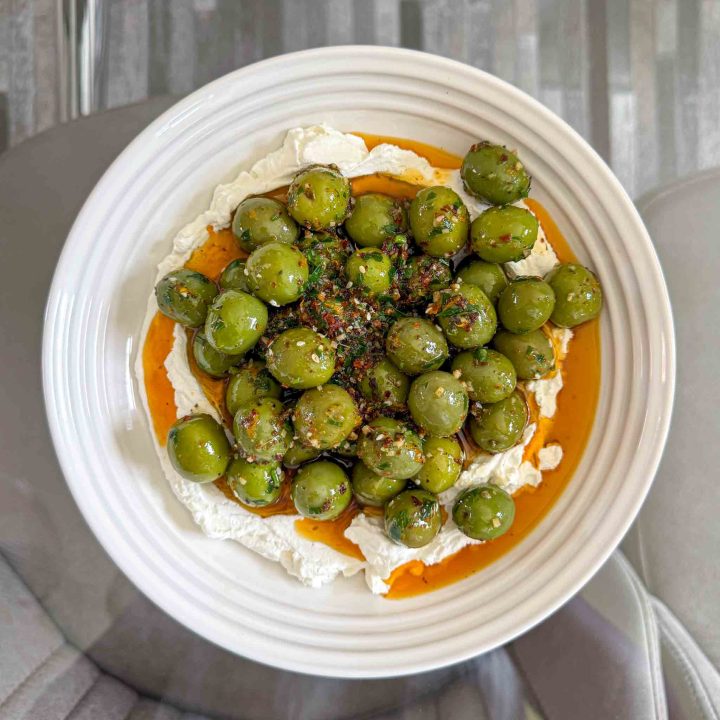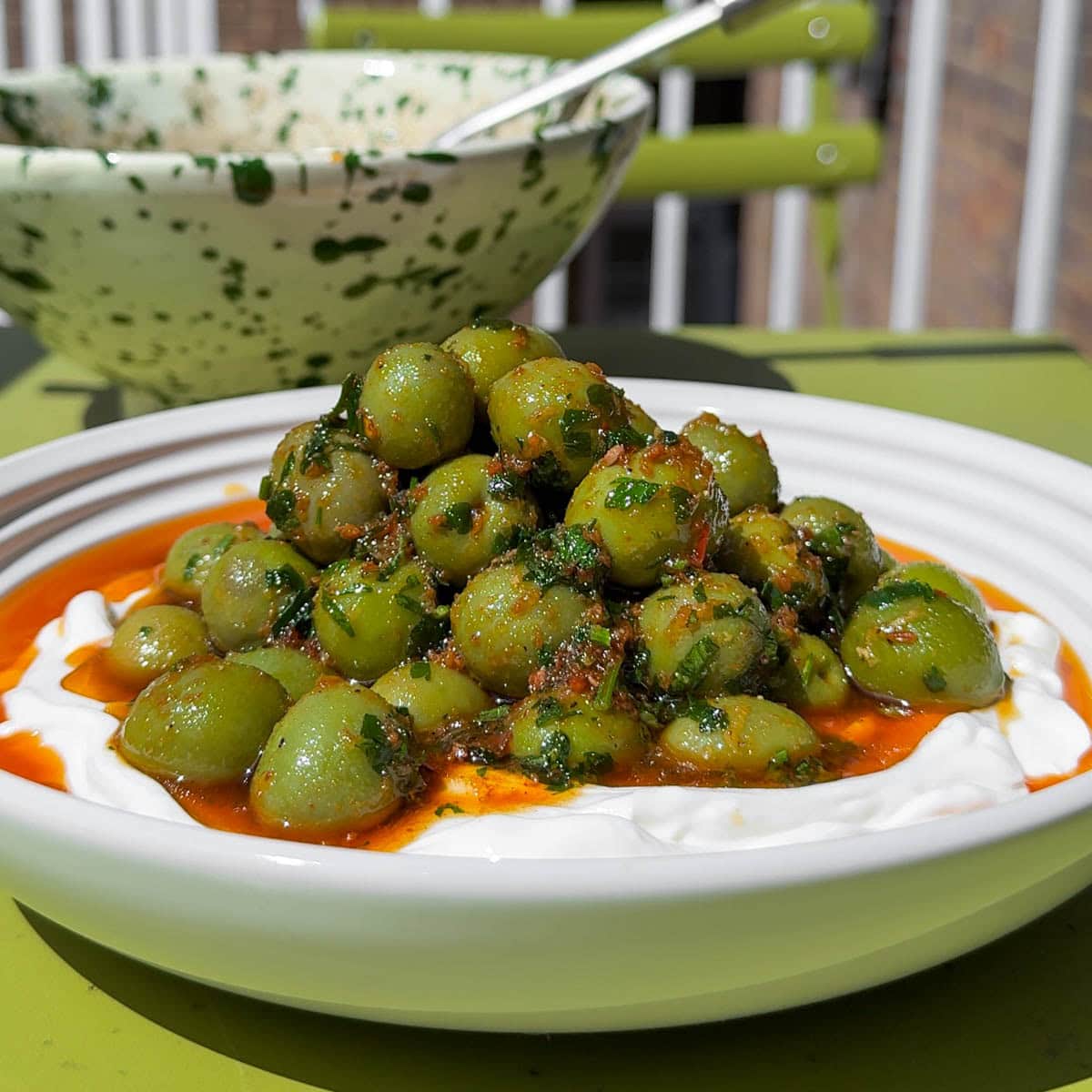
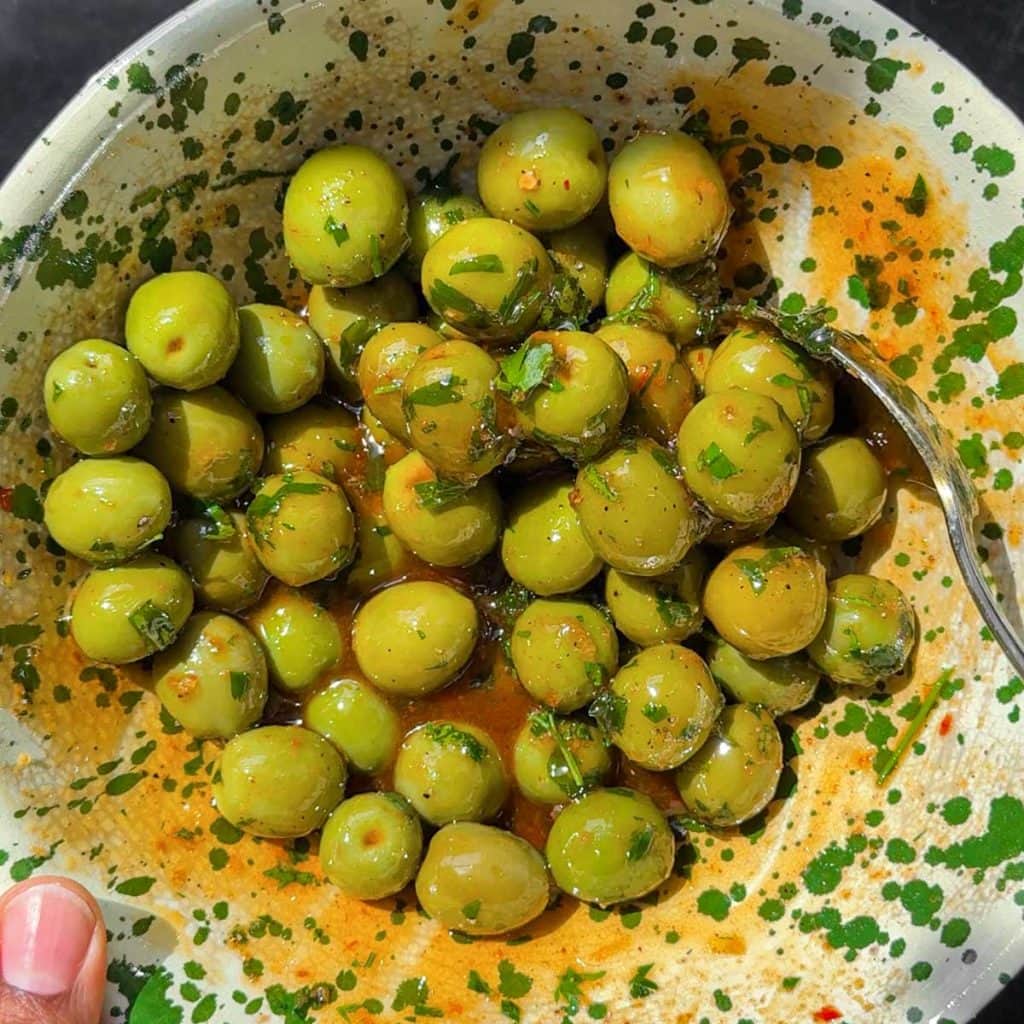
Nduja Marinated Olives are one of my favourite things to bring out in summer. They require almost no cooking and they can be made in advance. Added bonus: they improve the longer they sit in their marinade. They fit neatly into that category of “picky bits” that make warm-weather eating so enjoyable. Something to have alongside a drink, a board of cheese, or just on their own with bread. You can serve them as they are, or with a swipe of cheat’s labneh underneath, which adds another layer of richness and contrast.
Ingredient Breakdown
- Extra-virgin olive oil: the base for the marinade, rich and full-flavoured
- Nduja or nduja paste: spicy, smoky, porky, and spreadable; the star ingredient
- Garlic: sharpness and aroma, tamed once gently cooked in the oil
- Flat-leaf parsley: freshness to cut through the richness
- Nocellara olives: plump, buttery olives that soak up the marinade
- Greek yoghurt: strained into a quick labneh for optional serving
What is Nduja and Where Can You Find It?
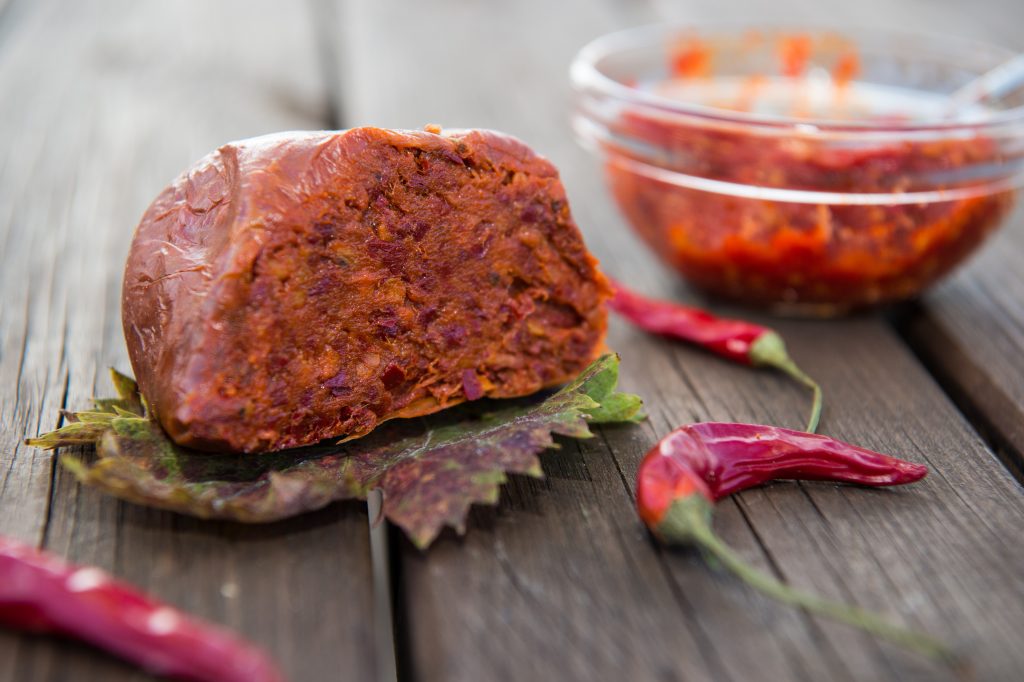
Nduja is a spicy, spreadable salami from Calabria in southern Italy. Unlike firm salami, nduja has a soft, almost pâté-like texture that melts when heated. It’s made with pork fat, lean cuts of pork, plenty of Calabrian chillies, and a natural fermentation process that deepens its flavour. The result is something smoky, fiery and rich, with a texture that makes it endlessly versatile in the kitchen.
You can spread nduja on toast, stir it into pasta sauces, or cook it into stews for depth. Here, it’s gently warmed with olive oil and garlic to form a marinade for these Nduja Marinated Olives. Heat loosens it into the oil, turning it into something silky and spoonable that clings beautifully to the olives.
Nduja is now widely available in the UK. You’ll find it at Italian delis, specialist food shops, and increasingly in supermarkets. Some are sold in large sausages that you slice into, others come pre-portioned in small tubs as a paste. Either will work here–just make sure it’s good quality. Sainsbury’s stock both nduja and nduja paste. Waitrose also sell their own nduja and nduja paste. Tesco carry nduja, while M&S/Ocado have nduja paste.
If you enjoy the fiery richness of nduja, you might also like my Nduja and Tomato Pasta, Nduja Sausage Rolls or Creamy Nduja Roast Chicken.
Choosing the Right Olives for Nduja Marinated Olives
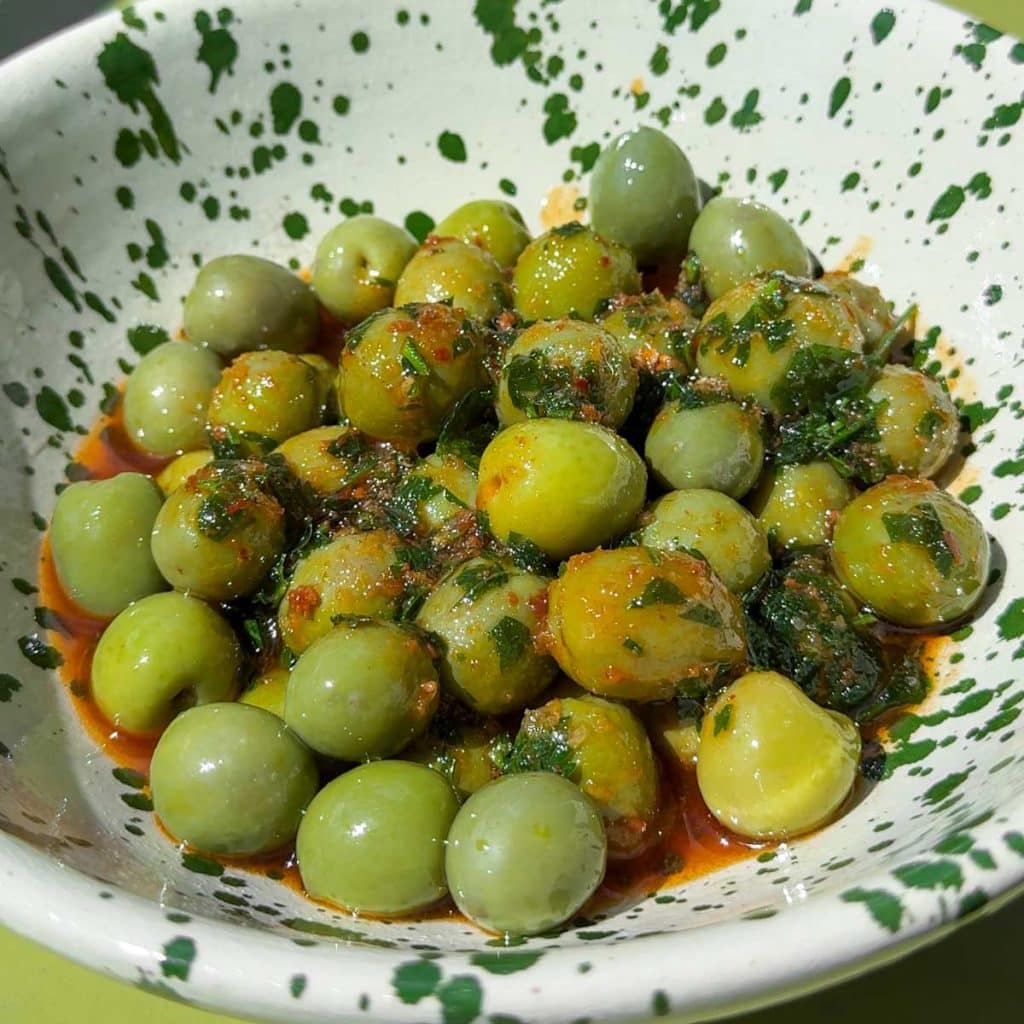
The olives you choose make a big difference in this Nduja Marinated Olives recipe. Nocellara are my go-to: large, plump, and naturally buttery, with a mild sweetness that stands up well to the smoky heat of nduja. Their firm flesh holds onto the marinade without collapsing, and their subtle flavour means they absorb spice rather than fight against it.
Castelvetrano olives are another good option. They have a similar buttery profile, though slightly milder, and take on the nduja nicely. I’d avoid overly sharp or briny varieties–kalamata, for instance, can clash with the richness and tilt the balance towards saltiness rather than spice. The goal is harmony: an olive that provides a soft, meaty base for the nduja without competing for attention.
Where possible, choose olives with their stones still in. The flavour is better and the flesh stays firmer. If you’re serving these for a larger group, you might opt for pitted olives for ease, but for flavour alone, whole is best.
Make-Ahead Entertaining with Nduja Marinated Olives
One of the things I love about these Nduja Marinated Olives is how well they lend themselves to entertaining. You can prepare them hours, or even a day, in advance and let them sit in the fridge until needed. The longer they rest, the more the nduja oil works its way into the olives, giving you something deeper and more rounded in flavour.
They’ll keep for up to four days in a sealed container in the fridge. In that time, the garlic mellows, the oil settles, and the olives themselves soften slightly as they drink up the marinade. If you find the oil and nduja have firmed up a little, just tip everything into a pan and warm very gently before serving–not to heat the olives through, but to loosen the oil and let the nduja melt back into it.
For hosting, that makes life simple: instead of rushing at the last minute, you can have them ready to go, needing only to be tipped into a bowl or plated with labneh. They’re also adaptable. Serve them as part of a spread with bread, cheese, and cured meats, spoon them over grilled sourdough so the nduja oil soaks into the crust, or scatter them through a grain salad to add smoky pockets of flavour. The simplicity is deceptive–they look and taste generous, yet require very little effort.
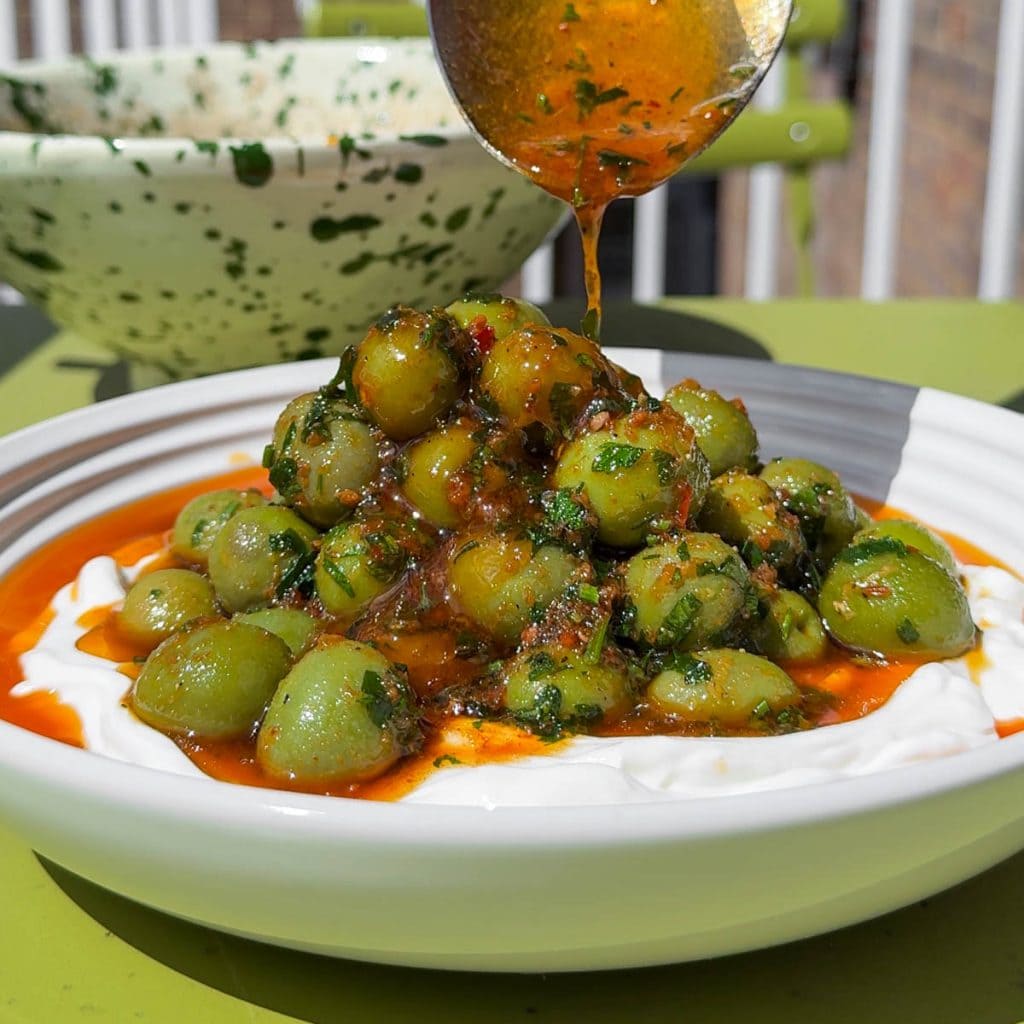
Elevate your Nduja Marinated Olives with Labneh
Labneh is a staple across the Middle East, made by straining yoghurt until thickened into a spreadable, tangy cheese. Traditionally, it takes overnight to achieve the right consistency, but a cheat’s version does the job in just a couple of hours. Greek yoghurt, lightly salted and weighed down to drain, transforms into something silky, creamy, and perfectly tart.
In the case of these Nduja Marinated Olives, labneh plays an important role in balance. The nduja brings heat, smoke, and porky depth, while the olives add brine and richness. Labneh cools and contrasts, tempering the spice and lifting the dish with freshness. It turns the olives into something more substantial and restaurant-worthy without complicating the process.
If you’ve never made labneh before, this recipe is an easy way in. Once you’ve drained yoghurt once or twice, you’ll find yourself making it regularly–it’s brilliant as a dip, spread on toast, or swirled into roasted vegetables. Here, it’s optional, but it elevates the olives into a proper centrepiece.
If you’re making the cheat’s labneh, you might also enjoy my Roasted Tenderstem Broccoli with Smoky Butter, Sticky Za’atar Carrots with Spicy Dukkah and Labneh, or Crispy Salmon with Spiced Butter, where yoghurt plays a cooling role too.
Final Thoughts
For me, summer cooking is about recipes that feel abundant and flavourful without demanding much time. Nduja Marinated Olives are exactly that: minimal effort, maximum flavour, and endlessly adaptable. They keep well, they serve beautifully, and they hit that balance of boldness and freshness that makes food memorable.
Whether you put them out as part of a spread, pile them on labneh, or just serve them with bread and wine, they deliver far more than the effort involved. That’s why I return to Nduja Marinated Olives again and again–they make summer entertaining feel easy, generous, and deeply satisfying.
Nduja Marinated Olives
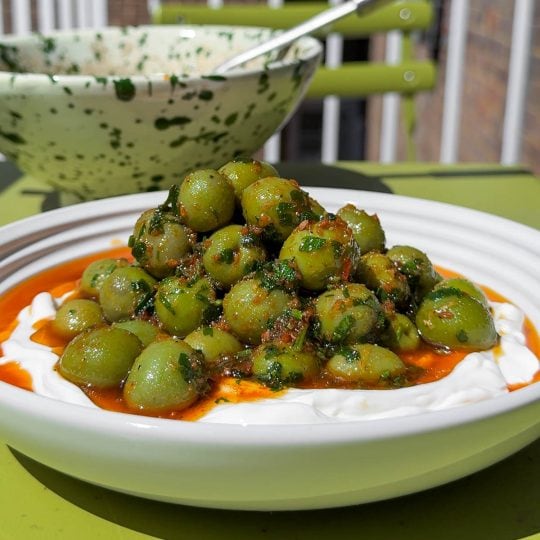
For me, summer is all about minimal cooking and lots of picky bits. These nduja marinated olives tick both boxes–they’re quick to throw together, can be made well in advance, and only get better the longer they sit. Perfect for entertaining or just as something to snack on with a drink. I love serving them over a cheat’s labneh, but they’re just as good on their own.
- Prep Time: 10 minutes
- Total Time: 15 minutes (longer if making the labneh)
- Yield: 4 1x
Ingredients
For the cheat’s labneh (optional):
- 225g Greek yoghurt
- ½ tsp salt
For the nduja marinated olives:
- 100ml extra-virgin olive oil
- 2 tbsp nduja or nduja paste
- 2 garlic cloves, minced
- small handful flat-leaf parsley, finely chopped
- 300g nocellara olives
Instructions
- If making the labneh, line a sieve with a clean cloth and set it over a bowl. Mix the Greek yoghurt with the salt, then spoon it into the cloth. Give it a squeeze, top with something heavy, and leave to drain in the fridge for 1 to 2 hours depending on how thick you want it.
- For the olives, heat the extra-virgin olive oil, nduja and garlic in a small saucepan over medium heat. As the nduja warms, it will melt into the oil. Once everything starts to sizzle, cook for 1 to 2 minutes, stirring often, or until fragrant.
- Remove the saucepan from the heat and stir in the fresh parsley.
- Place the olives in a bowl and pour over the warm marinade. Toss well and leave to cool before serving. The olives will keep in a sealed container in the fridge for up to 4 days. Note: If you’re making the olives ahead of time, the oil and nduja will firm up slightly in the fridge. Just tip them into a pan and warm very gently before serving–not to heat the olives through, but simply to loosen the oil and melt the nduja back into it.
- To serve, spread the labneh (if using) over a plate, pile the olives on top and finish with a drizzle of the marinade.