
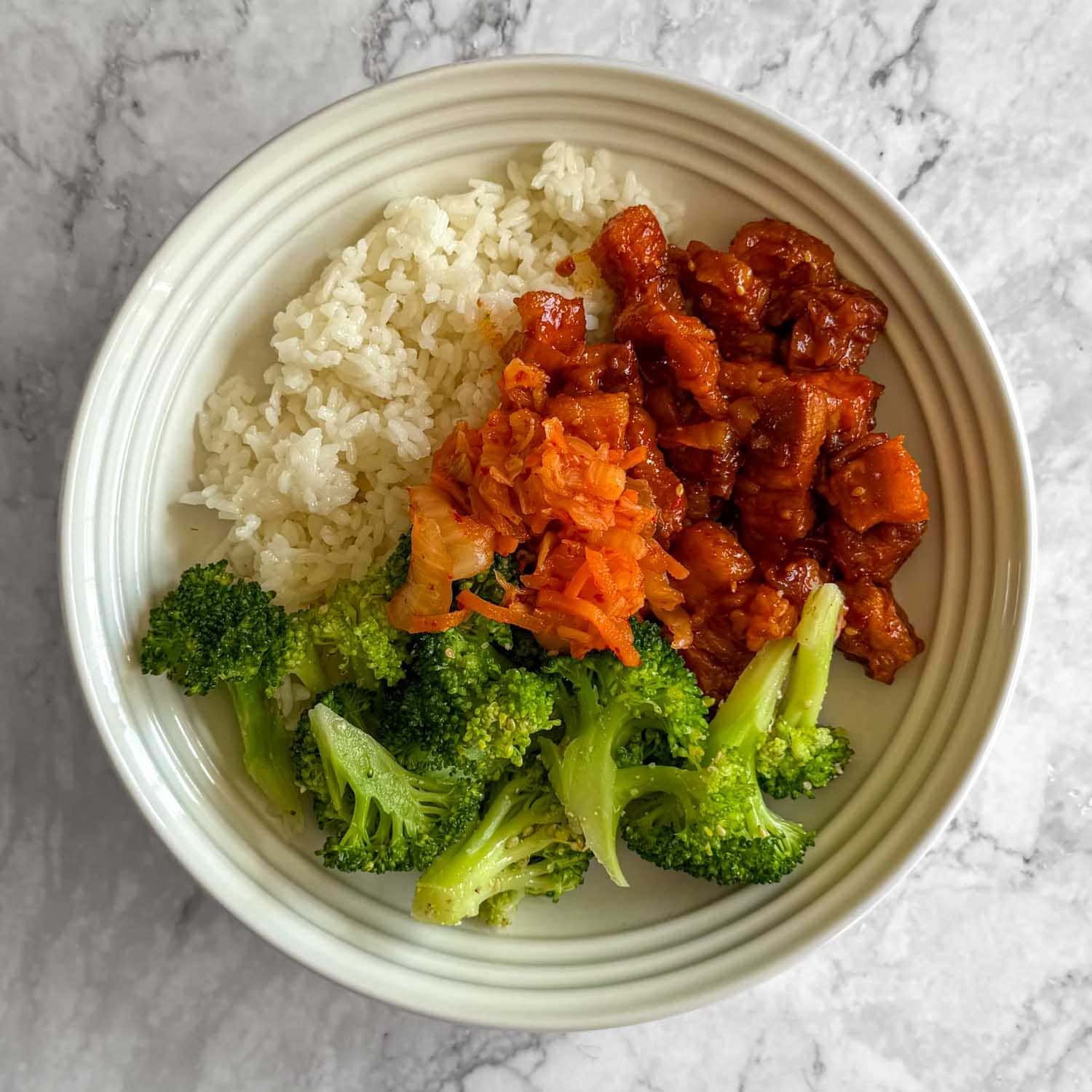
Sticky Kimchi Pork Belly is one of those dishes I cook when I want big, bold flavours without overcomplicating dinner. It uses four ingredients, one pan and very little time. Yet it delivers something deeply savoury, sticky and properly satisfying. It’s a true maximum flavour, minimum effort situation.
With so few ingredients, each one has to work hard, and here they really do. The pork belly provides richness and body. The kimchi brings sharpness and a fermented depth that cuts through the fat. Gochujang adds savoury warmth and complexity, while the honey smooths the edges and helps the sauce caramelise into a glossy coating.
The result is Sticky Kimchi Pork Belly that tastes punchy and balanced rather than heavy. Spoon it over hot rice and let the sauce seep in, or wrap it in crisp lettuce leaves for freshness and contrast. Watch me make it here.
Ingredient Breakdown
- Pork belly strips – Rich and fatty, ideal for rendering down and caramelising into sticky pieces.
- Kimchi – Sour, fermented cabbage that adds acidity, chilli heat and savoury depth.
- Gochujang – Korean fermented chilli paste with sweetness, umami and gentle warmth.
- Runny honey – Balances heat and acidity while encouraging proper caramelisation.
Why This Sticky Kimchi Pork Belly Works
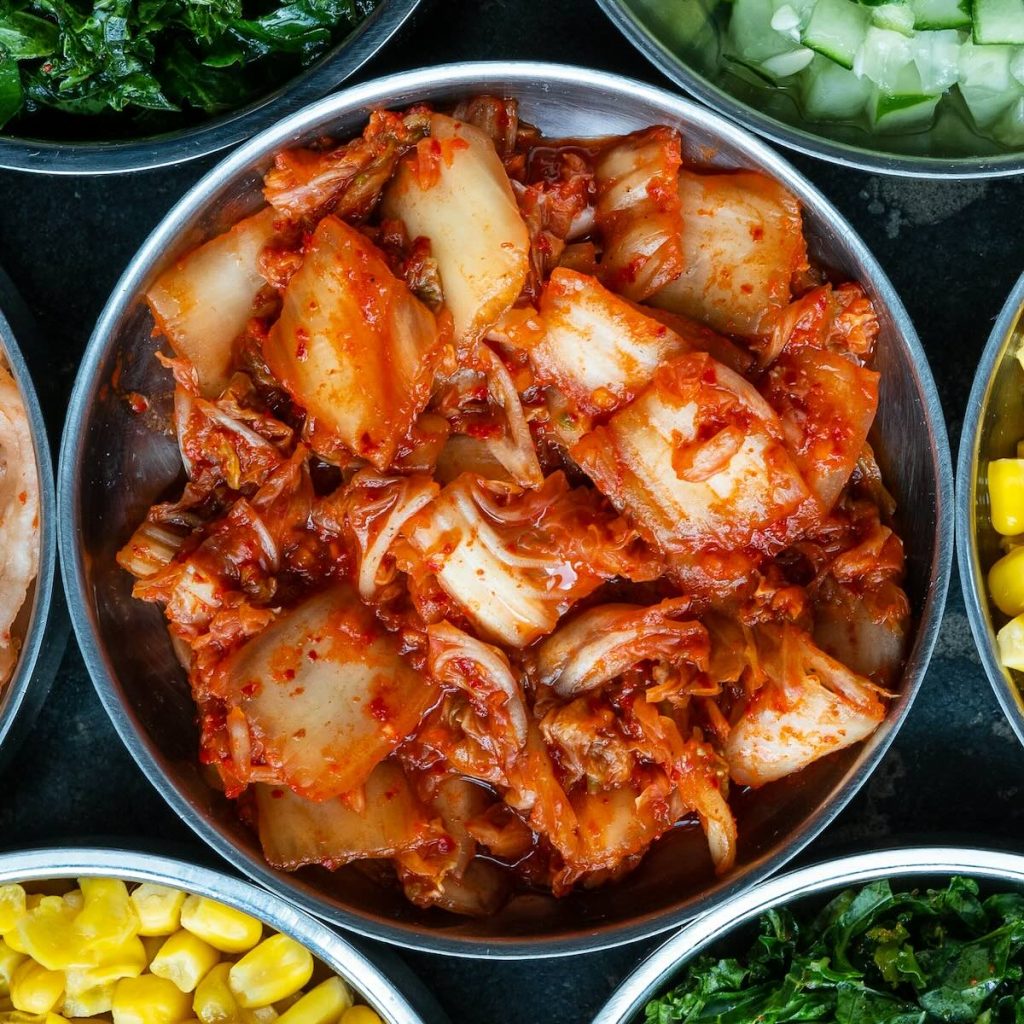
This dish relies on balance rather than complexity. Pork belly contains a high proportion of fat. Fat gives flavour, but it needs acidity to feel balanced. A well-fermented kimchi provides that acidity. It should taste tangy and slightly funky. That sharpness cuts through the richness and keeps the Sticky Kimchi Pork Belly nice and bright.
Avoid shelf-stable kimchi if you can. It often tastes sweeter and flatter, with less acidity and depth. This Sticky Kimchi Pork Belly depends on that tangy, fermented edge to stop it feeling cloying and one-note. If shelf-stable is all you can find, add a small splash of rice vinegar or white wine vinegar to the marinade. That extra acidity will sharpen the dish and restore some of the balance you would get from a properly sour, well-fermented kimchi.
Gochujang deepens the flavour profile. It contributes savouriness, mild heat and a subtle sweetness. As it cooks, it thickens and clings to the pork. Honey does more than sweeten. It rounds out the acidity and supports caramelisation. As the pork renders, the sugars reduce with the fat and create a glossy coating.
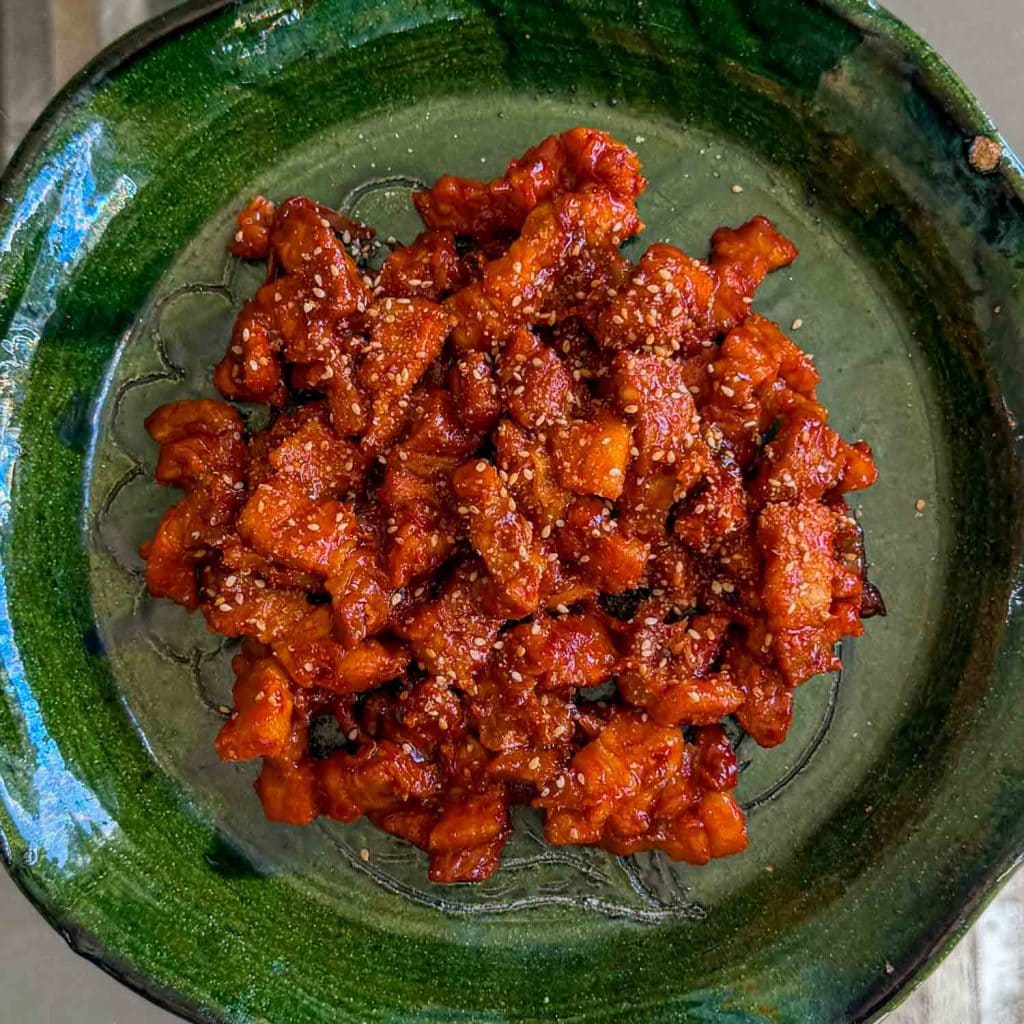
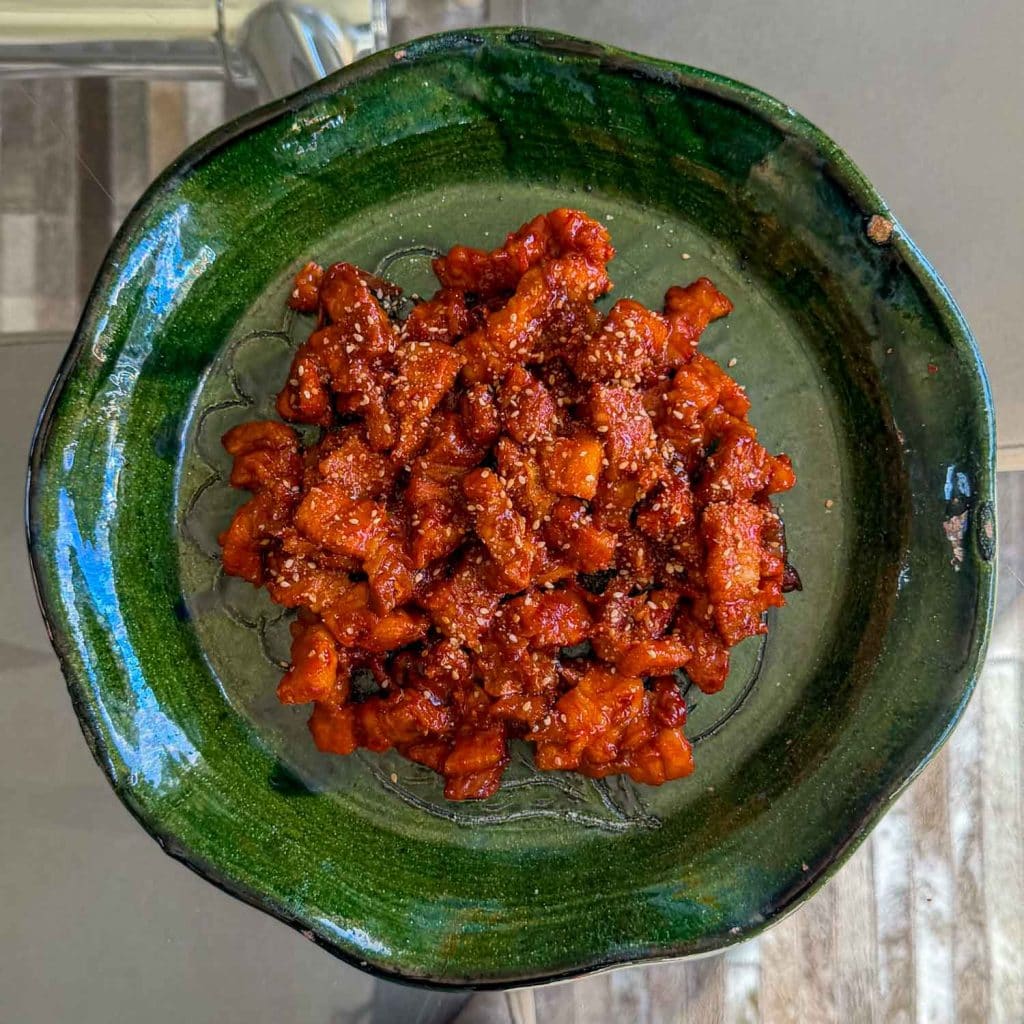
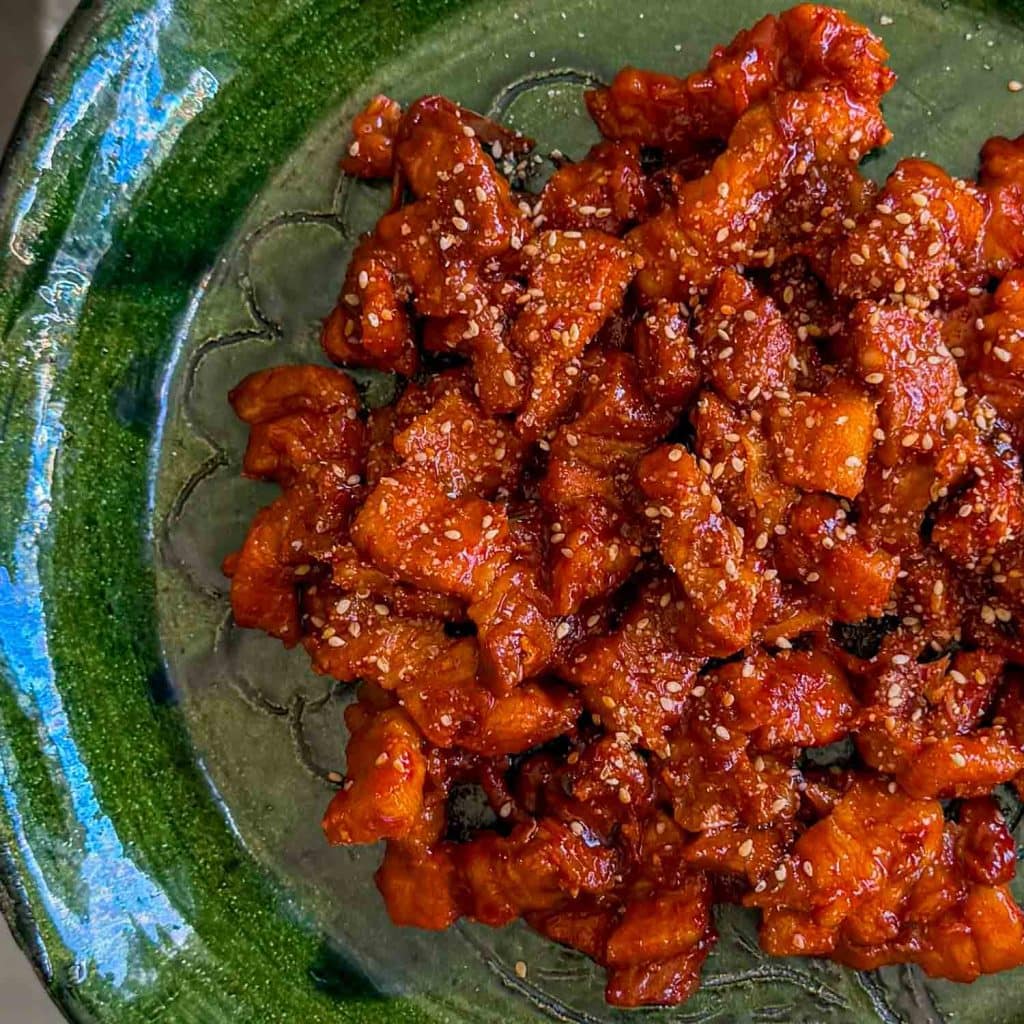
When cooked properly, this Sticky Kimchi Pork Belly should look lacquered and slightly charred at the edges. The sauce should cling rather than pool.
Cooking Sticky Kimchi Pork Belly Properly
The method is straightforward, but a few small decisions make a real difference to the final result:
- Slice the pork belly into roughly half-inch pieces, keeping them fairly even so they cook at the same rate. Smaller pieces render more efficiently and caramelise more evenly.
- Mix the kimchi, gochujang and honey thoroughly before adding the pork, then coat every piece well.
- Heat a good non-stick frying pan over a medium heat and do not add oil. The pork will release plenty of fat as it cooks.
- Spread the pork into a single, even layer and avoid piling it up. Overcrowding encourages steaming rather than caramelising.
- Cover the pan for the first stage of cooking to help the fat render, stirring occasionally to prevent sticking.
- After 12 to 15 minutes, remove the lid if needed and allow the sauce to reduce fully. You are looking for stickiness and light charring, not a loose sauce.
Your Sticky Kimchi Pork Belly is ready when the fat has rendered, the sauce clings to the meat and the edges have taken on colour.
If You Find Pork Belly Too Fatty
Pork belly is of course the star of the show in this Sticky Kimchi Pork Belly recipe, but it is not your only option:
- If you prefer something slightly leaner, pork shoulder steaks work very well. They still contain enough fat to stay juicy and to help the sauce reduce properly. Slice them into similar-sized pieces and cook in exactly the same way.
- Avoid pork loin steaks. They are too lean for this recipe. Without sufficient fat, the sauce reduces harshly and the meat can turn dry and tight. This dish relies on rendered fat to create its texture and depth. Remove that, and you change the character of the dish.
Tips for Nailing Your Sticky Kimchi Pork Belly
Although the method is straightforward, a few small decisions will make a noticeable difference to your final dish:
- Use medium/medium-high heat. Too high, and the honey will burn before the fat renders.
- Do not add extra oil. The pork provides enough fat for cooking.
- Spread the pork in a single layer to encourage proper caramelisation.
- Cover early on to help the fat render efficiently.
- Stir occasionally, but allow the pork to sit long enough to colour.
- Cook until the sauce is sticky and clings to the meat, not loose or watery.
- If the sauce thickens too quickly, lower the heat slightly.
- If it looks pale and thin, cook uncovered for a few more minutes.
Sticky Kimchi Pork Belly FAQS
Can I marinate the pork for longer than 10 minutes?
You can, but it is not necessary. The flavours are bold and penetrate quickly. Longer marinating will not dramatically change the outcome.
Can I make Sticky Kimchi Pork Belly ahead of time?
It is best cooked and eaten fresh, when the edges are at their stickiest and the sauce is at its glossiest. That said, you can prep it in advance. Marinate the pork, then keep it covered in the fridge for up to two days before cooking. You can also freeze the marinated pork for up to a month. Thaw it fully in the fridge, then cook as instructed.
Will it be very spicy?
It has a gentle warmth rather than an aggressive heat, as the honey and rendered pork fat soften the chilli and round everything out. If you prefer it milder, simply reduce the gochujang slightly.
What should I serve with Sticky Kimchi Pork Belly?
Plain steamed rice is the natural choice, as it absorbs the sticky sauce and balances the richness of the pork. For something fresher, serve it in crisp lettuce cups, or add sliced spring onions and quick pickles to bring contrast and a little sharpness to the plate.
Why You Should Make Sticky Kimchi Pork Belly
Sticky Kimchi Pork Belly is a reminder that you can build real depth of flavour with very little, as long as each ingredient has a clear role. The pork brings richness, the kimchi brings acidity, the gochujang adds savoury warmth and the honey ties it together while helping the sauce reduce and cling.
It is quick enough for a weeknight, but it still feels exciting and special. And once you understand why Sticky Kimchi Pork Belly works, you start to recognise the same structure elsewhere: richness balanced with sharpness, sweetness controlled through reduction, fermentation used to add depth without complication. That is what makes it a recipe worth keeping in rotation.

Love Pork? You’ll Love These Recipes!
If you like this Sticky Kimchi Pork Belly recipe, here are some other pork recipes you might enjoy:
- Braised Pork Belly Tacos: Tender, slow-cooked pork belly served in soft tortillas with pickled onions and salsa for a rich, flavour-packed taco experience.
- Spicy Pork Noodles: A quick and easy dish featuring spicy pork mince tossed with noodles, garlic, ginger, and a savoury sauce for a satisfying meal with a kick.
- Teriyaki Pork Miso Ramen: A comforting bowl of ramen with tender teriyaki-glazed pork, miso broth, and plenty of fresh toppings for a flavourful Japanese-inspired dinner.
- Pork & Vegetable Spring Rolls: Crispy, golden spring rolls filled with seasoned pork mince and crunchy vegetables, perfect as a starter or a light snack.
- Thai Basil Pork Stir-Fry (Pad Krapow): A fragrant and spicy stir-fry featuring minced pork, Thai basil, and a punchy sauce, served over rice for a quick, flavour-packed dinner.
Sticky Kimchi Pork Belly
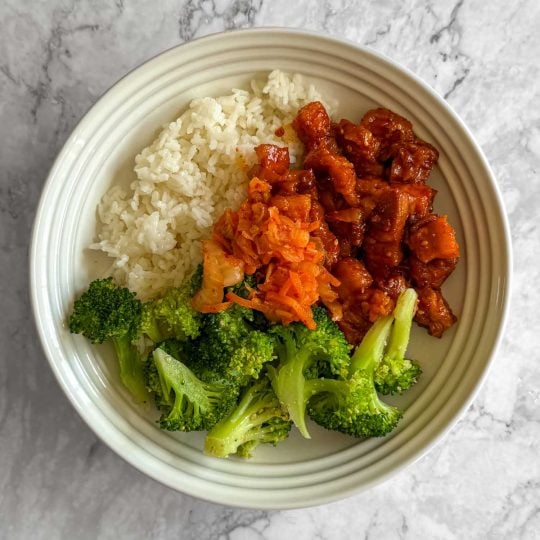
This quick and easy pork belly dish is the epitome of maximum flavour, minimum effort. It comes together in one pan using just four ingredients, yet delivers far more than the sum of its parts. Rich, punchy and deeply savoury, it’s perfect spooned over rice or wrapped up in crisp lettuce cups.
Tip: For the best balance, use a sour, well-fermented kimchi from the supermarket fridge section. The shelf-stable kind tends to be overly sweet and lacks the acidity and depth this dish needs.
- Prep Time: 5 minutes
- Total Time: 20 minutes
- Yield: 4 1x
Ingredients
- 500g pork belly strips
- 4 heaped tbsp kimchi
- 2 tbsp gochujang
- 2 tbsp runny honey
Instructions
- Slice the pork belly into roughly ½ inch pieces.
- In a large bowl, mix the kimchi, gochujang and honey until well-combined, then add the pork and toss thoroughly to coat. Leave to marinate for 10 minutes.
- Heat a non-stick frying pan over a medium heat. Add the pork and spread it into an even layer. Cover and cook, stirring occasionally, for 12 to 15 minutes, or until sticky, reduced and charring in places. Serve immediately.





One Response
So easy, soo delicious! Perfect midweek meal