
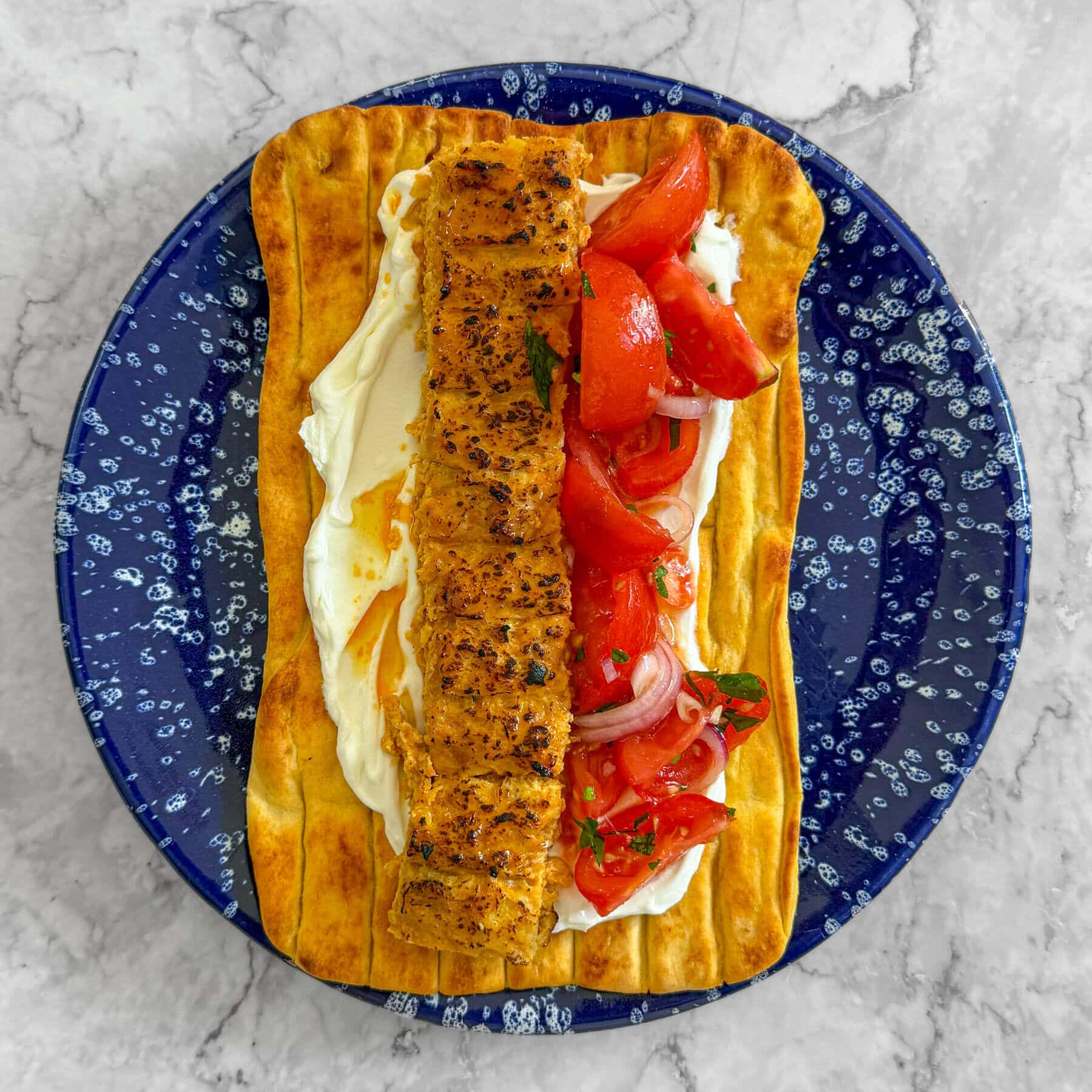
This is my take on viral sheet pan chicken kebabs, made with chicken and plenty of saffron — an ingredient I come back to often. Everything gets mixed, pressed into a tray and baked, so you get all the flavour and texture of a good chicken kebab without any skewering or grilling. Watch me make them here.
It’s a simple, low-effort way to make chicken kebabs in the oven, and one that delivers properly on both texture and flavour.
The key to keeping these Sheet Pan Chicken Kebabs juicy is twofold: adding chicken thigh to the mix, because chicken mince on its own is too lean and tends to dry out, and adding melted butter, which enriches the mixture and helps carry the flavour as it cooks.
The saffron runs through the mixture and infuses the roasting juices along with the tomato purée, creating something deeply savoury and fragrant. They work just as well wrapped in flatbreads as they do spooned over rice with all those juices.
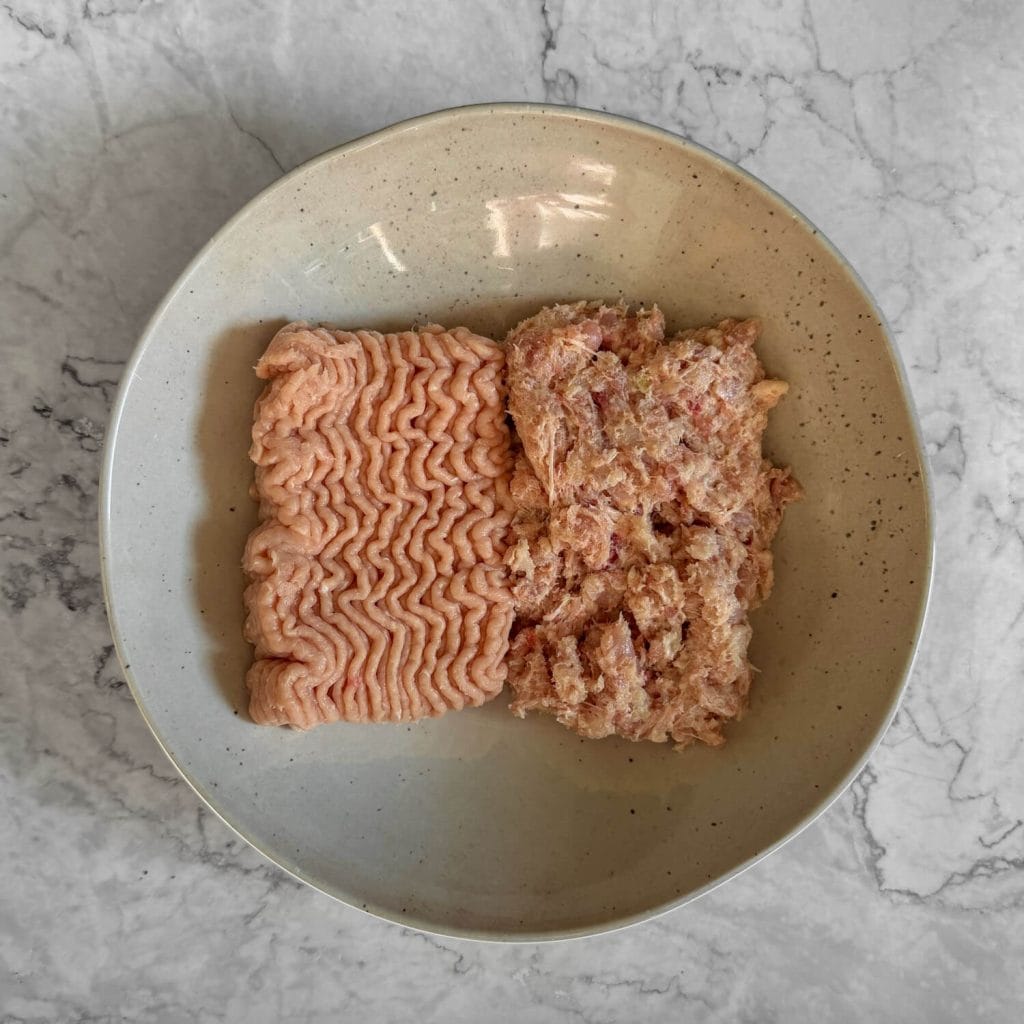
Ingredient Breakdown
- Chicken thigh fillets: add fat and flavour, keeping the kebabs juicy
- Chicken mince: gives the mixture its soft, cohesive texture
- Saffron: brings warmth, colour and a subtle floral note
- Onions: add sweetness and moisture once properly drained
- Tomato purée: deepens the savoury base
- Butter: enriches the mixture and helps carry flavour as it cooks
- Smoked paprika: adds gentle smokiness
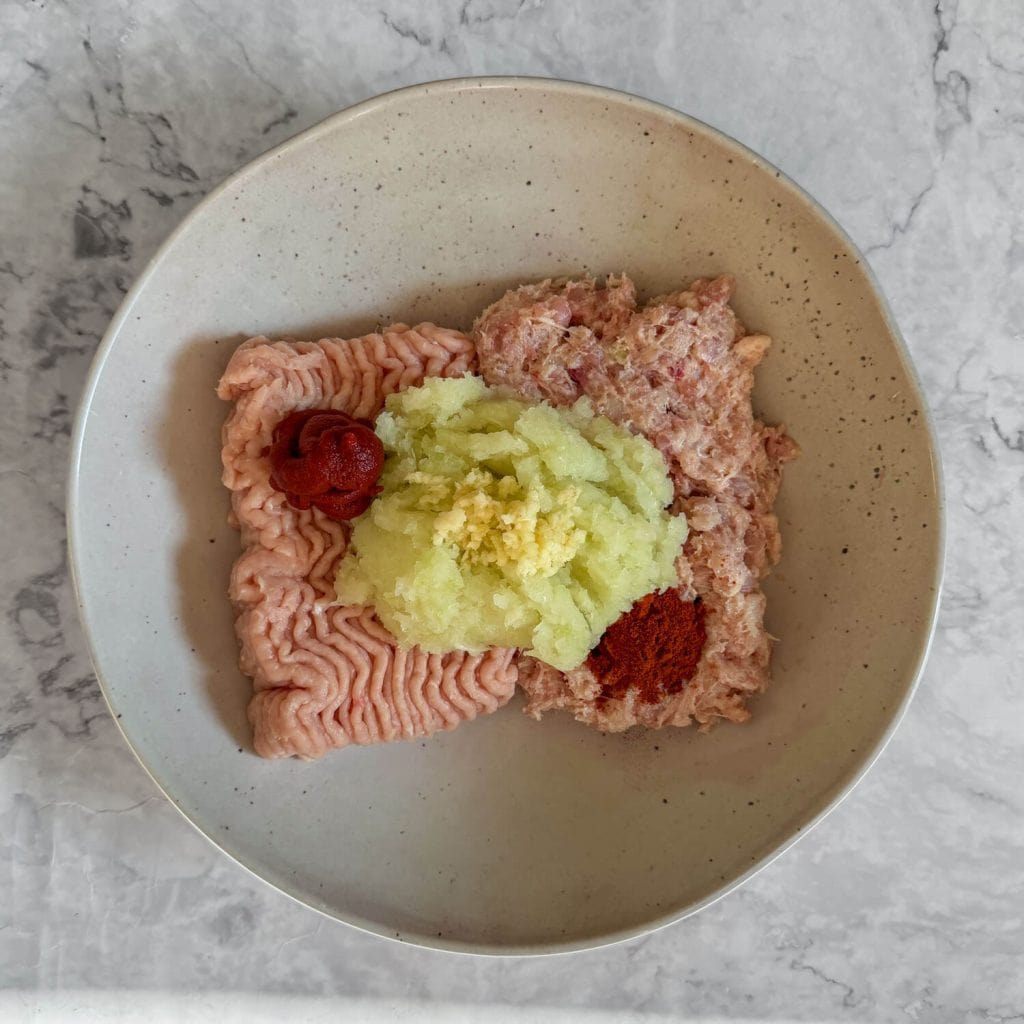
Why These Sheet Pan Chicken Kebabs Stay Juicy
This Sheet Pan Chicken Kebabs recipe relies on a few deliberate choices that make a noticeable difference in keeping them extra juicy:
- Using a mix of chicken thigh and chicken mince gives you the best of both. The mince provides that soft, cohesive texture you expect from chicken kebabs, while the thighs bring the fat needed to keep everything juicy. If you were to use chicken mince alone, the kebabs would be noticeably drier.
- Melted butter is just as important. It enriches the mixture, helps distribute the saffron evenly and ensures the kebabs stay moist as they bake in the oven. Combined, these two elements give you chicken kebabs that feel rich, tender and properly balanced.
- Draining the onions thoroughly is another step that shouldn’t be skipped. Removing excess water concentrates their flavour and stops the mixture from becoming too loose, which helps the kebabs hold their shape on the sheet pan.
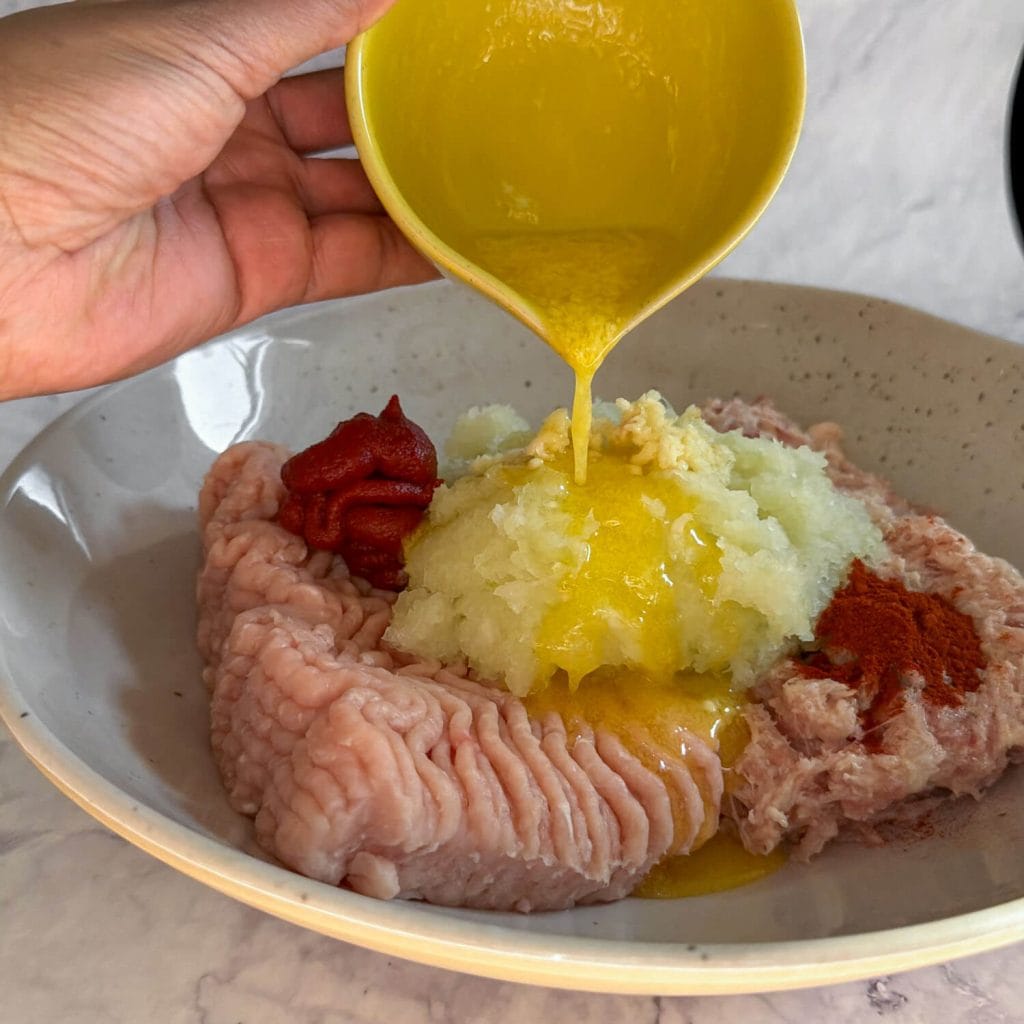
How to Get the Right Texture for Chicken Kebabs in the Oven
The goal is a mixture that’s sticky, cohesive and easy to shape. Here’s how you accomplish this.
- Blitzing the chicken thighs until finely minced allows them to fully combine with the chicken mince, rather than sitting as separate pieces. Once mixed, the texture should feel slightly tacky — this is what helps the kebabs hold together without skewers.
- Pressing the mixture firmly into the tray is key. You want an even layer so the chicken kebabs cook uniformly.
- Scoring the mixture before baking gives you that classic kebab shape. The shallow indentations also increase the surface area slightly, which helps with browning when you finish them under the grill.
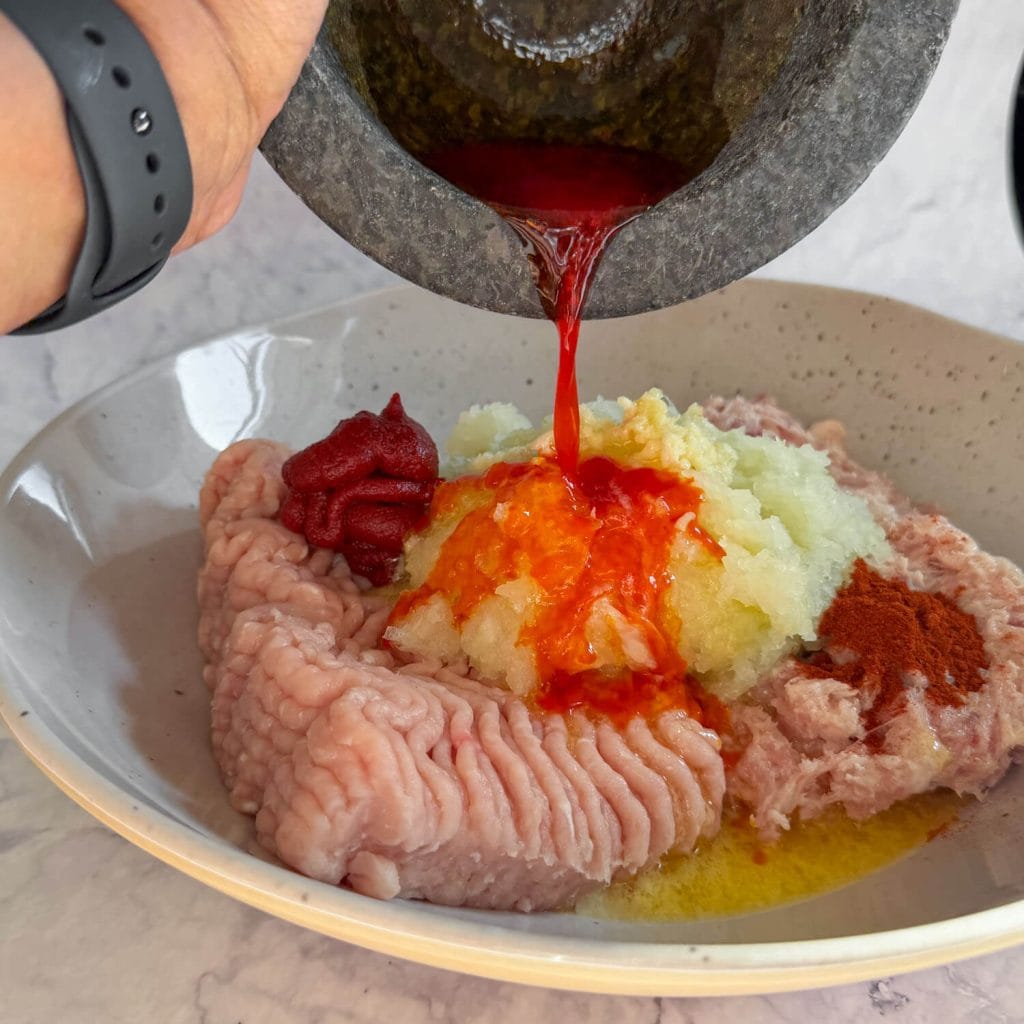
How to Cook Sheet Pan Chicken Kebabs in the Oven
These Sheet Pan Chicken Kebabs cook in two stages.
- The initial bake cooks the chicken through and allows the fat and juices to render out into the tray. You should see a good amount of liquid at this stage — that’s exactly what you want.
- Switching to the grill at the end is what gives you colour and light charring. It caramelises the surface and adds depth, bringing the kebabs much closer to what you’d expect from a grilled version. Keep a close eye during this stage so the kebabs take on colour without drying out.
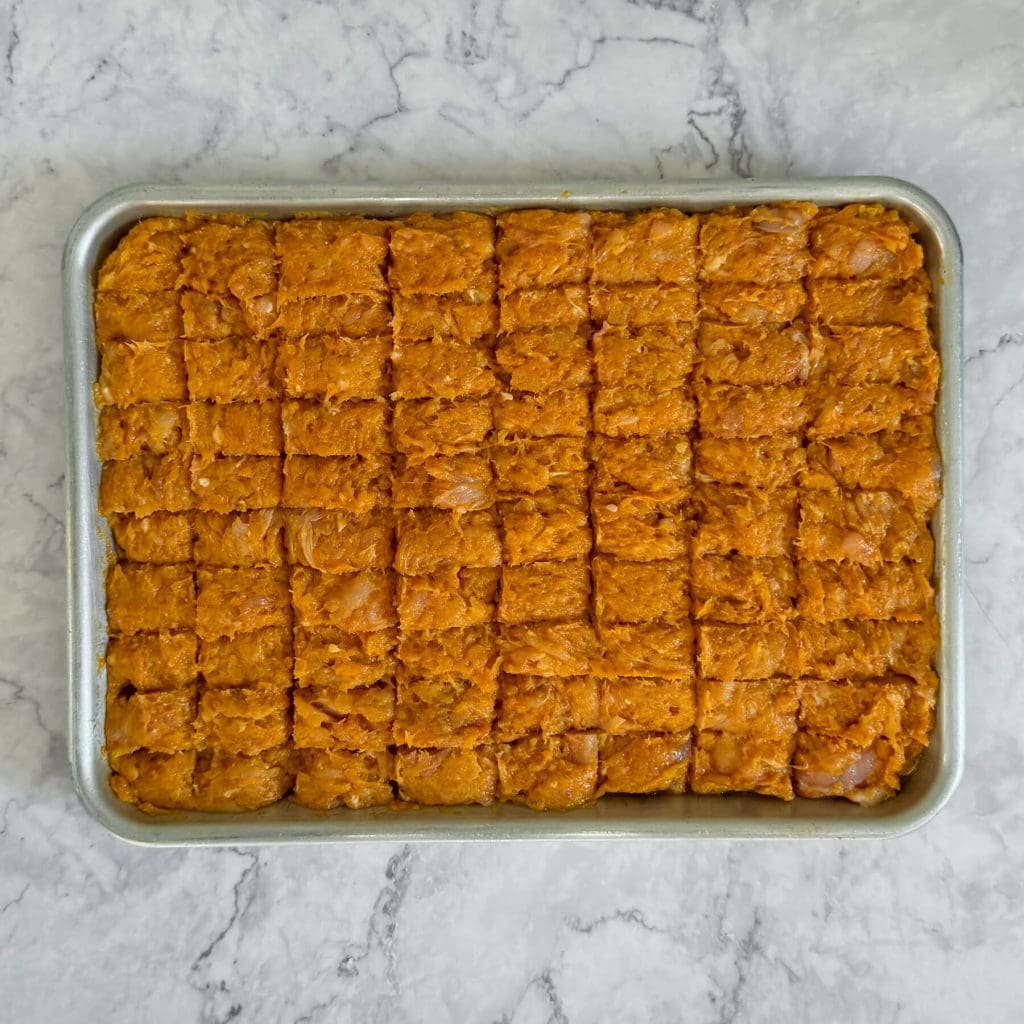
Tips for the Best Sheet Pan Chicken Kebabs
- Don’t skip draining the onions. Excess moisture will loosen the mixture and affect how well the kebabs hold their shape.
- Mix thoroughly until the mixture becomes slightly sticky. This helps everything bind together and gives you that classic kebab texture.
- Press the mixture firmly into the tray. If it’s too loose or uneven, the kebabs won’t cook as evenly or hold clean lines when sliced.
- Keep a close eye when grilling. You want light charring and caramelisation, not dryness.
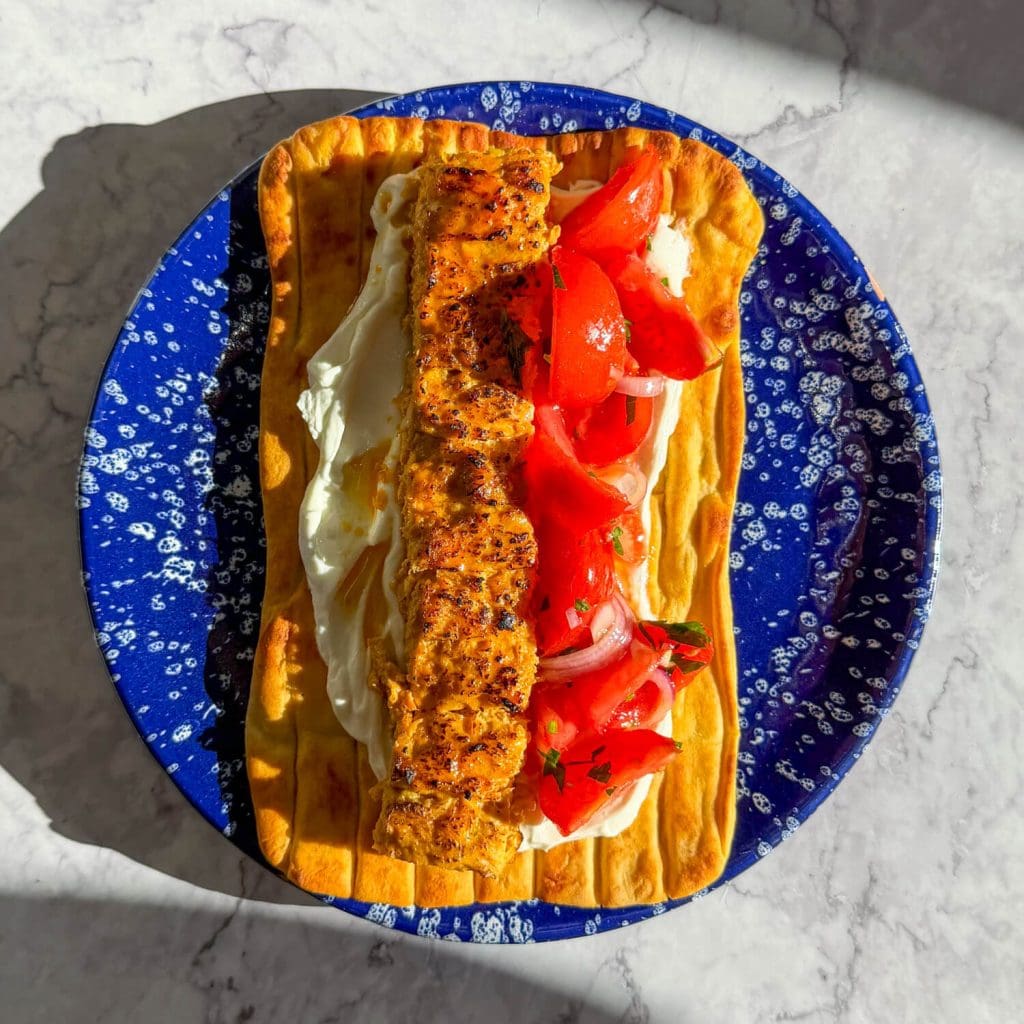
Making the Most of the Roasting Juices
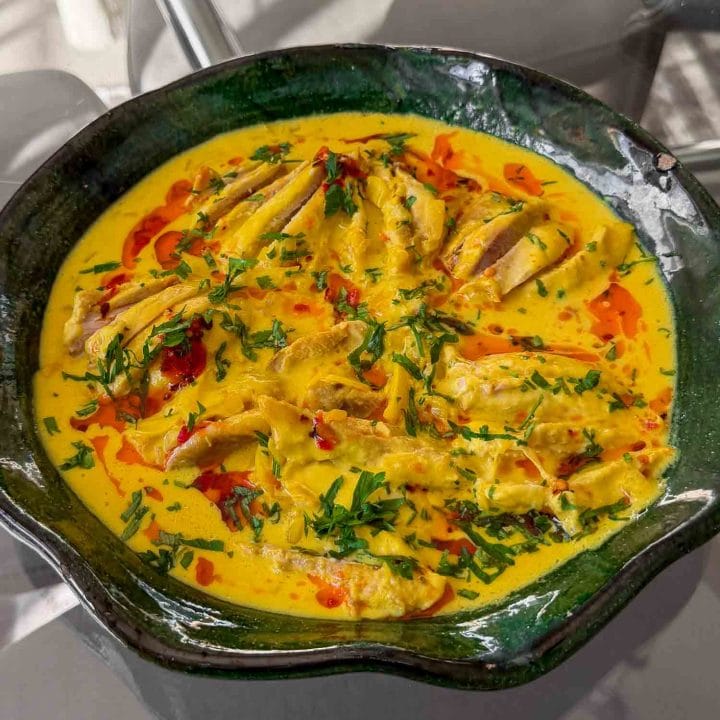
One of the advantages of cooking chicken kebabs on a sheet pan is everything that collects in the tray. The juices are packed with flavour from the saffron, butter and tomato purée. Rather than discarding them, use them to finish the dish.
If you’re serving these Sheet Pan Chicken Kebabs with flatbreads, soaking the bread briefly in the juices before warming makes a big difference. If you’re serving with rice, spoon the juices over just before serving — it ties everything together.
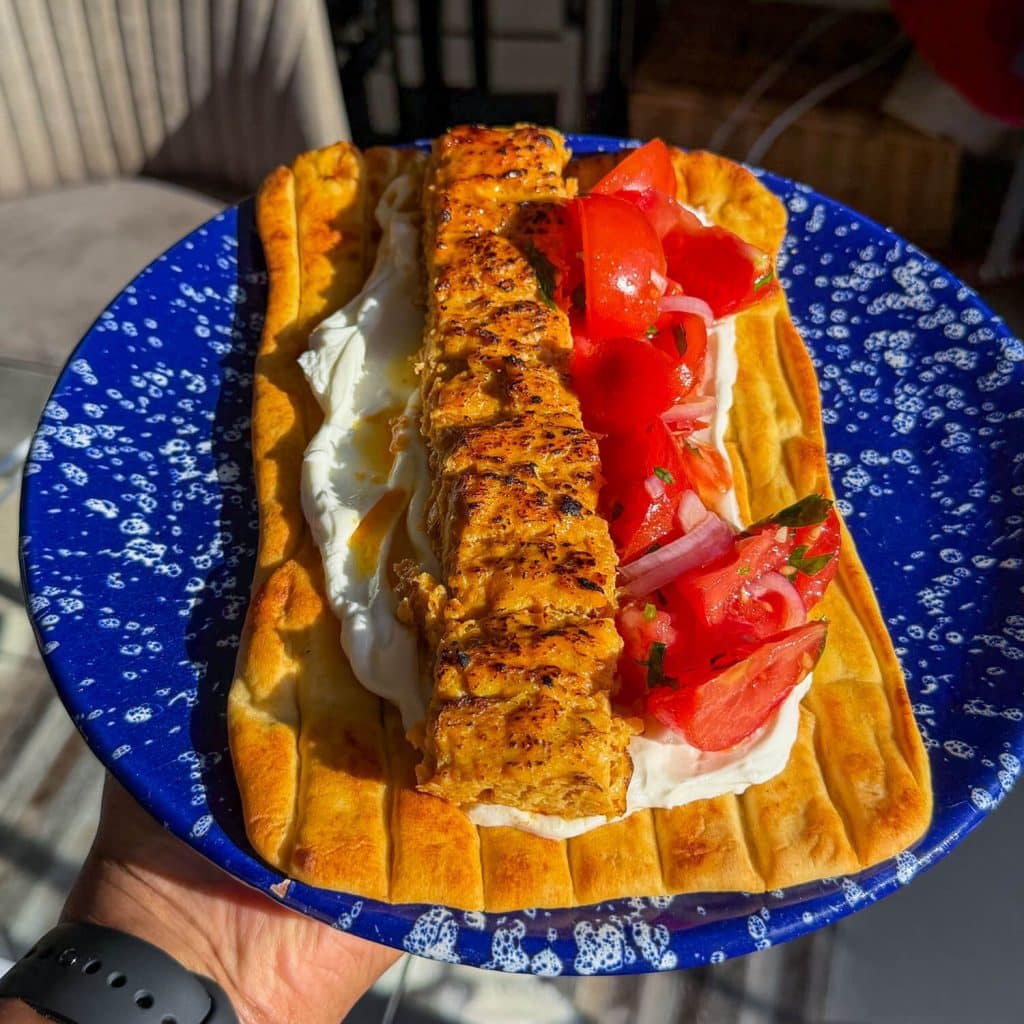
How to Serve Sheet Pan Chicken Kebabs
These sheet pan chicken kebabs are very flexible.
- Wrap them in flatbreads with garlic yoghurt and a fresh, herby tomato salad for contrast. If you’re up for making your own, try my Fluffy Flatbreads or Quick & Easy Flatbreads.
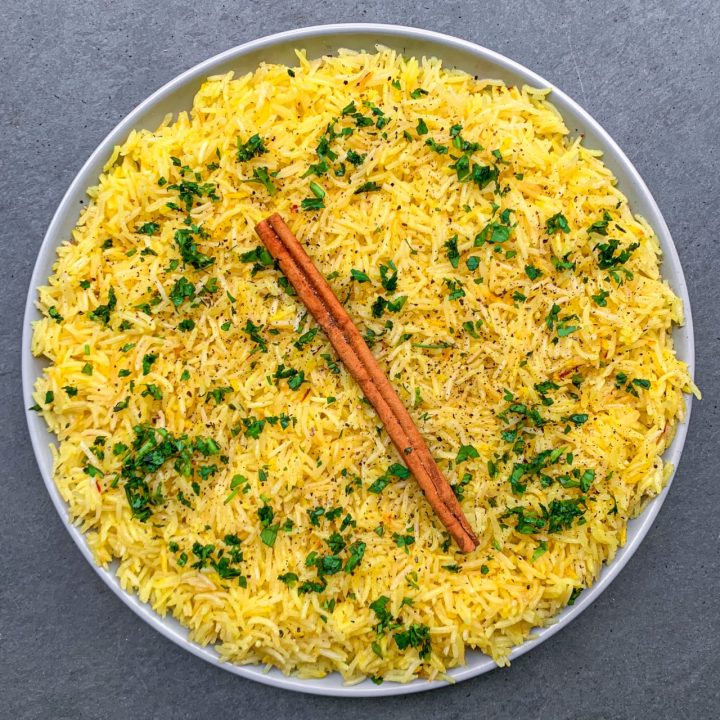
- Alternatively, serve the Sheet Pan Chicken Kebabs over rice with the roasting juices and some simply cooked vegetables. You can even double down on the saffron by serving them with my Saffron Rice.
In both cases, something fresh alongside helps balance the richness.
Sheet Pan Chicken Kebabs FAQs
Can you make chicken kebabs without skewers?
Yes — this is exactly what sheet pan chicken kebabs are designed for. Instead of shaping the meat onto skewers, you press the mixture into a tray, score it and bake it in the oven. You still get the flavour and texture of traditional chicken kebabs, but with far less effort.
Can you cook these chicken kebabs in the oven?
Yes, and it’s one of the easiest ways to cook them. Baking first ensures they cook through evenly, then finishing under the grill gives you the light charring you’d normally get from a barbecue.
Why are my chicken kebabs dry?
Chicken mince on its own is very lean, which is why it can dry out easily. Adding chicken thigh brings in fat and flavour, while butter helps keep the mixture moist as it cooks. Both make a noticeable difference to the final texture of the sheet pan chicken kebabs.
How do you keep chicken kebabs juicy?
It comes down to fat and balance. Using a mix of chicken thigh and mince prevents the kebabs from drying out, and adding butter helps carry moisture through the cooking process. Avoid overcooking as well, especially during the grilling stage.
Do I need to drain the onions?
Yes. Onions hold a lot of water, and if you skip this step, the mixture can become too loose and won’t hold its shape properly. Draining them also concentrates their flavour, which improves the overall result.
What temperature should you cook chicken kebabs in the oven?
A hot oven works best. Start at around 220°C to cook the kebabs through and render out the juices, then switch to the grill at a higher heat to finish and add colour.
Sheet Pan Chicken Kebabs with Saffron
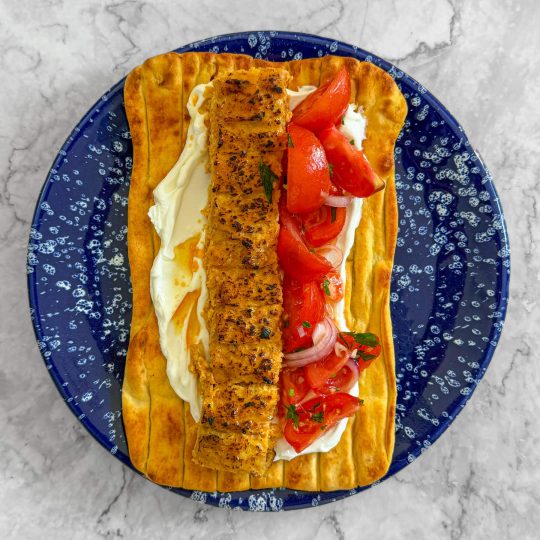
This is my take on the viral sheet pan kebabs, made with chicken and plenty of saffron – an ingredient I come back to often. Everything gets mixed, pressed into a tray and baked, so you get all the flavour and texture of a good kebab without any of the shaping or skewering.
The key to keeping these kebabs juicy is twofold: adding chicken thigh to the mix, because chicken mince on its own is too lean and tends to dry out, and adding melted butter, which enriches the mixture and helps carry the flavour as it cooks.
The saffron runs through the mixture and infuses the roasting juices along with the tomato purée, creating something deeply savoury and fragrant.
It’s simple, low effort, and works just as well wrapped in flatbreads as it does spooned over rice with all those juices.
- Prep Time: 25 minutes
- Total Time: 40 minutes
- Yield: 8 kebabs 1x
Ingredients
- 1 tsp saffron threads
- 2 onions
- 500g chicken thigh fillets
- 500g chicken mince
- 2 tbsp melted butter
- 4 garlic cloves, finely grated
- 2 tbsp double concentrated tomato purée
- 1 tsp smoked paprika
- extra-virgin olive oil, for drizzling
Instructions
- Heat your oven to 220°C / 200°C fan.
- Grind the saffron to a fine powder using a pestle and mortar. Add 1 tbsp hot water and leave it to steep for 5 minutes.
- Meanwhile, blitz the onions in a food processor until finely chopped, then transfer to a fine-mesh sieve. Press firmly with the back of a spoon to remove as much liquid as possible; this step is key for getting the right texture. Tip the drained onions into a large mixing bowl.
- Roughly chop the chicken thigh fillets, then add them to the same food processor (no need to wash it) and blitz until minced. The higher fat content of the thighs balances the leaner chicken mince and keeps the kebabs juicy. Add this to the bowl with the onions.
- Add the saffron water, chicken mince, melted butter, garlic, tomato purée and smoked paprika. Season generously with salt and pepper, then mix thoroughly until sticky and cohesive.
- Transfer the mixture to a quarter sheet pan (roughly 33cm x 24cm) and press it into an even layer.
- Use a knife or bench scraper to score the mixture into 8 long kebab strips. Then create shallow horizontal indentations across each strip to mimic the traditional kebab shape.
- Drizzle lightly with olive oil and bake at 220°C / 200°C fan for 10 minutes. Remove the tray from the oven and switch the oven to the grill setting at 275°C.
- If you’re serving this in flatbreads, soak them briefly in the tray juices before warming them in the oven. If not, carefully pour off some of the juices into a bowl to serve alongside – they’re excellent spooned over rice.
- Return the tray to the oven and grill for 5 minutes, or until the kebabs are lightly charred and golden in places.
- Serve in flatbreads with garlic yoghurt and a fresh herby tomato salad, or over rice with the roasting juices and your veg of choice.



2 responses
In your recipes, one ingredient is tomato purée, which is different depending on your side of the Atlantic. In America, purée is a lighter, milder, less intense form of tomatoes, and tomato paste contains less water than purée, the flavor is very tense, and tomato paste is very thick. Since I am in the American South I will use tomato paste especially since De Rica seems to offer only double concentrated tomato paste.
Ah, thank you for letting me know! Tomato paste was the right call 🙂